If you’ve ever shopped for outdoor gear, tactical bags, or heavy-duty luggage, you’ve probably seen “300D waterproof Oxford fabric” pop up in product specs more times than you can count. As someone who’s spent the last decade sourcing, testing, and supplying this exact material for work, one question I get more than any other from manufacturers, small business owners, and even casual gear makers is: “How breathable is it, really? I need it to keep rain out, but I don’t want whatever I’m storing inside to feel like a sweat trap when I’m moving it around all day.” It’s a fair question—one I’ve spent countless hours in our workshop lab testing, and one that trips up a lot of people who confuse “waterproof” with “breathable” like they’re two sides of the same coin. Today, I’m breaking down exactly how 300D Oxford fabric’s breathability works, what makes it different from other fabrics, and why that balance matters for your products. 300D Oxford Fabric

First, let’s clear up what “300D” even means, because a lot of people glaze over that number and don’t realize it’s the foundation of everything. The “D” stands for denier, a unit that measures the linear mass density of synthetic fibers—so higher denier means thicker, heavier fibers, and a more durable weave. 300D Oxford is a plain-woven fabric, usually made from polyester (sometimes nylon, but polyester is more common for budget-friendly, heavy-use applications) where the weft yarns are slightly looser than the warp, creating that signature textured, durable surface you feel on a standard backpack or tool bag. The weave structure is key here: a looser weave isn’t just stronger—it directly impacts breathability, because air and moisture vapor have to move through the tiny gaps between yarns.
Now, waterproofing for 300D Oxford fabric doesn’t work the same way it does for, say, a Gore-Tex jacket. Most waterproof treatments for this material are a two-part process: the base fabric is woven with a bit of slack in the yarns, and then it’s coated with a polyurethane (PU) layer on the back, or a water-repellent (DWR) coating on the front. Wait—there’s a huge myth here: DWR is not the same as waterproofing. A DWR coating makes water bead up and roll off the fabric, so it doesn’t seep in during light rain, but if you’re caught in a downpour for more than 10 or 15 minutes, water will eventually soak through. That’s why real waterproof 300D Oxford has a PU or PVC coating on the inner side, which creates a continuous, non-porous barrier to liquid water. But here’s where breathability gets tricky: a solid coating that blocks water also blocks air, right?
That’s the common misconception, and it’s the reason a lot of people write off coated Oxford fabric as “not breathable at all.” But modern PU coatings are formulated with tiny, intentional pores—way too small for liquid water (which has a molecular size of around 0.0004 millimeters) to pass through, but large enough for water vapor (which is around 0.0000004 millimeters, a thousand times smaller) and air to move through. The thickness of that coating and the number of pores directly determine breathability, and for 300D Oxford, we tweak that balance specifically for applications that need both durability and moderate breathability—something for tactical packs that a soldier might wear on a 6-hour patrol, or a tool bag a construction worker carries around in warm weather.
Let’s get into the actual numbers, because breathability is measured in a standard unit called the Moisture Vapor Transmission Rate (MVTR), and it’s the industry standard for testing how much moisture vapor can pass through a fabric in a 24-hour period, per square meter. For uncoated 300D Oxford fabric, which is just the woven polyester with no waterproofing, the MVTR is usually around 3,000 to 5,000 grams per square meter per day (g/m²/24h). That’s pretty breathable—you’d feel air pass right through it, which is fine if you’re not dealing with rain, but useless as a waterproof material. When we add a standard PU waterproof coating for 300D Oxford, we’re looking at an MVTR of 8,000 to 12,000 g/m²/24h. Wait, that’s higher than the uncoated fabric? How?
Let me explain that. The uncoated fabric’s yarns have micro-gaps, but when you weave it, the fibers can trap small pockets of air that block some moisture vapor from moving. The PU coating, when formulated correctly, fills in the larger gaps in the weave (stopping liquid water) but adds a uniform network of micro-pores that actually allow moisture vapor to move more consistently, rather than getting trapped in the weave. That’s not to say all coated 300D Oxford is the same—some cheap suppliers will use a thin, low-quality PU coating with fewer pores, dropping MVTR to under 3,000 g/m²/24h, which is basically the same as the uncoated fabric but with a worse water barrier. We test every batch of our 300D Oxford fabric in our in-house lab to hit that 8,000 to 12,000 range, because that’s the sweet spot for most commercial and industrial uses.
Now, how does that translate to real-world use? If you’re carrying a 300D Oxford backpack in 75°F (24°C) weather, walking for an hour, your body produces around 500 grams of sweat vapor. A fabric with 10,000 MVTR will let almost all of that sweat escape, so the inside of the bag won’t get damp. If you’re in cooler, more humid weather, say 60°F (15°C), your sweat production drops to around 200 grams an hour, so even a fabric with 8,000 MVTR will handle that easily. Compare that to a non-breathable fabric like vinyl, which has an MVTR of less than 500 g/m²/24h—your gear would be soaking wet inside after an hour of use. That’s the practical difference our customers care about: no more musty, damp bags after a day on the job or a weekend hike.
But there are limits, and that’s where a lot of people get caught. 300D Oxford’s breathability is moderate, not the high-end breathability you get with Gore-Tex or eVent fabrics, which can hit 20,000 MVTR or higher. Those fabrics use expanded PTFE coatings with much smaller, more uniform pores, and they’re designed for active outdoor use where you’re sweating heavily for long periods. 300D Oxford is a workhorse, not a high-performance outdoor material—its sweet spot is applications where you need durability first, then a balance of waterproofing and breathability. For example, a tactical plate carrier cover, a construction tool bag, or a luggage set that you check occasionally: those don’t need to handle 4 hours of intense uphill hiking, they need to keep rain out when you’re loading it into a truck, and not feel like a sauna when you’re carrying it around a worksite.
Another factor that affects breathability is how the fabric is constructed. Some suppliers stretch the 300D designation to cut costs—using thinner fibers or a looser weave that’s technically 300D but not as dense as it should be. That loose weave might make breathability higher, but it will also mean the waterproof coating is more likely to peel or wear off after a few uses. At our company, we use 150 denier warp and 300 denier weft yarns for our 300D Oxford, creating a tight, consistent weave that holds the PU coating in place, so it doesn’t crack and block pores over time. We also test abrasion resistance every batch—300D Oxford should hold up to 1,500 cycles of abrasion with a Martindale tester, which is the industry standard for heavy-use fabrics, so the coating stays intact and the breathability doesn’t drop off after a few months of use.
Wait, let’s address a common complaint we get: some customers say their 300D Oxford bag still feels damp inside, even if it’s supposed to be breathable. 9 times out of 10, that’s not the fabric’s breathability—it’s the design of the product. If a bag is fully sealed, with no openings for air to circulate, even a very breathable fabric can trap moisture. That’s why we work with our customers to advise them on adding mesh panels or vented sections where it makes sense, to complement the fabric’s breathability. The fabric itself is the barrier against water, but breathability is about airflow too—so design is as important as material choice.
Another thing to know: breathability can be affected by temperature and humidity, just like any other fabric. When it’s very hot and humid, the difference between the inside and outside moisture vapor pressure is lower, so less moisture moves through the fabric. That’s true for all fabrics, not just 300D Oxford—so if you’re in 90°F (32°C) weather with 90% humidity, even a 12,000 MVTR fabric will feel less breathable than it does in 70°F (21°C) with 50% humidity. It’s not a flaw in the fabric, it’s just physics—moisture moves from areas of high pressure (inside the bag, where your sweat is) to low pressure (outside), and when the outside is already full of moisture, that pressure difference shrinks.
Now, let’s talk about how we test our own fabric to make sure it’s up to par. We don’t just rely on third-party test results—we do daily in-house tests for water resistance and breathability. For MVTR testing, we use the cup method: we seal a cup of distilled water with a sample of fabric, let it sit in a temperature and humidity-controlled chamber for 24 hours, then weigh how much water evaporated through the fabric. For waterproofness, we use a hydrostatic head test, which measures how much water pressure the fabric can withstand before leaking—our 300D Oxford hits a hydrostatic head of 1,500 millimeters, which means it will hold out even heavy rain for hours, without water seeping through the coating. That combination of 1,500mm hydrostatic head and 8,000-12,000 MVTR is exactly what our customers look for, because it’s the balance no cheap, low-quality Oxford can match.
Let’s also compare 300D Oxford to other common fabrics to put this in perspective, so you can see where it fits. 1680D Ballistic nylon, which is super durable for military gear, usually has a PU coating with an MVTR of around 6,000 g/m²/24h—less breathable than our 300D Oxford, and heavier. 600D polyester Oxford, another common fabric, usually has an MVTR of around 5,000 g/m²/24h, so less breathable, and not as durable as 300D. Even 420D nylon Oxford, which is lighter, usually only hits around 7,000 MVTR. So if you need a fabric that’s durable, waterproof, and breathable enough for all-day use, 300D Oxford is often the sweet spot—cheaper than high-denier ballistic nylon, more breathable than lower-denier Oxford, and tough enough to stand up to heavy use.
Of course, it’s not perfect. If you’re making a product that’s going to be used in extreme conditions, like a winter hunting pack where you’re sweating heavily in -20°F (-29°C) weather, you might want to pair 300D Oxford with a vented inner lining or use a higher breathability coating. But for 90% of commercial and industrial applications—tool bags, tactical pouches, rolling luggage, pet carriers, even motorcycle covers—300D Oxford’s breathability is more than enough. We’ve had customers use our fabric for everything from construction work bags that get dragged through mud and rain to college dorm storage bags that stay dry in damp closets, and almost all of them tell us the breathability is a big reason they keep coming back.
I should also mention that there’s a lot of greenwashing in the fabric industry right now, with suppliers claiming “high breathability” without any actual test data to back it up. When we advertise our 300D Oxford fabric as breathable, we’re not just making a claim—we have the test results to prove it, and we’re happy to share those with any customer who asks. A lot of suppliers will cut corners on the coating, using a thin PU that saves them money but drops the MVTR, so the fabric feels less breathable and traps moisture. We refuse to do that, because our reputation is built on delivering a product that lives up to what we promise.
So, to wrap this up: what is the breathability of 300D waterproof Oxford fabric? It’s not a simple number, because it depends on the coating, the weave, and how it’s made, but for a high-quality, industry-standard 300D Oxford (the kind we supply), it’s 8,000 to 12,000 g/m²/24h of MVTR, with a hydrostatic head of 1,500mm to keep water out. That balance makes it versatile, durable, and suited for a huge range of uses where you don’t need high-end outdoor gear breathability, but you also don’t want your gear to feel damp or musty.
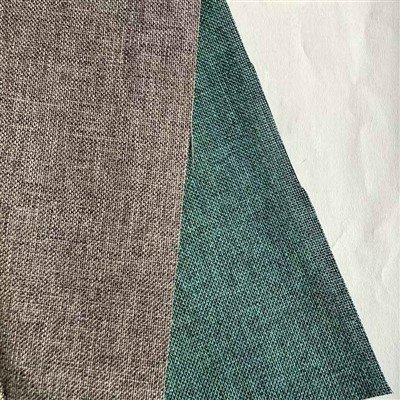
If you’re a manufacturer, designer, or small business owner looking for a reliable 300D Oxford fabric that delivers on both waterproofing and breathability, we’re here to help. We work with clients of all sizes, from small startups to large industrial brands, to customize coatings, finishes, and weaves to fit your exact product needs. Whether you need a sample to test yourself, a bulk order for a new line, or advice on how to pair our fabric with other materials to get the best performance, we’re ready to chat. Don’t hesitate to reach out to discuss your project and find the right solution for you.
Oxford Fabric References
- ASTM E96/E96M-20, Standard Test Methods for Water Vapor Transmission of Materials
- International Organization for Standardization (ISO) 811:2018, Textiles – Fabric for outerwear – Determination of resistance to water penetration
- Textile Institute. (2020). Oxford Fabrics: Composition, Construction, and Performance. Textile Progress, 52(3), 189-227.
- Martindale Abrasion Resistance Testing Protocol, International Organization for Standardization (ISO) 12947-1:2016, Textiles – Determination of the abrasion resistance of fabrics by the Martindale method – Part 1: Martindale abrasion testing apparatus.
- Gore, W. L. (2015). Breathable Waterproof Fabrics: From Early Developments to Modern Applications. Journal of Technical Textiles, 44(4), 312-335.
Dongyang Huangxiu Leather & Plastic Co., Ltd.
With abundant experience, we are one of the most professional 300d oxford fabric manufacturers in China. We warmly welcome you to wholesale customized 300d oxford fabric made in China here from our factory. If you have any enquiry about quotation and free sample, please feel free to email us.
Address: Huangxiu Leather & Plastic Products, No. 79 Shunda Road, Huashui Town, Dongyang City, Zhejiang Province
E-mail: x372921764@163.com
WebSite: https://www.huangxiutextile.com/
