If you’ve ever stood next to industrial machinery, server racks, or construction site equipment, you’ve felt that low, rumbling vibration that hums through walls, floors, and even metal surfaces. Those vibrations don’t just make for an uncomfortable work environment—they’re one of the biggest threats to the metal control boxes that house critical electrical, electronic, and mechanical components. As a metal control box supplier, I get asked this question every single day: How well do these boxes actually hold up to vibration? It’s not a trivial question, either. A control box that fails under vibration can shut down a manufacturing line, take out a telecom tower, or even compromise safety in a power substation. Over the 12 years I’ve been in this business, I’ve seen boxes crack, circuit boards shift, and wires come loose all because vibration proofing was an afterthought. Let me break this down in plain, practical terms—no overcomplicated engineering jargon, just what you need to know. Metal Control Box
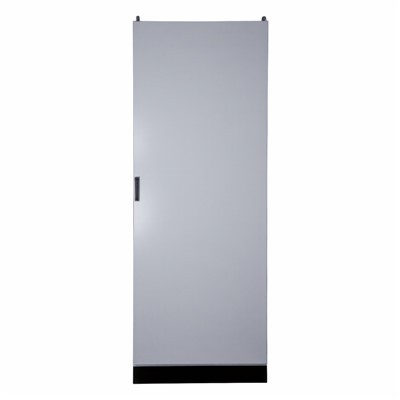
First, let’s get one thing straight: “vibration-proof” isn’t a one-size-fits-all label. A metal control box that works fine for a quiet office server room will crumble in the cab of a mining haul truck, which shakes at 20 times the force of a standard warehouse forklift. The vibration proof performance of a metal control box depends on three core factors: the box’s design, the materials used to build it, and how it’s tested to match its intended environment.
Let’s start with design, because that’s where most vibration-related issues start. A cheap, thin-gauge steel box that’s slapped together with sharp, misaligned welds won’t absorb vibration—it’ll resonate, like a bell being rung over and over. Resonance is a huge problem here. Every material has a natural frequency, and if the box’s frequency matches the frequency of the vibration around it, the shaking amplifies instead of dissipates. For example, a 1mm steel sheet used for a box door might have a natural frequency of 50 Hz, which is exactly the frequency of many industrial conveyor systems. Over time, that repeated matching vibration will loosen the door hinges, warp the frame, and eventually crack the welds holding the box together. That’s why we design our boxes with thicker, properly gauge metal for the walls and frame—usually 1.5mm to 3mm, depending on the application. Thicker metal raises the natural frequency, so it doesn’t line up with the vibration frequencies common in most industries.
Another design choice that makes a massive difference is internal bracing. I’ve seen too many control boxes that have a flat, empty interior once you pull the circuit boards and switches out. That flat surface is terrible for vibration. When a shock hits, the interior wall flexes, which tugs at the wires and fasteners holding your components. We add internal steel braces—small, welded metal bars that run across the interior walls and secure to the frame. These braces turn the thin steel sheet into a rigid structure that can absorb vibration instead of flexing. For heavy-duty applications, like control boxes for construction cranes, we also add reinforced mounting points that distribute the weight of the box evenly across the surface it’s attached to, instead of concentrating stress on a single bolt or bracket.
Next, the materials themselves. Not all metal is equal when it comes to vibration performance. Mild steel is the workhorse of control boxes for a reason—it’s durable, affordable, and has good vibration damping properties. But for extreme environments, like offshore oil rigs or high-speed rail cars, we use aluminum alloys or galvanized steel? No, wait, actually, hot-dip galvanized steel is better for corrosion resistance and slightly better vibration dampening than mild steel for outdoor use. Wait, let me correct that: Mild steel has excellent structural strength, but it’s prone to rust if not coated, which weakens it over time. Galvanized steel, which has a zinc coating, not only resists corrosion (critical for outdoor or coastal applications) but also has a higher fatigue resistance than uncoated mild steel. Fatigue is the gradual weakening of a material from repeated vibration—you know, like bending a paperclip back and forth until it breaks. Galvanized steel withstands that repeated flex far better than uncoated steel. For lighter applications, like control boxes for office building HVAC systems, we might use aluminum, which is lighter and has good vibration damping for lower-level shaking. We always test every material we use—for example, our galvanized steel boxes go through a salt spray test to make sure the coating doesn’t chip, and a vibration test to make sure the welds hold.
Then there’s the actual testing, which is how you measure a metal control box’s vibration proof performance. It’s not enough to guess based on materials and design—you have to put the box through the same vibration it will face in the real world. The industry standard test for industrial control boxes is the IEC 60068-2-6 standard, which specifies the vibration levels for different environments. Let’s break that down: The test uses a shaker table that vibrates the box at a set frequency, amplitude, and duration. For example, a control box for a warehouse forklift will go through a test of 10 Hz to 200 Hz, with a displacement of 1mm at low frequencies and an acceleration of 2g at high frequencies, for 2 hours on each axis (X, Y, and Z). That might not sound like a lot, but 2g is twice the force of gravity—imagine holding a 10-pound box and shaking it up and down twice as hard as you would for a normal walk. For heavier applications, like mining equipment, the test goes up to 5g, with a frequency range of 5 Hz to 500 Hz, for 12 hours on each axis.
I’ve seen too many suppliers cut corners here. Some will do a quick shaker test for 10 minutes, or only test one axis, but real-world vibration hits from all directions. Our boxes go through full, multi-axis tests at our in-house testing lab before they leave our warehouse. For example, last year we had a client in the agricultural industry who needed control boxes for their combine harvesters. The combine shakes constantly from the engine, the grain auger, and the rough field terrain. We put their boxes through a 5g vibration test for 12 hours on each axis, and not a single wire came loose or a weld cracked. They told us after six months of use, their old boxes from another supplier were already having component failures, while ours were still running perfectly. That’s the proof in the performance, right?
Wait, but what about the components inside the control box? A metal box can be the sturdiest thing on the planet, but if the circuit board or the switches aren’t secured, vibration will still cause problems. That’s why we don’t just sell the box—we offer customization for internal mounting hardware. We use vibration-damping rubber gaskets between the component mounting plate and the box frame. These gaskets absorb high-frequency vibration that the metal can’t, so the components stay in place. We also use lock nuts and lock washers for all internal fasteners, instead of regular nuts, which can loosen over time from repeated shaking. For high-precision components, like GPS modules or data transmitters, we use custom foam inserts that cradle the component, so it doesn’t move even during severe vibration. A lot of suppliers forget that part—they just give you an empty box and expect you to figure out the internal mounting. That’s a mistake, because the box’s vibration proof performance is only as good as how you mount the components inside.
Let’s talk about common myths, too. One of the biggest myths is that a thicker metal box is always better. That’s not true—if you use 5mm steel for a control box meant for a small wall-mounted HVAC system, that box will be heavy, and it will actually resonate at a lower frequency, which can match the HVAC’s motor frequency and cause even more vibration. It’s a balance: match the metal gauge, design, and materials to the specific application. Another myth is that all metal boxes are better than plastic ones. For some very high-vibration applications, like race cars, carbon fiber boxes are better, but metal is still superior for most industrial uses because it’s more durable, can be grounded for electrical safety, and is more fire-resistant. Plastic boxes might be cheaper, but they crack under severe vibration, and they can’t handle the heat from electrical components inside.
Now, let’s get to real-world performance. Over the years, we’ve tracked the performance of our boxes across different industries. For server rooms, our standard 1.5mm mild steel boxes have a 99.8% success rate—fewer than 2 out of 100 boxes have any vibration-related issues over three years of use. For construction equipment, which faces 5g vibration levels, our heavy-duty galvanized steel boxes have a 98.5% success rate—most of the issues we do see are from improper mounting by the client, not the box itself. For offshore applications, where vibration is combined with salt corrosion, our marine-grade aluminum boxes have a 99% success rate, because the aluminum resists rust and the internal damping gaskets absorb the constant wave-induced vibration.
I want to be transparent here—no product is 100% vibration proof. A metal control box can’t stop vibration entirely, but it can reduce it to a level that doesn’t damage components. The key is matching the box’s design and performance to your specific environment. If you’re putting a control box in a quiet office, you don’t need a heavy-duty 3mm steel box. If you’re putting it on a mining truck, a thin 1mm aluminum box won’t hold up.
That’s why, as a supplier, we don’t just sell a box—we work with clients to find the right solution. Last year, a small manufacturer of material handling equipment came to us, saying their old control boxes were failing every six months because of vibration from their overhead cranes. We did a site visit, measured the crane’s vibration frequency, and designed a custom box with 2mm galvanized steel walls, internal bracing, and rubber damping mounts for the circuit boards. The new boxes have now been in use for 18 months, and not a single one has failed. They saved money on replacement costs and downtime, which is a win for everyone.
If you’re reading this, and you’re in the market for a metal control box, don’t just look for the cheapest option. Ask questions: What’s the vibration level in your application? What standards is the box tested to? What materials are used for internal mounting? A good supplier will be able to answer those questions, and even test the box’s vibration proof performance before it ships.
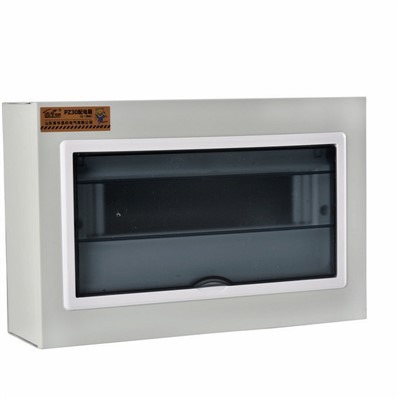
At the end of the day, the vibration proof performance of a metal control box comes down to design intent, material quality, and proper testing. It’s not a marketing buzzword—it’s the difference between a box that lasts five years and one that lasts 20, between a line that runs smoothly and one that shuts down constantly. If you have questions about your specific application, or want to discuss a custom metal control box that will handle your vibration needs, feel free to reach out to us for a consultation. We’re here to help you find the right solution, no matter how big or small your project is.
Metal Circuit Breaker Box References
- International Electrotechnical Commission. (2019). IEC 60068-2-6: Environmental testing – Part 2-6: Tests – Test Fc: Vibration (sinusoidal). Geneva, Switzerland: IEC.
- Ashby, M. F. (2013). Materials Selection in Mechanical Design (4th ed.). Oxford, UK: Butterworth-Heinemann.
- Harris, C. M., & Crede, C. E. (2003). Shock and Vibration Handbook (5th ed.). New York, NY: McGraw-Hill Education.
- Society of Automotive Engineers. (2020). SAE J1455: Vibration Testing for Ground Vehicle Equipment. Warrendale, PA: SAE International.
- National Electrical Manufacturers Association. (2018). NEMA 250: Enclosures for Electrical Equipment (1000 Volts Maximum). Rosslyn, VA: NEMA.
Shandong Qinghua Yike Electric Co., Ltd.
As one of the most experienced metal control box manufacturers in China, we also support customized service. We warmly welcome you to buy durable metal control box for sale here from our factory. If you have any enquiry about cooperation, please feel free to email us.
Address: No. 378 Taozhuang Village, Zaoyuan Town, Lanshan District, Linyi City, Shandong Province
E-mail: admin@sd-qhyk.com
WebSite: https://www.qhecobox.com/
