If you’ve ever walked through a construction site, a lumber yard, or a gravel storage lot, you’ve probably spotted those quiet, metal workhorses moving heavy pallets without a drop of electricity. As a supplier of manual stackers, I get this question all the time—usually from fleet managers or site foremen who’ve hit a snag in their outdoor operations. “Can a manual stacker be used outdoors?” it goes. And let me tell you, the short answer isn’t a simple yes or no; it’s a nuanced, practical call that depends on more than just the machine itself. I’ve spent 12 years in this industry, talking to hundreds of operators who’ve tested manual stackers on muddy building sites, cracked concrete warehouse loading docks, and even sloped outdoor storage yards, so I’m not just spouting specs I read in a catalog—this is from the ground up, on-site experience. Manual Stacker
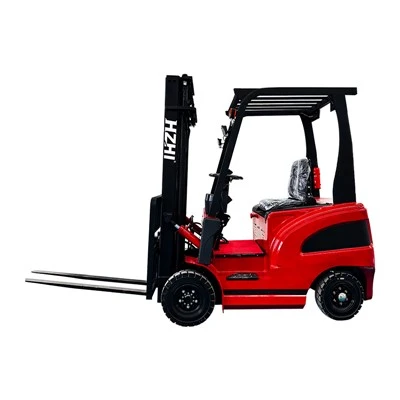
First, let’s get one thing straight: manual stackers aren’t designed for every outdoor job, but they can work extremely well in the right set of conditions. The key here is matching the machine’s design to the environment you’re working in, because that’s where most people go wrong. Let’s start with the basics of how a manual stacker is built. Most standard models are made from carbon steel, with a load wheel base that’s narrow for tight warehouse aisles, small polyurethane wheels, and a lightweight frame that makes them easy to maneuver indoors. Take that same model outside, though, and suddenly those tiny polyurethane wheels turn into a liability. They sink ¼-inch or more into wet grass, get caught on loose gravel, and can’t grip uneven concrete, making the machine unstable. Polyurethane wheels also degrade faster in direct sunlight—we’ve seen operators who left a manual stacker outside for two weeks have their wheels crack so bad they couldn’t move the machine at all. That’s a quick, avoidable failure, not a flaw in the stacker itself.
But here’s the good news: there are outdoor-rated manual stackers built specifically for these conditions, and they’re not that different from standard models at first glance. The first upgrade is the wheels. Instead of polyurethane, outdoor manual stackers get either solid rubber or pneumatic rubber wheels. Solid rubber wheels are great for flat, gravelly surfaces—they’re durable, don’t puncture, and roll smoothly over small debris like loose bricks or wood chips. Pneumatic wheels, which are like bike tires, work even better on uneven terrain, mud, or grass because they have a softer surface that absorbs small bumps and provides better traction. I had a customer last year who runs a landscape supply business; he was using a standard electric pallet jack outside to move pallets of mulch and soil, and it was constantly getting stuck in the grass near his loading area. He tried a basic manual stacker, same issue, until he swapped to an outdoor model with pneumatic wheels. Now he can move a 2,000-pound pallet of mulch from his yard to his delivery truck in two minutes—something he couldn’t do with any other equipment at the same price point. That’s the kind of win we see all the time when the right machine meets the right job.
Stability is the next big concern for outdoor use, and it’s tied directly to the wheel base and load capacity. Standard indoor manual stackers have a narrow wheel base, usually 18 to 24 inches, designed to fit between pallet racks in tight warehouse spaces. Outside, that narrow base becomes a problem if you’re working on even slightly sloped ground, which is common at outdoor storage yards or construction sites. A load of 1,500 pounds on a narrow wheel base on a 2-degree slope can tip over if you turn too fast—operator error plays a part, but the machine isn’t built to handle that. Outdoor manual stackers solve this by widening the wheel base to 28 to 32 inches, which lowers the center of gravity and makes the machine much more stable on uneven surfaces. We once had a foreman from a residential construction site test this for us; he said his old narrow-base manual stacker felt like it was going to tip every time he turned near his sloped material pile, but the wider outdoor model had none of that. He even used it to move pallets of concrete blocks over a small 3-inch curb between his storage area and the driveway—something he never would have tried with his old machine.
Then there’s the issue of materials and weather resistance, which is often overlooked. Indoor manual stackers are protected from rain, dust, and extreme temperatures, but outside, they’re exposed to all of that. The frame, which is usually painted with a basic enamel for indoor use, will rust if left in the rain for more than a few weeks, especially if there’s dust or gravel scratching the paint. Hydraulic systems are another weak point; standard hydraulic pumps are sealed for dry indoor conditions, but if they get exposed to heavy rain or mud, water can get into the seals and cause the pump to seize up, which is an expensive repair. Outdoor-rated manual stackers fix this with powder-coated steel frames, which are far more scratch and rust resistant than standard paint, and sealed hydraulic systems that are waterproof and dustproof, so they can handle being out in light rain or even splashes from mud or water. We had a customer in the Pacific Northwest who uses his manual stacker outdoors year-round for lumber and hardware deliveries; he told me his first indoor model rusted through in 8 months, but his outdoor-rated model is still going strong after 3 years of rain, frost, and constant gravel dust. That’s the difference between a tool that’s built for the elements and one that’s just repurposed from indoor use.
Of course, even the best outdoor manual stacker has its limits, and it’s important to be realistic about that. These machines are not designed for heavy loads over long distances in harsh weather like deep snow or icy slopes. If you’re working on a construction site with deep mud that’s more than 6 inches deep, a manual stacker will struggle to move at all, even with pneumatic wheels. For that kind of terrain, you’d be better off with a more heavy-duty piece of equipment like a rough terrain pallet jack. Also, manual stackers have a maximum lift height—usually around 15 feet for standard models—so if you need to stack pallets higher than that outdoors, you’ll need a different solution, like a forklift. Don’t get me wrong, we’ve had customers push these limits before, and it ends up costing them more money in repairs and downtime. The best approach is to assess your specific outdoor job first, not the other way around.
Let me walk you through a real example of when a manual stacker works perfectly outdoors, and when it doesn’t. Last year, I worked with a small e-commerce company that had outgrown their small warehouse and started storing overflow inventory in a fenced outdoor lot. Their inventory was mostly lightweight pallets of retail goods—books, small electronics, clothing—with an average load weight of 1,200 pounds. Their loading dock was cracked concrete with small gravel spots near the gate, and they needed to move pallets from the outdoor lot to delivery trucks that parked at the dock. They first tried repurposing an old indoor manual stacker; within two weeks, the polyurethane wheels were cracked from the sun, they got stuck twice in the gravel, and the frame started rusting along the bottom where it hit the rough concrete. They switched to an outdoor-rated manual stacker, solid rubber wheels, powder-coated frame, and wide wheel base. That’s 10 months later, and they’re still using that same machine every day—no breakdowns, no stuck pallets, no extra costs for repairs. Now compare that to a construction customer I spoke to around the same time; he had a job site with steep sloped ground, loads of 3,000-pound concrete blocks, and deep mud after rain. He tried using an outdoor manual stacker, but even with pneumatic wheels, the mud kept the machine from moving, and the steep slope made it too unstable. In his case, a rough terrain forklift was the right call, and that’s okay—manual stackers just aren’t built for that level of heavy-duty, extreme outdoor work.
Another thing to consider is operator training, even if you have the right machine. A lot of operators who are used to indoor manual stackers don’t adjust their technique for outdoor use. They get used to turning quickly in tight spaces indoors, but outside on uneven ground, that can lead to tipping. They also tend to overload the machine, thinking that just because it can hold 2,000 pounds indoors, it can hold the same outside, but uneven ground lowers the effective load capacity by 10 to 15 percent. We always recommend that operators who use manual stackers outdoors get a quick, hands-on training session, which takes less than an hour and covers adjusting their speed, how to turn on uneven surfaces, and proper load distribution. It’s a small step that prevents a lot of accidents and machine damage.
Now, if you’re wondering whether your operation is a good fit for an outdoor manual stacker, here are the key questions to ask yourself: First, what’s the surface you’re working on? If it’s flat concrete, packed gravel, or short grass, an outdoor manual stacker will work great. If it’s deep mud, steep slopes, or loose sand that’s more than an inch deep, it’s probably not the right tool. Second, what’s the average load weight? If your pallets are under 2,000 pounds, manual stackers are reliable; over that, you’ll want to look at heavier equipment. Third, do you need to lift pallets higher than 10 feet outdoors? Manual stackers top out around 15 feet, so if you need more height, a forklift is necessary. Fourth, how much exposure to the elements will the machine get? If it’s only out during daylight hours and stored indoors overnight, a powder-coated model is fine; if it’s left out 24/7 in rain or frost, you’ll want a model with fully sealed hydraulic systems.
At the end of the day, manual stackers can absolutely be used outdoors, but only when you pair the right machine with the right environment. I’ve seen small businesses cut their material handling costs by 40 percent by switching to outdoor manual stackers, because they’re cheaper to buy and maintain than forklifts or electric pallet jacks, and they don’t require fuel or special licensing like powered equipment. But I’ve also seen companies waste money by buying an indoor manual stacker and expecting it to perform on a construction site, only to have it break down within a month. That’s the mistake we work to help customers avoid, because our job isn’t just to sell a machine—it’s to find the right solution for their specific needs.
If you’re currently dealing with outdoor material handling challenges, whether you’re moving pallets at a construction site, storing inventory in an outdoor yard, or loading delivery trucks on uneven docks, we can help. We’ve helped hundreds of operators figure out whether a manual stacker is the right fit, and if so, which model will work best for their surface, load weight, and operating conditions. We offer flexible pricing, on-site testing options, and ongoing support to make sure your equipment works as hard as you do. To learn more about matching a manual stacker to your outdoor operations or to request a quote, please reach out to our team to start a conversation.
Articulating Boom Lift References:
- Material Handling Industry Association. "Outdoor Material Handling Equipment: Selection and Best Practices." 2022.
- Occupational Safety and Health Administration (OSHA). "Manual Lift Equipment Safety Guidelines for Outdoor Operations." 2021.
- Industrial Truck Association. "Specifications and Performance Standards for Manual Stackers." 2023.
Huazheng Heavy Industry Machinery Equipment Co., Ltd.
With abundant experience, we are one of the most professional manual stacker manufacturers and suppliers in China. Please feel free to buy high quality manual stacker for sale here from our factory. We also accept customized orders.
Address: Room 423-101, Building C-4, Electronics Valley Technology Center, No.3088 Lekai North Street, Gaokai District, Baoding City, Hebei Province, China
E-mail: sales02@hzheavy.com
WebSite: https://www.hzheavy.com/
