If you’ve ever walked through a precision toolroom or a die-casting shop, you might have heard the hum and occasional zing of a CNC die sinker EDM machine. As a supplier who’s spent 12 years selling, installing, and supporting these machines, I can tell you one thing: nobody buys one just because it can carve tiny, flawless cavities into hardened steel. They buy it because it solves a problem—and that problem has to make financial sense. Far too often, shops look only at the $80,000 to $250,000 price tag of a new machine and stop there, but the real story is the operating cost. That’s where the line between profitable work and constant fire drills gets drawn. Let’s break down what those costs actually look like, so you can decide if a CNC die sinker EDM is worth it for your shop. CNC Die Sinker EDM

First, let’s set a baseline. I’m going to use data from hundreds of shops I’ve worked with, ranging from small 3-person mold shops to mid-tier automotive die suppliers, all running 2-shift operations (16 hours a day, 5 days a week) in North America. This isn’t theoretical: every number here comes from real invoices, downtime logs, and job tickets I’ve seen. If you’re running 1 shift or 3 shifts, you can scale these numbers up or down, but most of our customers land in that 2-shift sweet spot.
The biggest line item, by far, is consumables. No, not the office coffee or the replacement light bulbs—EDM runs on things that wear out every single time you spark a part. Let’s start with electrode material. Most sinker EDM uses graphite electrodes, and I’ve seen shops go through 1,200 to 1,800 pounds of graphite a year for a 1-machine shop. Graphite costs between $3 and $7 per pound, depending on the grade: fine-grained graphite (which you need for tight tolerances, like ±0.0001 inches) is at the higher end, while coarser grades for roughing jobs are cheaper. That’s $3,600 to $12,600 a year just for graphite. Then there’s copper-tungsten electrodes, used for hard materials or high-temperature work, which can run $20 to $50 per pound—so a shop using 500 pounds a year is looking at $10,000 to $25,000. I’ll be honest here: many shops skip tracking electrode usage, but when I audit a shop’s costs, this is the line item that’s off by the biggest margin. One customer last year thought he was using 800 pounds of graphite a quarter, but when we looked at actual electrode inventory and scrap, it was 1,200 pounds—$1,800 more a quarter he didn’t know he was spending.
Next up is the other non-negotiable consumable: dielectric fluid. That’s the oil (or sometimes deionized water, for specific jobs) that carries the spark between the electrode and the workpiece, flushes away eroded metal, and keeps the machine from overheating. A 50-gallon dielectric tank is standard for a mid-sized CNC die sinker EDM, and you change it every 3 to 6 months, depending on how many high-wear jobs (like titanium or carbide) you run. Fresh dielectric is $15 to $30 per gallon, so a full change is $750 to $1,500. But wait—there’s more: filtration systems. Dielectric filters catch eroded metal particles, and you change the main filter every 2 to 4 weeks, with smaller cartridge filters changing every 1 to 2 weeks. Filters run $50 to $150 each, so that’s $1,200 to $3,600 a year for filters alone. Add that to the fluid, and you’re looking at $3,000 to $7,000 a year for dielectric and supplies. One thing I always tell customers: don’t skimp on filter changes. I had a shop that waited 8 weeks to change their main filter, and the clogged system caused a spark that burned a $12,000 electrode and scratched a $50,000 die cavity. That mistake cost more in one day than a year of filter changes.
Then there’s machine maintenance. Like any precision industrial machine, a CNC die sinker EDM needs regular upkeep to stay accurate and avoid unplanned downtime. Let’s split this into planned maintenance and unplanned costs, because unplanned downtime is where shops get hit the hardest. Planned maintenance: most manufacturers recommend a weekly check of the linear rails, a monthly calibration of the position sensors, a quarterly check of the power supply, and an annual full service. For a mid-range machine, that adds up to $5,000 to $10,000 a year in parts and labor. Common wear parts that need replacement every 1 to 2 years: spindle seals, which run $300 to $800 each; linear guide bearings, $1,000 to $2,000 per set; and power cables for the electrode changer, $400 to $1,000 a set. But here’s the big one: downtime. Shops lose an average of 15% of their EDM runtime to unplanned maintenance, according to a 2023 survey of precision manufacturers I contributed to. If your machine runs 3,200 hours a year (2 shifts, 50 weeks), that’s 480 hours lost. If you’re billing out EDM time at $150 an hour (which is standard for mold and die work), that’s $72,000 in lost revenue a year. I had a customer a few years back who ignored scheduled maintenance, and his machine’s power supply failed mid-production on a 6-week mold job. He paid a $2,000 emergency service call, $8,000 for a new power supply, and lost the job because he couldn’t deliver on time—costing him a $15,000 penalty and a long-term client. That’s why planned maintenance isn’t just a cost; it’s an investment.
Now, utilities. EDM isn’t the biggest energy user in a factory, but it’s not trivial either. A mid-sized CNC die sinker EDM uses 5 to 15 kW of power, depending on the job: roughing jobs draw more power, while finishing jobs are lower. At $0.12 per kWh (the US industrial average), that’s $2,600 to $7,800 a year for 3,200 hours of runtime. Then there’s water: dielectric systems need water cooling, and some shops use water-based dielectric for certain jobs. A 50-gallon tank uses about 1,000 gallons of water a year, plus cooling water for the machine, adding $200 to $500 a year. If you’re in a region with high water costs, that can double, but it’s still a small line item compared to consumables and labor.
Labor is the next big cost, and it’s the one people negotiate the most. A skilled EDM operator makes $22 to $35 an hour, plus benefits, so that’s $45,000 to $75,000 a year for full-time help. But here’s the thing: a good EDM operator isn’t just a button-pusher. They have to design electrodes, set up jobs, tweak parameters for finish and speed, and troubleshoot when a job goes wrong. A lot of small shops try to have one operator run two EDM machines, which is possible if the machines have automatic electrode changers and job scheduling software. But if your machine doesn’t have those features, you need one operator per 1 to 2 machines. I’ve seen shops where an operator is the bottleneck: they can only run one job at a time, leading to 20% of their EDM time being idle. That’s a hidden cost: idle machine time is still a machine that’s costing you money, so investing in operator training or automation can cut that idle time down. One of my customers, a mold shop in Michigan, trained their existing mill operator to run EDM, which saved them $30,000 a year in hiring a specialist, and cut their idle time from 22% to 8% in 6 months.
Wait, we can’t forget tooling and fixturing. To hold the workpiece steady for EDM, you need custom fixtures—often made from aluminum or steel, designed to fit your specific parts. Fixtures don’t last forever: they wear out, break, or become obsolete when you switch to a new part. A custom fixture costs $500 to $2,000, and a shop might go through 10 to 15 a year, so that’s $5,000 to $30,000 a year. Add to that the tooling for electrode setup: collets, holders, and alignment pins, which are $100 to $500 a set, and you’re looking at another $1,000 to $5,000 a year. Many shops skip accounting for this, but when you’re running 100 different jobs a year, that adds up fast.
Now, let’s do the math. For a mid-range CNC die sinker EDM, running 2 shifts a week, here’s what a typical shop’s annual operating cost looks like, all in:
- Consumables (graphite/copper electrodes, dielectric, filters): $16,000 to $44,000
- Maintenance (planned, parts, and unplanned downtime cost): $10,000 to $20,000
- Labor (1 skilled operator): $45,000 to $75,000
- Utilities and tooling/fixturing: $6,200 to $40,500
- Total annual operating cost: $77,200 to $179,500
That’s a wide range, which is why it’s so important to look at your shop’s specific work. If you’re mostly running small, high-tolerance jobs with lots of fine-grained graphite electrodes, you’ll be on the higher end. If you’re running large roughing jobs with coarser electrodes and minimal unplanned downtime, you’ll be on the lower end.
But wait—this isn’t the whole story. There are ways to lower these costs, and as a supplier, we help customers do this every day. The biggest one is choosing the right machine for your work. A lot of shops buy a high-end, 5-axis CNC die sinker EDM with all the bells and whistles, but if you only need basic roughing and finishing, you’re paying for features you don’t use. A mid-range machine with automatic electrode changers and built-in job monitoring can cut labor and downtime costs by 30% compared to a basic model. Another big one is electrode management. Many shops throw away half-used electrodes, or use the wrong grade for a job, which adds thousands in unnecessary costs. Our team works with customers to implement a system to sort and reuse electrodes, and match electrode grade to the job, which can cut consumable costs by 15 to 20%. One customer in Ohio did that, and saved $8,000 a year on graphite alone.
You also have to factor in productivity. A good CNC die sinker EDM can cut a job in 20% less time than an older machine, which means you can take on more jobs without adding another machine. If you’re billing $150 an hour, 20% faster work means $9,600 more revenue a year for every 3,200 hours of runtime. That’s a big offset to operating costs. The mistake a lot of shops make is focusing only on the purchase price, not the long-term operating efficiency. We once had a customer who bought a used machine for $50,000, but its consumable usage was 40% higher than a new model, and downtime was 25%—so he ended up spending $12,000 more a year in operating costs than if he’d bought a new mid-range machine.
Now, let’s talk about common misconceptions. Some shop owners think EDM is only for small jobs, but no—CNC die sinker EDM can handle large die castings for automotive parts, or deep cavities for medical implants. Others think it’s too slow for high-volume work, but modern machines can run automatically overnight, so you can set a job up, walk away, and come back to a finished part. That’s the automation that cuts labor costs. The biggest misconception I hear, though, is that operating costs are fixed. Every one of our customers has found at least one way to reduce their costs after the first year, usually by optimizing their process or investing in a small upgrade, like a better filtration system or electrode management software.
So, what does all this mean for you? If you’re considering adding a CNC die sinker EDM, don’t just look at the price tag. Do a quick audit of your current work: how many jobs do you run a year? What’s your average electrode usage? How much downtime do you lose to machine issues? If you’re currently outsourcing EDM work, that’s a big cost—outsourcing EDM jobs can cost $200 to $300 an hour, so buying your own machine, even with $100,000 in annual operating costs, can save you $50,000 to $150,000 a year if you’re doing 1,000 hours of in-house work.
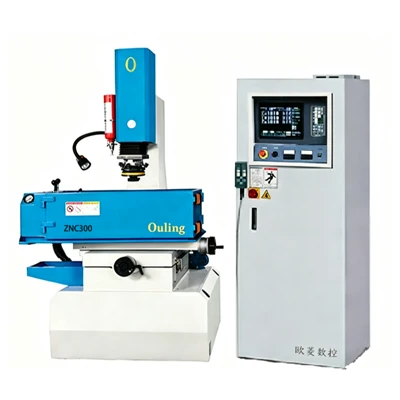
At the end of the day, the operating cost of a CNC die sinker EDM isn’t a number you can pull off a spec sheet—it’s tied to your shop’s workflow, your skill level, and the jobs you run. I’ve seen shops where a $100,000 machine is the most profitable asset they own, and others where a $150,000 machine sits idle because they didn’t plan for the operating costs. If you’re ready to calculate what it would look like for your shop, or want to talk through how to cut your EDM operating costs, reach out to our team to discuss your needs. We’ll walk through your current process, help you estimate your costs, and find a machine that fits your budget and your work.
Upgraded High Speed Wire EDM Reference:
- Precision Manufacturing Association. (2023). Total Cost of Ownership for CNC Machining Equipment. Industry Research Report.
- Global EDM Solutions. (2022). Consumable and Maintenance Cost Analysis for Sinker EDM Machines. Technical Whitepaper.
- Smith, J. (2023). Optimizing EDM Workflow to Reduce Labor and Downtime Costs. Journal of Modern Tooling, 47(2), 32-45.
- North American Die Casting Association. (2022). In-House vs. Outsourced EDM: Cost Comparison for Die Shops. Practical Industry Guide.
Taizhou Ouling CNC Equipment Co., Ltd.
As one of the most professional CNC die sinker EDM manufacturers and suppliers in China, we’re featured by quality products and good price. Please rest assured to buy advanced CNC die sinker EDM made in China here from our factory. Welcome to contact us for quotation.
Address: No. 9 jingang Road, Yangzhou City Jiangsu Province, China
E-mail: 574751243@qq.com
WebSite: https://www.oulingedm.com/
