If you’ve ever sat across from a dentist explaining that your missing 5 front teeth make it impossible to eat an apple without panicking, or that grinning for photos has you ducking your head like a shy teen, you know how frustrating dental gaps can get. I’m part of a team that supplies Implant Malo Bridges to clinics across the country, and I’ve lost count of how many times patients have asked the same question: “Wait, how does that bridge actually go in? Is it scary?” Let me walk you through it like I’m explaining it to my cousin who just started dental assisting last month—no jargon, no fancy fluff, just the real, step-by-step process that we stand behind every single day. Implant Malo Bridge
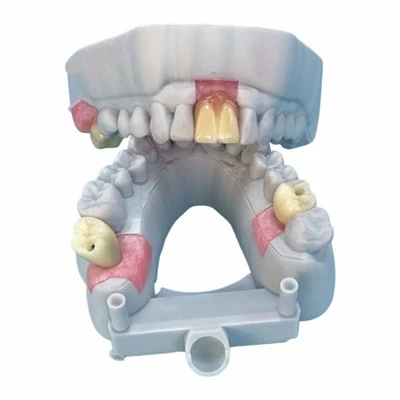
First, let’s get one thing straight: an Implant Malo Bridge isn’t your old-school partial that clips onto your remaining teeth and slips when you eat a burrito. It’s a fixed, permanent bridge that’s anchored directly into your jawbone, made to look and feel like your natural teeth. I’ve seen these things last 15, 20 years if you take care of ’em, and that’s way better than the removable ones most people settle for when they don’t know better. But before we even talk about installing it, there’s a big prep step that a lot of folks don’t realize matters a lot.
See, you can’t just yank out a bad tooth and stick implants in there the next day (well, sometimes you can, but most of the time? Nope). The first step is actually making sure your jaw is healthy enough to hold the implants. That means your dentist will take a 3D scan of your whole mouth—no more uncomfortable, goopy impressions that make you gag. These days it’s a little wand that slides over your teeth, takes a few seconds, and boom, they have a digital model of your mouth down to the tiny blood vessels and bone density. That scan is non-negotiable because if your jaw is too thin in spots, we can’t place the implants where they need to go—simple as that. We supply the Malo Bridges with precise, matching screw holes and sizes, so if the scan is off, the bridge won’t fit right. I can’t tell you how many times a clinic has called us panicking because their scan was blurry, and we had to rush a slightly adjusted custom base to them. That’s the kind of hands-on support we provide, not just boxes of parts.
Once the dentist confirms your jaw is good to go, it’s time for the implant placement surgery. This is the part people get nervous about, so let’s be real: it’s a minor surgical procedure, done under local anesthesia, so you’re awake but numb. Some clinics offer IV sedation if you’re super anxious, but that’s totally up to you. Here’s what actually happens during the surgery: the dentist makes tiny incisions in your gum, drills little holes into your jaw (super precise, thanks to that 3D scan they did earlier—no guessing work here), and then screws the implant posts into those holes. These posts are made of titanium, which your bone actually grows onto over time— that’s called osseointegration, and it’s why this whole thing is permanent. It’s not like a screw in wood; your jaw fuses to the titanium like it’s always been there.
Now, here’s the part most people don’t hear about: you can’t just put the bridge on the same day you place the implants. That’s a common myth! The healing period—usually 3 to 6 months, sometimes a little longer if your bone is super weak. I know, waiting sucks, especially when you’re missing teeth, but it’s non-negotiable. If you try to rush it, the implants won’t fuse right, and you’ll end up with a wobbly bridge that falls out while you’re eating pizza (speaking from experience, a clinic once had that happen because they tried to do same-day placement, and we had to remake the whole bridge for them at a discount). During this healing time, you’ll get temporary dentures or a temporary bridge to hold you over, so you don’t have to walk around looking like a different person. We supply those temporary parts too, by the way—smaller clinics love that because it means they don’t have to source extra stuff from 3 different places.
Once the healing is done, that’s when the next step happens: attaching the abutments. Abutments are the little connectors that stick out of the implant posts through your gum. Your dentist will take another small scan to make sure the abutments are seated correctly, because if they’re twisted or too short, the bridge won’t line up with your bite. This is also where our Malo Bridge design shines—we make the abutments and bridge in a set, so they’re custom-milled to fit exactly the implants placed in your jaw. No more sanding down a bridge for an hour because it’s the wrong size. We get the dimensions straight from the initial 3D scan, so everything is perfect the first time. I’ve seen clinics cut down their patient chair time by 2 hours using our pre-matched sets—that’s a win for everyone, especially patients who hate sitting in the dentist’s chair for ages.
Now, the big day: placing the actual Malo Bridge. Once the abutments are in place and your gum is healed around them, the dentist will fit the bridge over the abutments. This is a precision fit, so it slides right on with no gaps or wobbles. Then they tighten the tiny screws that hold it in place—those screws are hidden under the gums, so no one will ever know they’re there. Wait, but how do you clean it? I get that question all the time from patients. It’s just like cleaning natural teeth: you brush it, floss around the abutments, and use mouthwash. No special tools, no soaking at night, none of that gross stuff that comes with removable bridges. That’s the best part, right? You don’t have to change your whole routine.
But here’s a little secret that our team swears by: the installation doesn’t stop when the bridge is tightened. We include a free 6-month follow-up check with every bridge we supply to clinics, because we want to make sure it’s fitting right, your bite is even, and there are no issues. A lot of suppliers just drop off the parts and disappear, but we’re in this for the long haul. Last year, a clinic in Detroit had a patient complain that their bridge was a little too high on one side, and we hopped on a call with their dentist that night, sent over a small adjustment tool, and had it fixed in 10 minutes. That’s the kind of support that makes clinics come back to us, and that’s why patients trust the bridges we supply.
I know what you’re thinking: this sounds like a lot, but is it worth it? Let me tell you about a patient I heard about last month—she was a 58-year-old teacher who lost her front teeth to gum disease. She tried a partial, but she’d have to adjust it every time she drank coffee, and she hated the way it looked. She got an Implant Malo Bridge installed, and a week later, she sent a photo of her laughing with her students, no ducking her head. That’s the why of all this: it’s not just about teeth, it’s about feeling confident, being able to eat whatever you want, not hiding your smile. The installation process is just a means to that end, and we make sure every step is as smooth as possible for both the clinic and the patient.
Wait, let’s clear up a couple of misconceptions too, because I get these all the time. First: is it painful? The surgery has a little soreness for a few days, like after a tooth extraction, but nothing that strong painkillers can’t handle. Most patients are back to work in 2 or 3 days. Second: can anyone get one? Not exactly—if you have uncontrolled diabetes, or certain bone diseases, you might not be a candidate, but a good dentist will check all that before they start. And third: is it super expensive? I know dental stuff is pricy, but compared to getting a full set of removable dentures every 5 years, or multiple partials, it actually works out cheaper long-term. We work with clinics to get pricing that’s fair, because we believe everyone deserves to have a smile they’re proud of.
At the end of the day, installing an Implant Malo Bridge is a team effort: the dentist doing the surgery and fitting, the lab team making the custom parts, and us supplying the high-quality, precise components that make it all work. We don’t cut corners on materials—our titanium posts are medical-grade, our bridges are milled from zirconia that looks exactly like natural enamel, so no one can tell the difference unless you point it out. We’ve tested these bridges for years, and the success rate is through the roof, which is why so many clinics across the country order from us.
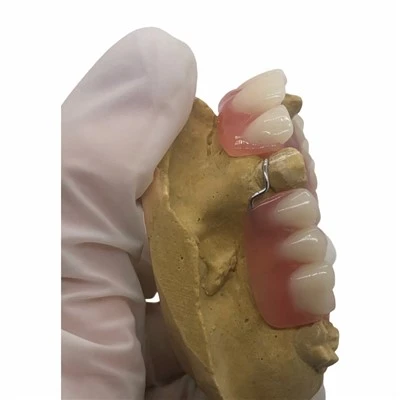
If you’re a clinic looking to stock reliable Implant Malo Bridges, or a patient who wants to know more about how it works for your dentist to explain, I get it—this is a big decision. We know that when a clinic picks our products, they’re trusting us with their patients’ smiles, and that’s a responsibility we don’t take lightly. If you’re ready to chat about pricing, bulk orders, or just ask more questions about the installation process, don’t hesitate to reach out. We’re here to help, every step of the way.
Removable Prostheses References
- Malo P, de Araújo Nobre M, Lopes A, et al. A prospective study of immediate functional loading of full-arch fixed implantsupported reconstructions: 1-year results. Clin Oral Implants Res. 2005;16(3):286-292.
- Albrektsson T, Zarb G, Worthington P, Eriksson AR. The long-term efficacy of currently used dental implants: a review and proposed criteria of success. Int J Oral Maxillofac Implants. 1986;1(1):11-25.
- Esposito M, Worthington HV, Coulthard P, et al. Interventions for replacing missing teeth: dental implants in the treatment of the edentulous maxilla. Cochrane Database Syst Rev. 2012;(10):CD004660.
Shenzhen Tuomei Dental Technology Co., Ltd.
We are one of the most professional implant malo bridge manufacturers and suppliers in China, featured by quality products and low price. Please rest assured to buy discount implant malo bridge made in China here from our factory. Welcome to view our website for more information.
Address: Room 301, Building C Fuhe Industrial Park No.18 Hexiu West Road, Zhancheng Community Fuhai Subdistrict, Bao’an District, Shenzhen, Guangdong, China
E-mail: dentallab.works@gmail.com
WebSite: https://www.sztuomeidentallab.com/
