If you’ve ever stopped to look at the metal flooring under your feet at a loading dock, a factory mezzanine, or a crowded public transit platform, chances are good you’ve walked on grating. But when it’s time to source this material for a new project—whether you’re spec’ing out a warehouse expansion, upgrading an industrial walkway, or fitting out a commercial kitchen—one of the first big decisions you’ll face is choosing between serrated and smooth grating. As a supplier who’s spent years helping clients navigate this exact choice, I know it’s not just a matter of preference. It’s about matching the grating’s design to the specific demands of the space, and there are key, practical differences that go way deeper than surface texture. Serrated Grating
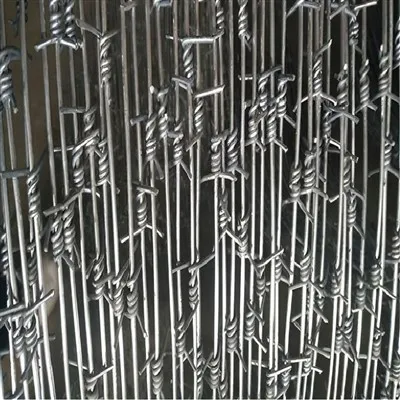
Let’s start with the basics, because not everyone who works with grating every day knows the fine print. Grating is essentially a grid of parallel metal bars connected by cross bars, designed to bear heavy loads, improve slip resistance, and let debris, water, or light pass through. Smooth grating is exactly what it sounds like: bars with a flat, unmodified top surface, left as they come from the mill or a standard cutting process. Serrated grating? That’s smooth grating with small, evenly spaced triangular or rectangular serrations stamped, milled, or pressed into the top of each load-bearing bar. The goal of those serrations is straightforward enough, but their impact on performance, safety, and longevity is where things get nuanced.
I’ve lost count of how many times a client has called me saying, “I just need grating that’s not slippery” and assumed serrated is always the answer. But that’s not the case. Let’s break down the core differences, starting with slip resistance—this is the biggest, most commonly discussed distinction, and it’s where serrated grating earns its reputation as a go-to for high-risk areas. Those tiny serrations create micro-channels that disrupt the thin layer of water, oil, grease, or mud that can turn smooth metal into a slip hazard. Think of walking on a freshly mopped linoleum floor versus walking on a floor with textured anti-slip tiles: the same logic applies here. Smooth grating, even on a well-maintained surface, can become extremely dangerous in wet or oily environments, which is why OSHA and other workplace safety agencies have specific guidelines for slip resistance in industrial settings.
But here’s a detail many people miss: the effectiveness of serrated grating’s slip resistance depends on the depth and spacing of the serrations, and not all serrated grating is created equal. At our facility, we use a precision stamping process that creates serrations 1/8 of an inch deep, spaced 1/4 inch apart, which has been tested to meet ANSI (American National Standards Institute) slip resistance standards for industrial flooring. Cheaper, mass-produced serrated grating often uses shallower, wider serrations that don’t break up liquids as effectively, so it offers barely more slip resistance than smooth grating. That’s a critical point for anyone sourcing this material: not all “non-slip” grating delivers on its promise.
Next up is load capacity and structural performance. A common myth I hear is that adding serrations weakens the grating, but in reality, the difference is negligible for most standard applications. When we stamp serrations into the load-bearing bars, we’re removing a tiny fraction of material—usually less than 2% of the bar’s cross-sectional area. For most projects, that doesn’t have a measurable impact on the grating’s ability to support weight, whether it’s pallet jacks moving across a warehouse walkway or heavy machinery sitting on a platform. Where this does become a consideration is in ultra-heavy load applications, like bridge decks or industrial loading ramps rated for 100,000+ pounds of static weight. In those cases, smooth grating might have a tiny edge, because there’s no intentional material removal, but the difference is so small that most structural engineers still specify serrated grating for safety reasons, unless every last ounce of load capacity is non-negotiable.
Wait, but what about maintenance and longevity? That’s another area where the two types of grating diverge. Smooth grating is incredibly easy to clean. The flat, even surface doesn’t have crevices or sharp edges where dirt, grime, or food residue can get trapped. For spaces like commercial kitchens, where health code compliance depends on being able to fully sanitize every surface, smooth grating is often the better choice. You can spray it down with a pressure washer, wipe it with a sanitizing cloth, and not have to worry about debris hiding in the texture.
Serrated grating, on the other hand, has those tiny gaps and raised edges that can catch debris, oil, and dust. That means it requires a bit more work to clean. In environments where there’s a lot of mud, wood chips, or fine metal shavings, those serrations can even get clogged over time, which reduces their slip resistance and can cause small objects to get stuck if they’re small enough to fit into the gaps. The upside? That textured surface actually resists scuffs and abrasion far better than smooth grating. If you’re dragging heavy tools, metal bins, or pallet feet across the grating, smooth metal will scratch and wear down quickly, creating a shiny, smooth path that’s even more slippery over time. Serrations don’t wear as evenly—they maintain their texture far longer, so the slip resistance stays consistent for years, even in high-traffic areas.
Cost is another big factor, and one that comes up in almost every purchasing conversation. At first glance, smooth grating is cheaper. It’s simpler to manufacture—no stamping, no additional processing steps. But when you factor in long-term costs, that initial savings might be an illusion. Smooth grating in a wet or oily environment will show more signs of wear faster, so you’ll be replacing it sooner. Worse, if an accident happens because the smooth surface was slippery, the liability costs can be enormous. Serrated grating costs a bit more upfront, but it delivers longer slip resistance, lower maintenance needs, and fewer safety-related issues, which adds up to better value over time.
Of course, there are specific scenarios where one type is clearly the better choice, regardless of cost. Let’s walk through some common use cases, because that’s when this information becomes truly useful. If you’re designing a commercial kitchen walkway, a food processing floor, or a medical facility utility platform—spaces where deep cleaning and strict hygiene rules apply—smooth grating is almost always the right pick. It’s easy to sanitize, doesn’t trap food particles or cleaning chemicals, and meets health code requirements in most regions. For areas where slip resistance is non-negotiable: loading docks, outdoor stair treads, chemical processing plants, parking garage ramps, or any space where rain, snow, oil, or grease is a regular occurrence, serrated grating is the standard for a reason.
I also want to address a question I get a lot from architects and engineers: what about corrosion resistance? Wait, does the type of grating affect how it holds up to rust? Not directly, but the texture can play a small role in how corrosion develops. Smooth metal, especially if it’s galvanized (the most common protective coating for steel grating), corroves evenly. Serrated metal, because of the stamping process, can have slightly thinner coating in the serration grooves if the coating isn’t applied properly. That’s why it’s important to work with a supplier that uses consistent, high-quality galvanization processes—at our facility, we use hot-dip galvanization that fully coats every serration, so there’s no weak spot. If you’re buying cheap serrated grating from a supplier that skips proper coating, you’ll see rust develop in those grooves long before the rest of the grating shows signs of wear. That’s another reason to work with a reputable supplier, not a generic hardware store or online bulk seller.
I’ve seen too many projects go wrong because the wrong type of grating was chosen for the space. A few years back, we had a client come to us after they’d installed smooth grating for a loading dock at a auto repair shop. Within six months, they’d had three slip-and-fall accidents, two involving employees and one involving a customer. The repair shop floor regularly had oil and transmission fluid leaks, and the smooth grating couldn’t break up that slippery residue. They ended up ripping out the smooth grating and replacing it with our precision serrated grating, and they haven’t had a single slip incident since. That’s the kind of problem we help clients avoid by getting the choice right from the start.
Another example: a bakery client I worked with a couple of years ago. They were building a new production floor and wanted grating that was slip-resistant, but they also needed it to be easy to clean for health inspections. At first, they pushed for serrated grating, worried about safety, but after we walked through the trade-offs, they opted for smooth grating with a light anti-slip coating added to the surface. It met their hygiene needs, and the coating gave them enough slip resistance for their mostly dry production environment, with only occasional spills of flour or water. That was the right call for their specific space, not a one-size-fits-all recommendation.
At the end of the day, the difference between serrated and smooth grating isn’t just a surface detail. It’s about safety, maintenance, long-term cost, and compliance with industry standards. There’s no universal “best” type—what works for a warehouse won’t work for a hospital, and what works for a bakery won’t work for a chemical plant. That’s why taking the time to understand your specific environment, traffic, and needs is so important.

If you’re currently spec’ing grating for a project, or you’re dealing with existing safety issues with the grating you have, I’m here to help. We’ve worked with everyone from small business owners to large industrial construction teams, and we can walk you through the pros and cons, help you calculate long-term costs, and recommend the right solution for your space. No sales pitch, no pushy follow-up calls—just honest advice based on years of experience in the industry. Reach out to our team to discuss your needs today, and we can help you make a choice that’s safe, cost-effective, and built to last.
Steel Grid For further reference, key industry standards and research on grating performance include:
- American National Standards Institute (ANSI/NAAMM FB100-17) for Steel Bar Grating
- Occupational Safety and Health Administration (OSHA) Slip Resistance Guidelines for Walkway Surfaces
- National Fire Protection Association (NFPA) 101: Life Safety Code for Industrial Flooring
- Corrosion Resistance of Galvanized Steel Structures: A Comprehensive Review (National Association of Corrosion Engineers, 2021)
Anping Chengshuai Slope Protection Engineering Manufacturer
As one of the most reliable serrated grating manufacturers and suppliers in China, we have world-leading production equipment and strong manufacturing capabilities. Please rest assured to buy cheap serrated grating for sale here from our factory. For price consultation, contact us.
Address: 200 meters east of Wanghulin Village, Anping County, Hengshui City, Hebei Province, China.
E-mail: elfwangwang@gmail.com
WebSite: https://www.chengshuaislopeprotection.com/
