If you’ve ever stepped into a commercial brewhouse during a busy brew day, you know it’s equal parts organized chaos and precision engineering. Coppers glinting under LED lights, hoses snaking between tanks, and a team of brewers moving in sync to mash, boil, and ferment beer—every action here is tied to one unspoken rule: cleanliness is non-negotiable. That’s where a CIP system comes in, and as a brewhouse system supplier, I can tell you it’s not just a fancy acronym. It’s the backbone of consistent, safe, and compliant craft beer production. Let me break down what a CIP system for a brewhouse actually is, why it matters, and why it’s one of the most critical investments a craft brewery can make. Brewhouse System
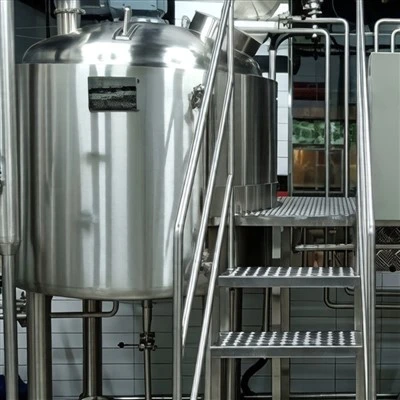
First, let’s unpack the acronym: CIP stands for Clean-in-Place. Unlike the old-school method of taking apart every single pipe, valve, and tank to scrub by hand—something that was not only labor-intensive but also risked human error, cross-contamination, and damage to sensitive equipment—CIP is a automated, closed-loop process that cleans all internal surfaces of your brewhouse, fermenters, bright tanks, piping, and even fill lines without disassembly. That might sound straightforward, but it’s far from a one-size-fits-all setup. A brewhouse’s CIP system has to be tailored to the specific design of your tanks, the types of beer you brew, and the volume you produce. As someone who’s spent the last 12 years working with craft breweries, from 10-barrel nanobreweries to 100-barrel regional producers, I’ve seen firsthand how a poorly matched CIP system can derail a month’s worth of brew runs, while a well-engineered one can save weeks of labor and prevent costly batch rejections.
Let’s talk about how CIP works in practice, because it’s not just flipping a switch and walking away. A typical brewhouse CIP cycle is a sequenced process with four key phases, each with strict temperature, flow rate, and chemical concentration requirements. The first phase is pre-rinse: you send cold or lukewarm water through all the lines, tanks, and connections to flush out leftover beer, wort, or yeast. This step is crucial because removing the bulk of organic material early prevents it from baking onto surfaces during the next, hotter steps. If you skip or rush the pre-rinse, you’ll end up with hard-to-remove protein or malt residues that harbor bacteria, leading to off-flavors in your next brew. For example, a brewery that brews hazy IPAs—high in wheat and oat proteins—needs a longer pre-rinse than one that only brews lagers with simpler malt bills, a detail I always work into my system designs for clients.
Next comes the caustic wash phase. This is the workhorse of CIP, using a heated solution of sodium hydroxide (lye) at concentrations between 0.5% and 2% and temperatures ranging from 140°F to 180°F. The hot caustic solution dissolves and saponifies fats, proteins, and stubborn organic residues that the pre-rinse missed. It also has the added benefit of sanitizing surfaces, though we never rely on it alone for full sanitization, especially for packaging lines. Flow rate is non-negotiable here too: the solution has to hit the internal walls of pipes and tanks at a minimum velocity of 2 to 3 meters per second. If it flows too slow, it creates dead zones where residue can build up; too fast, and you risk damaging seals or wasting excess chemical. I always adjust these parameters based on a brewery’s pipe diameter and tank size—something many cheap, pre-built CIP systems don’t account for, leading to inconsistent cleaning.
After the caustic wash, you do a mid-rinse with warm water to flush out all the caustic solution and dissolved residue. This is followed by an acid rinse, usually with phosphoric or nitric acid, at concentrations of 0.5% to 1% and temperatures around 120°F to 140°F. The acid’s job is to remove mineral deposits—hard water scale, beer stone from tannins and hop resins—that build up on surfaces over time. Beer stone is a silent culprit: it’s not just unsightly; it creates rough patches where bacteria and yeast can hide, and it can even alter the pH of your beer during fermentation. I’ve had clients come to me saying their IPA has a bitter, metallic off-flavor, only to find ¼-inch thick beer stone lining their fermenter walls. A proper acid rinse phase eliminates that before it becomes a problem.
The final phase is the final rinse, usually with cold or potable water, to flush out the acid before the CIP cycle ends. Some systems add a final sanitizer step here, using food-grade sanitizers like peracetic acid or chlorine dioxide, which kills any remaining pathogens and ensures your equipment is ready for the next brew run. The entire cycle usually takes between 30 and 90 minutes, depending on the size of the system—way faster than manual cleaning, which can take 4 to 6 hours per batch for a 10-barrel brewhouse.
Now, why is this such a big deal for brewers? Let’s start with consistency. Every brewer knows that even a tiny batch can turn out different if there’s a variable in the process. CIP eliminates human error—no more one brewer scrubbing a tank a little longer than another, no more missed spots because someone was in a rush to get the next brew running. That consistency translates to consistent beer, which is what keeps customers coming back and what makes distributors willing to take on your brand. I had a client in Oregon who switched from manual cleaning to a custom CIP system I designed, and within six months, their batch rejection rate dropped from 12% to less than 2%. That’s thousands of dollars saved every year, not to mention the peace of mind that their beer is the same every time it leaves the taproom.
Then there’s safety and compliance. The craft beer industry is heavily regulated—by the TTB in the U.S., by similar bodies in the EU and other regions—and cleaning protocols have to meet strict food safety standards. A CIP system provides documented cycles, with timestamps, temperature logs, and chemical concentrations, which is essential for audits. No more guessing whether your cleaning process meets regulatory requirements; the system tracks every detail, so you can prove to inspectors that your equipment is being properly cleaned. I always make sure my systems are calibrated to meet local food safety codes, and I walk clients through how to access their cycle data for audits—something that’s become a huge priority for small brewers who might not have a dedicated food safety team.
Cost savings are another big one. While the upfront cost of a CIP system might seem steep for a new brewery, it pays for itself quickly. Manual cleaning requires more labor: you need to hire extra staff or have your brewspend time scrubbing instead of brewing. A 10-barrel brewhouse might spend 10+ hours a day on manual cleaning, which is time that could be used to brew more beer, develop new recipes, or run tastings that drive sales. CIP also reduces water and chemical waste: the closed-loop design reuses most of the water and chemical solutions, instead of flushing them down the drain after every use. I’ve seen clients cut their water usage for cleaning by 50% or more, which is not only better for the environment but also saves on utility bills. Plus, CIP is gentler on equipment than manual scrubbing—no more abrasive brushes scratching tank walls or pipes, which can harbor bacteria and shorten the life of your brewhouse.
But here’s the thing: not all CIP systems are created equal. As a supplier, I’ve seen way too many breweries buy a cheap, off-the-shelf CIP system that’s meant for generic industrial applications, only to realize it doesn’t work for their specific needs. For example, a nanobrewery with a 2-barrel brewhouse doesn’t need a CIP system designed for a 50-barrel production facility. A brewery that brews sour beers, which require extra strict cleaning to avoid cross-contaminating with other beers, needs a system that has separate tanks for caustic and acid solutions, to prevent mixing. A brewery that does canning and bottling needs a CIP system that can handle small-diameter fill lines, which have different flow rate requirements than large fermentation tanks. One of my first clients, a small sour brewery in Colorado, came to me after their pre-built CIP system cross-contaminated a batch of their rare wild ale with a pilsner they brewed the week before. We redesigned their CIP with dedicated, separate solution tanks for their sour beer lines, and they haven’t had a cross-contamination issue since.
Modern CIP systems also have smart features that make them even more effective. Many of the systems I design now have automated controls that adjust temperature and flow rate in real time based on sensor data—if a line is longer than expected, the system extends the wash time. Some have pressure sensors that detect if there’s a clog in a pipe, so you don’t run a partial clean that leaves residue behind. There are also remote monitoring options, so brewers can check if their CIP cycle is running on schedule from their phone, even when they’re at a distributor meeting or testing a new hop recipe. For craft breweries that are growing fast, these smart features mean their CIP system can adapt as they add more tanks or expand their production.
Now, I want to be honest—CIP systems aren’t perfect, and they require some maintenance. You have to regularly test chemical concentrations, clean the solution tanks to prevent buildup, and calibrate sensors to make sure they’re accurate. But that maintenance is minimal compared to the payoff. I provide my clients with a detailed training session when their system is installed, and I offer ongoing support to troubleshoot any issues. A lot of breweries think they can install a CIP system and forget about it, but like any piece of brewhouse equipment, it needs regular upkeep to work at its best.
If you’re a brewery owner or operator, whether you’re just starting out with a 1-barrel nanobrewery or scaling up to production volumes, a CIP system isn’t a luxury—it’s a necessity. It’s the difference between inconsistent, risky batches and beer that’s safe, compliant, and reliable for your customers. It’s the difference between spending all your time cleaning and spending your time brewing great beer and growing your business.

At the end of the day, what I love most about working with brewhouse systems is that I’m not just selling equipment—I’m helping craft breweries thrive. I’ve seen how a well-designed CIP system can turn a small brewery into a local favorite, and eventually a regional staple. If you’re tired of dealing with inconsistent cleaning, batch rejections, or the hassle of manual cleaning, let’s connect to talk about what a CIP system for your brewhouse would look like. We’ll walk through your brew schedule, your tank and pipe layout, your production goals, and design a system that fits your needs, not a one-size-fits-all template. Let’s make your cleaning process work for you, not against you.
Stainless Steel Tanks References
- Schneider, R. (2020). Brewing: Principles and Practices for Quality Beer Production. Brewers Publications.
- Food and Drug Administration. (2022). Food Safety Modernization Act (FSMA) Preventive Controls for Human Food. U.S. Department of Health and Human Services.
- Meilgaard, M., Siebert, K. J., & Boulton, R. (1999). Technical Brewing: A Comprehensive Approach. Master Brewers Association of the Americas.
- European Brewery Convention. (2019). Guidelines for Clean-in-Place (CIP) Systems in Breweries. EBC Publications.
- Stewart, G. G., & Russell, I. (2018). Beer: A Quality Perspective. Academic Press.
Wenzhou Jinggong Machinery Equipment Co., Ltd.
We are one of the most professional brewhouse system manufacturers and suppliers in China. With abundant experience, we warmly welcome you to buy customized brewhouse system at competitive price from our factory. If you have any enquiry about quotation, please feel free to email us.
Address: No.Jiadi Industrial Zone, Yaoxi Town, Longwan District, Wenzhou City, China.
E-mail: jinggong2026@163.com
WebSite: https://www.jg-ind.com/
