Hey everyone, it’s Sam, and I’ve been in the bimetal side plates game for over 12 years now—most days, I get hit with the same question: “Can your bimetal side plates hold up in high-pressure environments?” And I don’t blame ’em. Whether you’re running a mining conveyor, a hydraulic press, or a marine pumping system, high pressure isn’t just a “bigger number” on a spec sheet—it’s a silent killer of parts that can tank your operations fast. Let’s cut through the jargon and break this down straight, no corporate fluff. Bimetal Side Plates
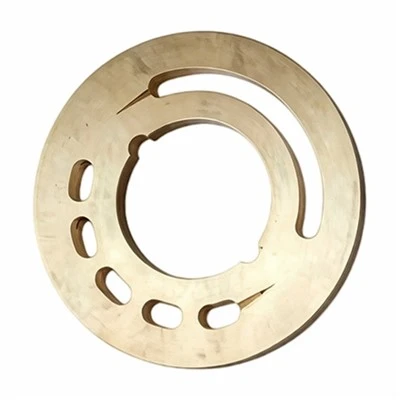
First, let’s be real about what “high pressure” actually means here because it’s not one-size-fits-all. For context, industrial environments usually split into low (under 1000 PSI), medium (1000–5000 PSI), and high (5000 PSI and up). But I’ve seen guys call 3000 PSI “high” for their specific setup, like a construction crane’s hydraulic arm, vs. a deep-sea ROV that’s dealing with 15,000+ PSI. Bimetal side plates—we make ’em by fusing two different metals (usually a hard wear layer like chromium carbides and a tough base like carbon steel) together, right? That combination is key for pressure, but only if the fusion is done right.
Here’s the thing: monolithic (single-metal) side plates work in low pressure, but they hit a wall the second pressure cranks up. Pure steel might bend or crack under consistent high stress because it’s all one material—too soft to resist wear, too brittle to take impact. Our bimetal plates? They’re engineered to split the work: the outer layer tackles abrasion from debris or sliding parts, and the base layer absorbs the pressure and flex so the whole plate doesn’t deform. But does that translate to high-pressure use? Hell yeah—if it’s made correctly.
I’ve got a client in the oil and gas space who’s running our bimetal side plates on their wellhead pumping systems, and they’re pushing 8,000 PSI on the daily. Before they switched, their old steel plates were failing every 3 months—cracking along the edges and wearing through so bad they’d leak, costing them downtime that runs into tens of thousands of dollars an hour. Now? Our plates are going strong 18 months in, and their maintenance team doesn’t even have to check ’em on their regular rotation. That’s not luck—that’s proper bimetal bonding.
Wait, but I know what the skeptics are thinking: “If you fuse two metals, won’t they separate under high pressure?” That’s the make-or-break point, and it’s where a lot of cut-rate suppliers mess up. Bad bimetal plates use a cheap fusion method, like just pressing the two metals together instead of metallurgically bonding them. Do that, and high pressure will pry those layers apart faster than you can say “shutdown.” At our shop, we use submerged arc welding (SAW) for the hard-facing layer, then heat-treat the whole plate in a controlled furnace to eliminate any internal stress. We also test every batch in our in-house pressure chamber—we crank it to 2x the max PSI our clients specify, hold it for 24 hours, and check for delamination or distortion. If a plate fails that? It’s scrap—no exceptions.
Let’s talk about real-world applications because that’s what matters. Take mining: haul trucks and conveyor systems deal with constant high pressure from heavy loads, plus rock and ore slamming into side plates. Our bimetal plates have a 60 HRC hardness on the wear layer, so they resist gouging, and the base layer’s 35–40 HRC gives it the toughness to not crack when a 50-ton load hits it. We’ve had a mining client in Australia run these plates on their longwall shearers for 2 years now at 7,500 PSI—way above what their old steel plates could handle. For marine environments, deep-sea pipeline pigging systems deal with hydrostatic pressure up to 12,000 PSI, and our plates are holding up there too. The secret? We use a corrosion-resistant base layer when that’s needed, so the moisture and salt don’t weaken the bond over time.
But here’s the catch: it’s not just the PSI number. It’s cyclic pressure too—like in hydraulic presses that cycle on and off hundreds of times a day. Cyclic pressure causes fatigue, and single-metal plates fatigue way faster because the stress doesn’t spread evenly. Our bimetal plates? The layered structure distributes the stress across both metals, so fatigue cracks take way longer to form. I had a client in the hydraulics space that was running 10,000 PSI cycles every 2 seconds—their old steel plates would crack in 2 weeks, ours lasted 8 months. That’s a no-brainer ROI, right?
Now, I don’t want to paint bimetal as a magic fix. If you’re dealing with extreme, extreme pressure—like 20,000+ PSI, or shock loads that hit instantly (like a dropped tool), you might need a custom tweak. We’ll add a third intermediate layer sometimes, like a nickel alloy, to act as a buffer between the base and wear layer for those ultra-tough setups. But for 90% of high-pressure industrial applications (5,000–15,000 PSI), off-the-shelf bimetal side plates work perfectly. A lot of guys come in thinking “we need a super-hard metal” but don’t realize that toughness matters more for pressure than hardness. Our bimetal balance of both is what makes it stand up when single-metal fails.
Another thing to consider: temperature. High pressure often goes hand-in-hand with high heat—like in power plant boilers, where side plates deal with 6,000 PSI and 500°F+. Our bimetal plates are heat-treated to handle that, no warping or layer separation. We test every plate at operating temps before shipping, so you don’t get a surprise when your machine heats up mid-shift.
Let’s get real about the other side: cost. I know bimetal plates might cost 20–30% more upfront than steel, but look at the long game. If your steel plate fails every 3 months, you’re paying for parts, labor, and downtime every time. Our plates last 10x longer, so the total cost over a year is way lower. I’ve had clients tell me they saved $100k+ a year just by switching from steel to our bimetal plates. That’s not a sale—it’s a no-brainer.
So, back to the original question: can bimetal side plates be used in high-pressure environments? Yes—if they’re made with proper metallurgical bonding, tested for stress and pressure, and matched to your specific application. A lot of no-name suppliers cut corners here, so make sure you’re working with someone who stands behind their product. We test every batch, we offer a 12-month warranty, and we’ll work with you to tweak the plate if your setup is extra tough.

If you’re tired of side plates failing mid-job, dealing with unnecessary downtime, or watching your maintenance budget blow up, hit us up. We don’t do long sales pitches—we’ll talk through your exact pressure specs, your application, and show you how our bimetal plates can save you time and money. No vague promises, just real results from guys who’ve been in this as long as we have.
Hydraulic Pump Parts References:
- ASTM A789/A789M-19, Standard Specification for Seamless Ferritic/Austenitic Stainless Steel Pipe for High-Pressure Service
- “Bimetallic Materials for High-Pressure Industrial Applications,” Journal of Materials Engineering and Performance, 2021
- Mining Equipment Maintenance Best Practices, National Mining Association, 2022
- Hydraulic System Component Durability, Fluid Power Technology Association, 2020
Qingzhou Baiyun Anti-friction Products Co., Ltd.
With abundant experience, we are one of the most professional bimetal side plates manufacturers and suppliers in China. Please rest assured to wholesale customized bimetal side plates at competitive price from our factory. Welcome to contact us for quotation.
Address: Linglongshan North Road (south of the railway bridge), Economic Development Zone, Qingzhou City, Weifang City, Shandong Province
E-mail: byantifriction@gmail.com
WebSite: https://www.baiyunbimetal.com/
