Hey everyone, thanks for dropping by—if you’re here, chances are you’re either new to sourcing steel or you’ve been burned before by mixing up carbon steel coil with other types (like stainless or alloy) that don’t fit your project needs. I’m Jake, been working in carbon steel supply for 12 years now, and I’ve seen way too many folks waste time, money, even materials because they couldn’t tell the difference between the real stuff and lookalikes. Today, I’m breaking down exactly how to identify carbon steel coil—no fancy engineering jargon, just real, easy-to-use tips I actually tell my own customers. Carbon Steel Coil
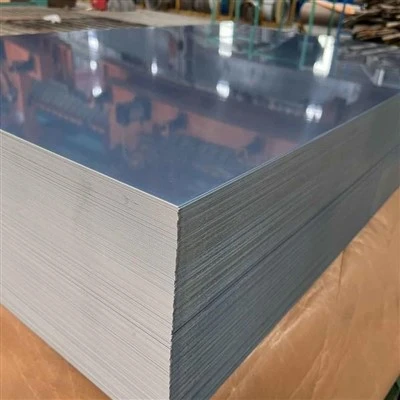
First, let’s get one thing straight: carbon steel coil isn’t just “steel that has carbon.” It’s a specific type where carbon content makes up 0.05% to 2.1% of the total alloy weight. Anything less than that is basically low-carbon steel with too little strength, and more than that turns it into cast iron, which is way too brittle for most coil uses (think automotive parts, construction frames, pipes—you get the idea). The problem? A lot of suppliers will label other steel coils as “carbon” to move product, so you need to check these basics first.
Let’s start with the most obvious, no-tools-needed trick: the magnet test. Wait, before you laugh, hear me out. Carbon steel is ferromagnetic—meaning it sticks to magnets. Stainless steel? A lot of common stainless (like 304 or 316) is austenitic, which is non-magnetic, so it won’t stick. The only stainless that is magnetic is the ferritic or martensitic types, but those are way less common for coil work, and even then, they stick weakly, not like carbon steel. I do this with every single coil I get in my warehouse—grab a cheap fridge magnet, hold it to the edge of the cut coil (not the paint if it’s coated, the bare metal edge), and if it grabs tight and doesn’t move, that’s a solid sign it’s carbon steel. If it barely sticks or not at all? Walk away. I once had a customer bring in a coil they bought online that had a weak magnet stick—turned out it was stainless they were using for a farm fence, not the structural carbon they needed. Saved them a $2k mistake with that 10-second test.
Next, visual inspection, but not just “it looks like steel.” Carbon steel coil typically has a dull, grayish-silver, matte finish. When you cut it, the edge is that same dull color, not the bright, shiny, silvery sheen of stainless steel. Wait for galvanized? That’s a whole other thing—galvanized is steel coated with zinc, so it’s bright gray with a spangle (that tiny, star-like pattern) on the surface, but the base steel underneath the zinc is still carbon. Another visual cue: rust speed. Carbon steel rusts way faster than stainless. If you leave a sample of carbon steel coil out in a damp garage, you’ll see surface rust within a few days, sometimes even hours if the humidity’s high. Stainless? It might take months to show a tiny spot. I test this all the time with small test coupons I keep by my desk—throw a sample from a new batch next to a stainless sample, and the difference is obvious in a week. That said, if the coil is pre-painted or pre-galvanized, this trick doesn’t work—you have to get to the bare metal edge.
Now, if you want to get a little more precise (like for structural or high-stress projects), the spark test is easy, no lab required. Grab a grinder with a fresh, medium-grit wheel—don’t use a thin cutoff wheel, that’ll give you wacky sparks. Hold the grinder to the bare edge of the coil for 2 to 3 seconds, and watch the sparks. Carbon steel sparks will be short, thin, and they’ll fork a little, but not a ton. The higher the carbon content, the more sparks you get—low-carbon (like for ductwork) has faint, almost wispy sparks, while medium or high-carbon (for springs or tools) has more dense, bright sparks. Stainless steel, on the other hand, produces very few sparks, they’re super dim, and almost no forking. I’ve done this test with new suppliers’ samples so many times—last month, a guy brought in a coil labeled “high-carbon” that had sparks like stainless, so I sent it back. He was confused, but once I showed him the difference, he got why that’s a no-go.
Wait, but what about the paperwork? A lot of people skip this, but that’s the biggest mistake. Every legitimate carbon steel coil supplier (myself included) will provide a mill test report (MTR) when you order. This isn’t some fancy document—It lists the chemical composition, including carbon content. Look for a number between 0.05% and 2.1% under the “carbon” or “C” line. If it’s below 0.05%, that’s commercial steel, not carbon steel, and if it’s over 2.1%, it’s cast iron, which will crack when you bend it. I’ve had so many customers not ask for MTRs and end up with material that snaps when they try to roll it, which cost them weeks of downtime. Pro tip: if a supplier won’t send an MTR before you place an order, that’s a red flag. I send mine 100% of the time—no questions asked, because I stand behind my product.
Another thing to watch out for: mislabeled grades. Common carbon steel coil grades are A36, A572, SAE 1006, SAE 1010—these are all industry standards. If the coil is labeled “carbon steel” but the grade isn’t one of these, do a quick Google search for that grade. I once saw a supplier label a coil as “carbon steel grade XYZ” that was actually a low-grade alloy that rusted 10x faster than regular carbon steel. The MTR will list the grade, so cross-checking that takes 2 minutes and saves you a headache.
Let’s talk about common mix-ups, too. A lot of people confuse carbon steel with alloy steel. Alloy steel has other elements (like chromium, nickel) added in more than 5%, while carbon steel only has carbon, manganese, silicon, and small traces of other stuff (all under 1%). So alloy steel will have a more polished look, maybe a bit of a blue tint, and the magnet test might be similar, but the spark test will have more sparks than low-carbon, less than high-carbon. But for most projects, you don’t want alloy steel—it’s way more expensive, and you don’t need it if carbon will work.
Wait, what if you’re buying a smaller coil, like for a DIY project or a small fabrication? The same rules apply, but you can also do a bend test. Carbon steel coil is ductile—if you take a 1-inch strip, bend it back and forth a few times, it will flex without breaking. If it’s stainless, it’s way more rigid, and alloy steel is super hard, so it’ll snap on the first bend. I always tell hobbyists this one—no fancy tools needed, just a pair of pliers.
Let me share a real story that drives this home. A couple years back, a small construction company reached out to me after they bought a coil set from another supplier for framing their warehouse. They were having issues with the beams rusting in the rain, and when they brought a sample, it turned out to be a mix of stainless and low-carbon steel. The supplier they used before didn’t do any of the tests I just mentioned, and ended up making them redo half the framing. We supplied them with A572 carbon coil, sent over the MTR, and they’ve been a repeat customer ever since. That’s why I care about this stuff—this isn’t just steel, it’s what people use to build their homes, their businesses, their equipment.
Now, let’s recap the quick checklist so you don’t have to scroll back:
- Magnet test: Tight stick to bare metal = good sign. Weak or no stick = run.
- Visual: Dull gray, matte finish. Brilliant shine = probably not carbon.
- Rust test: Leaves a rust spot in 1-3 days (damp conditions) = carbon. No rust = stainless.
- Spark test: Short, forkable sparks = carbon. Dim, few sparks = stainless.
- MTR Check: Carbon content between 0.05% and 2.1% = legitimate. Below or above = bad.
I know there’s a lot of info here, but trust me—these 5 steps will save you so much frustration. If you’re in the market for carbon steel coil, don’t waste time guessing. I’ve got a huge inventory in stock right now, in all common grades (A36, A572, SAE 1006, SAE 1010) with MTRs ready to go. Whether you’re doing a small 500-pound order for a DIY project or a 50-ton shipment for a construction run, hit me up to chat through exactly what you need. No sales pitches, just honest advice and product that works.
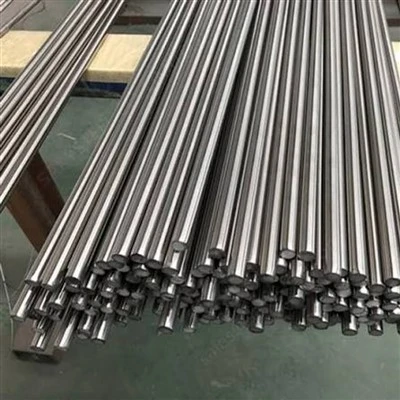
At the end of the day, carbon steel is one of the most versatile, cost-effective materials out there, but only if you get the real stuff. Don’t let someone sell you a lookalike that’ll fall apart or cost you extra. Stick to these tips, and you’ll be golden.
Stainless Steel References
ASM International. (2020). Carbon Steel: Properties, Production, and Applications. ASM Handbook, Volume 1: Properties and Selection: Irons, Steels, and High-Performance Alloys.
The Fabricator. (2022). Identifying Steel Grades: Spark Test Basics. The Fabricator Magazine.
American Iron and Steel Institute. (2021). Carbon Steel Coil: Quality Standards and Testing Requirements. AISI Technical Bulletin.
Wuxi Jin Ming Jian De Industry & Trade Co., Ltd.
Wuxi Jin Ming Jian De Industry & Trade Co., Ltd. is one of the most professional carbon steel coil manufacturers and suppliers in China, also supports customized service. With abundant experience, we warmly welcome you to wholesale CE approved carbon steel coil in stock here from our factory. If you have any enquiry about quotation, please feel free to email us.
Address: 2102-2105, Yuexing Building, Guangnan Road, Liangxi District, Wuxi City, Jiangsu Province, China.
E-mail: info@wxjmjdss.com
WebSite: https://www.jmjdsteelexp.com/
