If you’ve ever walked through a machine shop, you’ve probably heard the high-pitched whine of a CNC turning lathe long before you saw the setup. As someone who’s spent the last decade sourcing, testing, and supplying CNC turning components for everything from automotive parts to medical devices, I can tell you this: the magic behind a perfect turned part isn’t just the machine itself—it’s the tools that work with it. A lot of people reach out to me asking, “What tools do I actually need for CNC turning, beyond just the lathe?” So today, I’m breaking down the real, used-in-the-shop tools (not the textbook fluff) that make CNC turning tick, plus some tips I’ve picked up supplying clients all over. CNC Turning
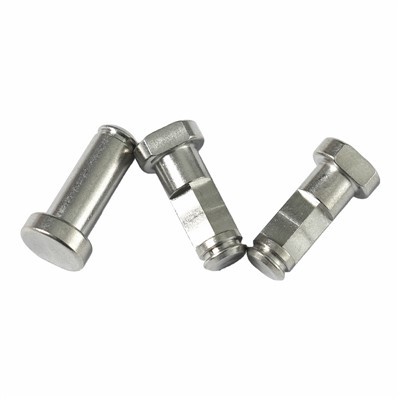
First, let’s start with the core of every turning operation: cutting tools. This is where most people cut corners (pun totally intended) and end up with chipped parts, scrap material, or slow run times. I used to get a call from a new client all the time complaining their tools were wearing out in half the expected life—turns out they were grabbing cheap inserts from a random supplier, not realizing insert grades make all the difference. There are three main types of inserts you’ll run into, depending on the material you’re turning. If you’re working with steel (think brackets, shafts, hardware), you’ll use carbide inserts, specifically a tungsten carbide grade with a titanium nitride (TiN) or titanium carbonitride (TiCN) coating. These handle the high heat and friction of steel turning way better than uncoated inserts. For stainless steel (used a lot in food equipment, medical parts), you want a heat-resistant carbide insert, often with an aluminum titanium nitride (AlTiN) coating—trust me, this is non-negotiable; stainless is way stickier than regular steel, so you need that coating to keep it from welding to the insert. And if you’re turning non-ferrous materials like aluminum, brass, or copper (super common for electrical parts, decorative components), you need a sharp, precision-ground carbide insert—no thick coating here, it’ll build up too much heat and cause built-up edge (BUE, that gunk that forms on the tool and ruins the surface finish). I always tell my clients: match your insert grade to your material, not the other way around. We supply every grade we test for, and we’ve had way fewer returns since we started walking new clients through this.
Next up: tool holders. Inserts are useless without a good tool holder to mount them, and the right holder can change your entire operation. I’ve seen guys use a generic holder that’s too short for a deep turning pass, and they end up with tool chatter—that annoying vibration that leaves a wobbly, imperfect surface and wears out inserts way faster. There are two main categories of tool holders for CNC turning: external (for turning the outside of a part, like a shaft or bolt) and internal (for boring, turning the inside of a hole, like a tube or pipe). For external turning, you’ll want a rigid, steel-shanked holder with a 90-degree or 45-degree angle, depending on if you’re doing roughing (removing a lot of material fast) or finishing (getting a smooth surface). Roughing holders are sturdier, with thicker shanks to handle heavy cuts, while finishing holders might have a lighter profile for tighter spaces. For boring, you need a bar with a solid shank—no hollow, flimsy ones. I once had a client who was using a cheap hollow boring bar for a 6-inch deep hole, and it bent halfway through, ruining a $200 block of titanium. Oops. Also, don’t forget about tool holder inserts themselves—some holders use indexable inserts that you can flip or replace quickly, which is a huge time-saver. If you’re doing small-batch runs, indexable holders are a game-changer; for high-volume, single-part runs, a solid carbide tool bit might be more cost-effective, but most of our clients go indexable for the flexibility.
Then there’s workholding tools—this is what keeps your part fixed to the lathe spindle, and if it’s not secure, you’re going to have a bad time. The go-to here is a 3-jaw chuck. It’s self-centering, which means it clamps a round part perfectly in a few seconds, and it’s ideal for most external turning. But wait—if you’re turning irregularly shaped parts, or parts that need to be machined on two sides, a 4-jaw independent chuck is better. It lets you adjust each jaw individually, so you can center non-round shapes, or hold a part that’s already been machined on one side. For longer parts, you might use a tailstock center, which is a point that presses into the end of the part to keep it from bending or vibrating at high speeds. We had a client recently turning 3-foot-long aluminum shafts and they were getting a bow in the middle every time they ran it without a tailstock—adding that tiny center fixed it immediately. And for parts that are too small to hold in a chuck (or too delicate), there are collets. Collets fit into the chuck and have a slotted, tapered design that clamps parts evenly, which is way gentler on small, precision parts like pins or connectors. A lot of people sleep on collets, but if you’re doing fine finishing on small components, they’re non-negotiable.
Next, let’s talk about tooling for secondary operations that happen right on the lathe—CNC turning isn’t just turning; you can do threading, grooving, facing, even part-off all on the same machine. For threading, you need threading inserts, which have a precise profile matching the thread you need (like UNF, metric, or NPT for pipes). These are indexable too, so you can switch between thread sizes fast. For grooving, you have grooving inserts that are thin and sharp, designed to cut a narrow groove around a part—think retaining ring grooves or seal grooves. Part-off tools are the ones that cut the finished part off the raw material once it’s done being machined. These are super specialized; you want a part-off tool with a sharp edge and a rigid holder so it doesn’t chatter or bend when it’s cutting through the full diameter of the bar. I always advise against using a regular turning insert for part-off—you’ll get a bad cut and possibly damage your lathe. We keep a full stock of part-off tools in different widths for this exact reason.
Don’t sleep on support tools either—these are the things that make your operation run smooth, even if they’re not the flashy inserts or chucks. First, cutting fluid (or coolant, whatever you call it). CNC turning generates a ton of heat, and if you don’t have proper coolant, your inserts will wear out fast, your parts might warp, and you’ll get that BUE I mentioned earlier. Coolant also flushes away the chips so they don’t get stuck in the cut and scratch your part. There are different types: soluble oil for general turning, synthetic coolant for high-heat operations, and straight oil for hard materials like titanium or Hastelloy. I tell our clients to always have their coolant set to the right concentration—too weak and it doesn’t work, too strong and it causes foaming and skin irritation for the operators. Then there’s chip management tools. Turning produces a lot of chips, and long, stringy chips can wrap around your part or tool and cause crashes. Chip breakers on inserts help break chips into small, manageable pieces, but you can also add a chip conveyor to your lathe to move chips away automatically. We always recommend chip conveyors for high-volume runs; they save so much time on cleanup and prevent accidents.
Wait, let’s also talk about inspection tools, because CNC turning is all about precision—even a tiny error can make a part unusable. The main one is a micrometer, used to measure external diameters with super high precision (down to 0.001 inches). For internal diameters, you need an inside micrometer or a bore gauge. And if you’re doing really tight tolerance work (like medical parts that need to be within 0.0005 inches), you’ll use a coordinate measuring machine (CMM) or a digital vernier caliper with high resolution. A lot of new machinists skip the digital tools and use old-school ones, but digital calipers are way faster and less prone to human error. We always include a quick inspection cheat sheet with every CNC turning quote we send out, listing the tools we use to verify part dimensions, so clients know exactly what goes into the quality.
Now, I want to be real with you—there’s a lot of garbage out there when it comes to CNC turning tools. You’ll see cheap inserts on eBay for $5 a pack, but they’ll wear out after 10 parts instead of 100, and they can damage your lathe if they chip mid-cut. As someone who’s been in this supplier game for years, I’ve tested dozens of tool brands, and the ones that hold up are the ones made for the specific operation, not the cheapest option on the shelf. We don’t cut corners on our tools because our customers rely on us to get parts right, on time, and without headaches.
If you’re new to CNC turning, or if you’re looking to upgrade your current operation, don’t just go buying random tools—talk to someone who knows the process. We’ve helped dozens of small shops and large manufacturers figure out exactly what tools they need for their specific materials and part types, no pushy sales tactics, just straight-up advice. If you’re tired of scrap parts, worn-out tools, or slow run times, reach out. We can walk you through everything from insert grades to tool holders, and make sure you’ve got the right setup for your CNC turning projects.
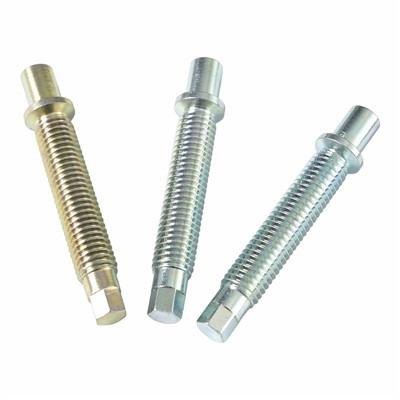
At the end of the day, CNC turning is part machine, part skill, and part tooling. You can have a top-of-the-line lathe, but if your tools are garbage, you’ll never get the parts you need. I’ve seen it too many times. That’s why we focus on supplying quality, tested tools, not just moving product. If you’re looking for CNC turning components or tooling to level up your operation, hit us up. No nonsense, no hidden fees, just the tools and parts you need to get the job done right.
Copper Turning References:
- Smid, P. (2003). CNC Turning Handbook: A Practical Guide to CNC Turning Programming and Operation. Industrial Press Inc.
- DeGarmo, E. P., Black, J. T., & Kohser, R. A. (2020). Materials and Processes in Manufacturing (13th ed.). Wiley.
- Canadian Manufacturers & Exporters. (2022). Best Practices for CNC Turning Tooling Selection and Maintenance. Industry Technical Report.
- Tooling U-SME. (2021). Cutting Tools for CNC Turning: Grade Selection and Application. Vocational Training Report.
Huizhou Quanyi Precision Hardware Products Co., Ltd.
We’re well-known as one of the leading CNC turning manufacturers and suppliers in China, featured by quality products and good service. Please rest assured to buy customized CNC turning made in China here from our factory. Contact us for more details.
Address: Building A10, 7th Floor, Zhongchuangyingke 5G Industrial Park, Zhonghan Industrial Park, Tonghu Town, Huizhou City
E-mail: info@qycncturning.com
WebSite: https://www.qycncturning.com/
