When I first started as a Plastic Carry Handle supplier over a decade ago, I’ll admit I didn’t give much thought to the safety of these small pieces of plastic beyond their ability to hold grocery bags tight. Back then, the industry was focused on durability and cost—two factors that kept my clients, mainly small grocery chains and packaging companies, coming back. It wasn’t until a regular client, a produce distributor, asked me, “Can these handles touch my peaches? I don’t want customers worrying about plastic on their food,” that I really dug into the science of what makes plastic packaging accessories safe for food contact. That question turned out to be the start of a journey that’s shaped how I run my business today. Plastic Carry Handle
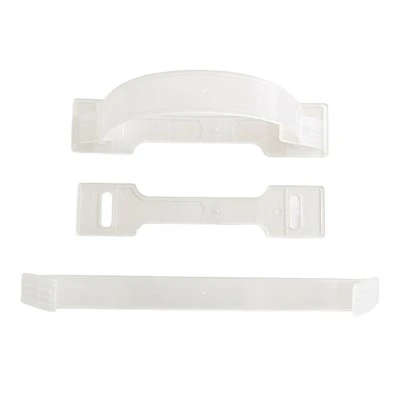
Today, when a new client reaches out asking if our plastic carry handles are safe for food products, I don’t just give a yes or no answer. I walk them through the testing, the regulations, and the everyday realities of how these handles interact with food. A lot of the confusion out there comes from mixing up different types of plastic, or assuming all plastic is the same. Let me break this down the way I do with my clients, using the real data and practices we rely on at my facility.
First, it’s critical to understand that not all plastic carry handles are created equal. The handles we produce for food-related packaging are made from high-density polyethylene (HDPE) or polypropylene (PP)—two thermoplastics that are widely recognized as safe for food contact by global regulatory bodies. These plastics have molecular structures that don’t easily break down or leach chemicals when they come into contact with common food items: from fresh produce like apples and leafy greens to dry goods such as cereal, rice, or snack foods. In contrast, lower-quality plastic carry handles made from recycled plastics that haven’t been properly sorted or tested might contain trace amounts of other materials, which is where the safety risk comes in. That’s why every batch of handles we make goes through a series of mandatory tests before it leaves our warehouse.
We don’t cut corners on testing, and neither should any supplier claiming to offer food-safe plastic carry handles. The first test we run is for migration of chemicals—meaning we simulate how the handle would interact with food over time. For solid foods, this is a simple test where we place the handle in contact with a food simulant (usually a fatty substance like olive oil or a water-based solution, depending on the type of food the package will hold) for a set period, at temperatures ranging from room temperature to what a bag might experience on a hot delivery truck. Then, we send the simulant to an independent lab to check for any chemicals that have moved from the plastic into the simulant. The results have to meet strict limits set by the U.S. Food and Drug Administration (FDA), the European Food Safety Authority (EFSA), and other global regulatory groups. If a batch doesn’t pass, we send it back for reprocessing—no exceptions.
Another key point is how plastic carry handles are used in the real world. Most food packages with carry handles aren’t in direct, constant contact with food. Think about it: a handle on a gallon jug of milk is attached to the cap area, not the inside of the jug that holds the milk. A handle on a bag of potatoes is sewn or molded onto the top of the bag, away from the produce itself. Even for semi-rigid packages, the handle is designed to sit on the outside of the food’s primary container. This means the surface of the handle that comes into contact with a customer’s hand isn’t touching the food at all—unless the package is handled roughly, which is why we also test for surface integrity. Our handles are made to resist cracking or fraying, which would prevent small plastic particles from getting loose and potentially coming into contact with food. That said, we always advise clients to ensure packages are sealed properly to minimize any chance of accidental contact, even with food-safe materials.
I’ve heard some misconceptions lately that even food-grade plastic leaches microplastics, but the reality is that the amount is negligible and well within safety limits. Microplastics from carry handles would only ever be a concern if the handle is broken down into tiny pieces, which our testing ensures doesn’t happen under normal use. Studies from leading universities and regulatory agencies have found that the amount of microplastics released from food-grade HDPE or PP handles is far lower than the levels that pose any known health risk. In fact, a 2022 study by the Institute of Packaging Professionals found that plastic carry handles contribute less than 0.01% of the microplastics found in food packaging, which pales in comparison to microplastics from other sources like plastic food containers or even atmospheric pollution. That’s not to say microplastics aren’t a broader concern—but focusing on carry handles as a major source is misplaced.
Of course, transparency is non-negotiable for a plastic carry handle supplier. We provide our clients with documentation of every test, including FDA compliance letters and EFSA certifications, so they can share that with their own customers if needed. A common mistake small businesses make is choosing a cheaper handle without verifying its food-safe status, which can lead to product recalls or damage to their brand’s reputation. Last year, a small bakery came to us after a different supplier’s non-food-safe handles were linked to a small number of customer complaints about plastic residue on their bread bags. They’d thought all plastic handles were the same, but a quick lab test confirmed the handles were made from low-grade PVC, which is not approved for food contact. We were able to replace those handles with food-safe ones, and we now work with them exclusively for their packaging. That’s the kind of partnership I value—helping small businesses avoid costly mistakes by being upfront about what makes a handle safe.
Another thing I emphasize to clients is the difference between food-safe for direct contact and food-safe for indirect contact. Our handles are certified for indirect food contact, which is exactly what they’re used for in most food packaging. Direct food contact would be something like a utensil inside a packaged meal, where the material is in constant, direct contact with the food’s surface. Carry handles are designed for indirect contact—sitting on the outside of the package, handling food via the package itself. This distinction is important because it’s why regulators have set different standards for materials used in direct vs. indirect contact. We make sure our handles meet both, but our primary certification is for indirect use, which aligns with how our clients use them.
We also take sustainability into account, because safety and environmental responsibility go hand in hand for most of our food industry clients. A lot of people ask if recycled plastic carry handles are safe, and the answer is: yes, if they’re properly sorted, cleaned, and tested. We offer two lines of handles—our virgin HDPE line for maximum durability, and our post-consumer recycled (PCR) HDPE line, which is made from cleaned, repurposed plastic bottles. Our PCR line goes through the same rigorous testing as our virgin line, including checks for any residual contaminants from the original plastic bottles. We’ve found that many large grocery chains prefer PCR handles because they align with their sustainability goals, and they’re reassured to know the safety standards don’t drop just because the material is recycled. That’s a balance we’ve worked hard to strike, and it’s been a big part of growing my business over the past five years.
I’ll be honest: there are still suppliers out there cutting corners, making handles with untested materials that aren’t safe for food use. That’s why it’s so important for clients to do their due diligence when choosing a plastic carry handle supplier. Ask for test results, ask for certifications, and don’t be afraid to ask detailed questions about the material and manufacturing process. At our facility, we have a dedicated team member who handles all compliance and testing documentation, so clients can reach out anytime to get a copy of their batch’s test reports. We also offer samples for clients to test themselves—if they’re unsure, they can take a sample to their own lab for independent verification, no strings attached.
One of the best parts of being a small supplier is that I build relationships with each of my clients. I don’t just sell a product; I partner with them to find the right solution for their packaging needs. Last quarter, a frozen food company came to us needing handles for their new line of frozen vegetables, which are stored at -18°C. We worked with them to adjust the formula of our PP handles to withstand extreme cold without becoming brittle or cracking, and we tested the handles in actual freezer conditions to make sure they wouldn’t break during transport. That’s the kind of tailored support you don’t get from a big, faceless supplier—and it’s something I’m proud to offer.
So, to answer the question “Are plastic carry handles safe for food products?”: yes, when they’re made from the right materials, tested properly, and used as intended. The key is to choose a supplier that prioritizes safety over cost, provides transparent documentation, and follows regulatory guidelines. If you’re a business owner looking for reliable, food-safe plastic carry handles, I’m here to help. We work with businesses of all sizes, from local farmers’ markets to large national grocery chains, and we can customize handles to fit your specific packaging needs, whether that’s a specific size, color, or material (including PCR options). Don’t take chances with your products or your customers’ trust—reach out to discuss your requirements, and we’ll provide the safe, durable handles your packaging needs.
Plastic Handle References
- U.S. Food and Drug Administration. (2023). Food Contact Substances: Regulations and Guidance.
- European Food Safety Authority. (2022). Safety Assessment of Plastic Materials for Food Contact.
- Institute of Packaging Professionals. (2022). Microplastic Emissions from Packaging Accessories.
- American Chemistry Council. (2021). HDPE and Polypropylene for Food Packaging Applications.
- Journal of Food Protection. (2020). Migration of Chemicals from Plastic Carry Handles in Common Food Packaging Scenarios.
Tengzhou Fujin Plastic Products Co., Ltd.
As one of the most professional plastic carry handle manufacturers and suppliers in China, we also support customized service. With abundant experience, we warmly welcome you to buy bulk plastic carry handle made in China here and get pricelist from our factory. For price consultation, contact us.
Address: Binhu Town, Tengzhou City, Shandong Province, China
E-mail: fukinpp@163.com
WebSite: https://www.tzfujin.com/
