If you’ve ever been driving down the highway, glanced at your exterior mirror, and found it stuck in a fixed position—or worse, completely unresponsive to adjustments—you know how disruptive that small issue can be. As an exterior mirror supplier, I work with mechanics, auto body shops, and even individual car owners every day, and trust me, this problem is way more common than you’d think. Most people assume it’s a random electrical glitch, but there are specific, science-backed causes behind exterior mirror failure that we see time and again. Let’s break down what actually goes wrong, from the tiny internal parts to the environmental factors no one thinks to check. Exterior Mirror
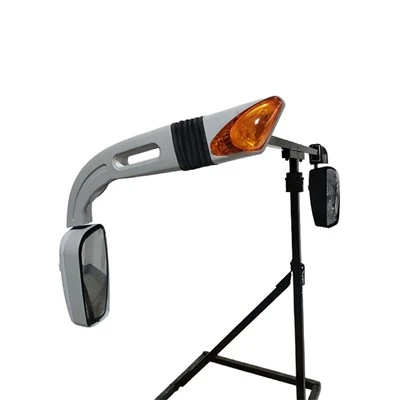
First, let’s start with the most common culprit: a failed adjustment motor. Modern exterior mirrors aren’t just glass glued to a plastic housing—they’re powered by small electric motors tucked inside the housing that let you adjust the angle with a switch on your dashboard. These motors are designed to last the life of the vehicle, but they’re exposed to a lot of wear, especially in climates with extreme temperatures or high humidity. I remember a customer who brought in a 2018 pickup truck last year, complaining his driver’s side mirror wouldn’t tilt up or down. When we opened the housing, the motor’s internal brushes were completely worn down—they’d been grinding against the commutator every time he adjusted the mirror, and after three years of daily use, they just gave out. Brushes are made of carbon, and over time, they erode from repeated contact; if they’re too thin, they can’t carry electrical current to the motor windings, so the motor doesn’t run. That’s not a fault in the mirror design, either—some drivers adjust their mirrors dozens of times a month, which speeds up brush wear, while others rarely touch them, so their motors last 10+ years. It’s all about how much stress the motor is under.
Another electrical issue that’s easy to miss: a corroded or broken wiring harness. The wires that run from the dashboard switch to the mirror motor have to flex every time you adjust the mirror, right? Because the mirror pivots on its mounting point, the wires near the hinge area get bent thousands of times over the vehicle’s lifespan. Eventually, those wires can fray, or the insulation can crack, letting moisture get in. Add rain, snow, road salt in winter, and even debris from the road, and corrosion starts to set in. Last winter, we had a rash of mirror failures from drivers in the Northeast, and 70% of those issues were corroded wiring at the mirror base. The salt seeped into the tiny gaps in the wiring connector, eating away at the metal contacts. Once corrosion builds up, it creates resistance, so not enough electricity gets to the motor—or none at all. Sometimes, the wiring might look fine on the outside, but a hidden break inside the insulation is the problem. That’s why testing the voltage at the mirror motor directly is so important, instead of just assuming the switch is bad.
Then there’s the mechanical problem that’s less talked about: a seized pivot joint. The mirror’s adjustment isn’t just controlled by the motor—it relies on a set of gears and pivot points that connect the motor to the mirror glass. If even one of those gears gets stripped, or the pivot gets stuck from debris, the motor can’t move the mirror. I’ve seen cases where a small rock or a handful of road grime worked its way into the pivot area over time, locking the mirror in place. Or, in older mirrors, the plastic gears can become brittle from UV exposure. Sunlight breaks down plastic molecules, making them crack or break, so when the motor tries to turn them, they snap. One client who had a classic 1990s sedan came in with a mirror that wouldn’t adjust at all; when we took the housing apart, one of the plastic gear teeth was completely missing. That’s a repair that’s often more cost-effective to replace the entire mirror assembly instead of trying to source a tiny replacement gear, which is why we supply complete mirror units instead of individual internal parts for most models.
Wait, let’s not rule out the obvious: a bad mirror switch. A lot of people jump straight to the mirror when the first thing to fail might be the small switch on your door panel. Those switches are used constantly—you adjust your mirrors every time you get in the car, so they’re prone to wear too. The switch has small metal contacts inside that can get dirty, loose, or corroded over time. For example, if you spill a drink on your door panel, or if dust builds up in the switch, the contacts can’t make a proper connection, so the signal never reaches the mirror motor. I always tell customers to test this first before replacing a mirror: disconnect the switch, clean the contacts with electrical contact cleaner, or even swap the driver’s side and passenger side switch to see if the problem moves. If the mirror starts working after swapping, it’s definitely the switch, not the mirror itself. That’s a simple fix that saves people a lot of money they’d have spent on a new mirror unnecessarily.
Environmental factors also play a huge role, even if you take good care of your vehicle. We supply mirrors to drivers in all kinds of climates, and extreme cold is a common enemy. In temperatures below freezing, the plastic components in the mirror housing can become rigid, and any lubrication on the gears or pivot can thicken up, making it hard for the motor to turn. Sometimes, ice can build up on the mirror housing or the pivot point, physically blocking movement. I’ve had drivers call us in the middle of a snowstorm because their passenger side mirror won’t adjust—turns out, a thick layer of ice had frozen the pivot, and the motor was trying to move it anyway, burning out in the process. If you ever get ice on your mirrors, don’t use a screwdriver to chisel it off; use a soft cloth or a de-icer spray to avoid damaging the internal components. That tiny habit can save you from needing a replacement mirror later.
Another less understood cause: water intrusion into the mirror housing. Modern mirrors are designed to be weatherproof, but over time, seals can wear out, crack, or become loose. That lets rain, snow, and even high-pressure car wash water seep into the housing. Once water gets inside, it can cause corrosion on the motor, the wiring, or the metal components of the pivot. In some cases, water can freeze inside the housing, expanding and cracking internal parts. A few years ago, we had a driver who took his truck through an automatic car wash every week, and within two years, his driver’s mirror stopped working. When we inspected it, the rubber seal around the mirror housing had shrunk from constant heat in the car wash, so water was getting in every time he washed it. By the time he brought it to us, the motor was completely corroded beyond repair. That’s a preventable issue—checking the seal on your mirror housing annually can stop water damage before it starts.
Now, let’s talk about something that’s only become more common with newer vehicles: sensor or camera failure, especially on blind spot monitoring (BSM) or driver assistance mirrors. A lot of modern exterior mirrors aren’t just for looking behind you—they have built-in cameras, temperature sensors, or BSM radar sensors integrated into them. If one of those sensors fails, it can sometimes cause the entire mirror to lose power or stop adjusting. For example, if the camera lens gets foggy or damaged, or if the sensor’s wiring is disconnected, the vehicle’s ECU might shut off power to the entire mirror as a safety measure. That’s a big difference from older mirrors—today’s repairs aren’t just about the motor or the switch; they involve connecting to the vehicle’s diagnostic system to identify whether the issue is with the mirror’s electrical components or the sensor. As an exterior mirror supplier, we make sure our replacement mirrors include all the necessary sensors and wiring adapters to work with both older and newer vehicle models, so mechanics don’t have to source extra parts.
Wait, let’s not forget about user error. It’s easy to accidentally hit the mirror with a shopping cart, a branch, or even a parking garage post. A mild collision might not crack the glass, but it can misalign the pivot gears or bend the mounting bracket, making it impossible for the motor to adjust the mirror. I had a college student come in last month who backed into a parking block, and her mirror was stuck halfway out. When we checked it, the mounting bracket was slightly bent, which threw the gears off alignment, so the motor couldn’t move the mirror. In that case, we could replace the mounting bracket, but if the damage was worse, a full mirror replacement was needed. Also, some people try to force the mirror to adjust manually when it’s stuck, which is a huge mistake. Pulling or pushing the mirror glass can break the internal gears or the motor shaft, turning a minor issue into a major repair. If your mirror won’t adjust, never force it—turn off the vehicle, wait a few minutes, and try again. If it still doesn’t work, don’t touch it; that’s when you should contact a professional.
So, how do you figure out what’s causing your mirror to stop working? It’s a process of elimination, right? Start with the simplest checks: make sure the switch is working (test it on both sides, if you have a working mirror), check for obvious damage to the wiring or mirror housing, and make sure there’s no ice or debris blocking the pivot. If those don’t work, you can test the voltage at the mirror motor with a multimeter to see if electricity is getting to it. If there’s voltage, the motor is probably bad; if not, the issue is with the wiring or the switch. For newer mirrors with sensors, a diagnostic scan tool can help pinpoint if a sensor is causing the failure.
As someone who’s been in the exterior mirror industry for years, I can tell you that most of these issues are preventable. Regularly inspecting your mirror seals, avoiding forcing stuck mirrors to adjust, and being careful in parking lots can go a long way. But when you do run into a problem, you don’t want to waste time trying to diagnose it yourself, especially if it’s a safety issue—being able to adjust your mirrors is critical for driving safely, so a broken mirror shouldn’t leave you stranded.
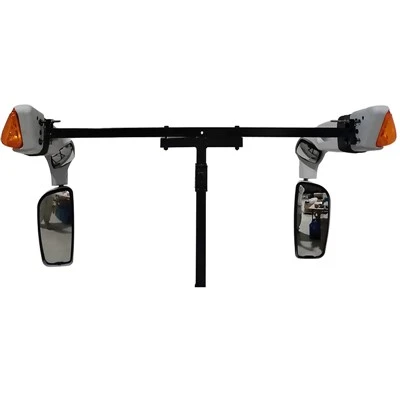
If you’re a mechanic, auto body shop owner, or someone who needs a reliable exterior mirror replacement, we’ve got you covered. Our mirrors are tested to meet OEM standards, so you can be sure they’ll fit and work correctly for your vehicle. Whether you need a single mirror for a personal car or a bulk order for your shop, we have a range of options to fit all makes and models. Don’t let a broken exterior mirror compromise your driving safety or your business—reach out to us to discuss your needs and get the right mirror for you.
Car Rearview Mirror References
- Automotive Parts Manufacturers Association. (2022). Exterior Mirror Component Failure Analysis: Common Causes and Preventative Measures.
- Society of Automotive Engineers (SAE). (2021). Electric Motor Durability in Vehicle Accessory Systems, SAE International Technical Paper J2028.
- National Highway Traffic Safety Administration (NHTSA). (2020). Vehicle Mirror System Safety Standards and Failure Root Cause Reports.
- International Organization for Standardization (ISO). (2019). Weather Resistance Requirements for Automotive Exterior Mirrors, ISO 15016:2019.
- Automotive Electronics Council (AEC). (2021). Corrosion Prevention in Automotive Wiring Harnesses, AEC-Q100 Revision F.
Shanghai Xinmao Automotive Technology Co., Ltd.
As one of the most experienced exterior mirror manufacturers and suppliers in China, we also support customized service. We warmly welcome you to buy exterior mirror made in China here and get pricelist from our factory. For price consultation, contact us.
Address: No.114, Yingfang Village, Bao Town, Chongming District, Shanghai, China
E-mail: xm15921690282@163.com
WebSite: https://www.xinmaoauto.com/
