If you’ve ever found yourself staring at a overflowing garage, a cramped office storeroom, or a backyard cluttered with seasonal equipment and wondering where to turn, flat pack storage containers might just be the solution you’re missing. As a flat pack container supplier, I’ve worked with hundreds of businesses, homeowners, and construction teams over the last seven years, and one question comes up again and again: can these collapsible, modular units really hold the weight of all my extra stuff? The short answer is yes—but there’s a lot to learn about how they work, what makes them different from traditional storage solutions, and why they’re quickly becoming the go-to for smart, cost-effective storage across industries. Flat Pack Container
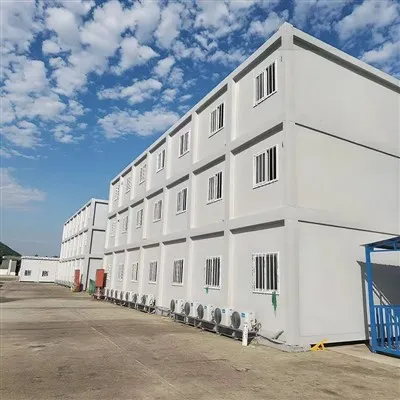
Let’s start with the basics, because a lot of people confuse flat pack containers with the big, rigid shipping containers you see stacked at ports. Standard shipping containers are built to withstand cross-ocean voyages, so they’re heavy, welded together, and not designed to be disassembled and moved multiple times. Flat pack containers, on the other hand, are engineered for exactly that portability. When they’re delivered to your site or property, they come in a set of flat, easy-to-transport panels and frames—no heavy cranes needed, no waiting weeks for delivery. You (or a small team of two or three people) can put one together in a matter of hours, as long as you follow the assembly guide. That design doesn’t make them less durable, though. The steel frames are reinforced, the corrugated panels are rust-resistant, and the locking mechanisms are built to keep contents secure in all weather, from rain and snow to intense summer heat.
The first place most of my customers test flat pack containers for storage is residential use. Homeowners these days have more stuff than ever before: vintage furniture, holiday decorations, kids’ outgrown toys, tools, lawn equipment, even seasonal clothing that doesn’t fit in closets or basements. Traditional self-storage units can cost $100 to $200 a month, and that’s before you add fees for insurance or late payments. A flat pack container, by contrast, is a one-time investment. You can set it up in your own backyard, on a level gravel pad or a small concrete slab, and you don’t have to pay monthly rent forever. One recent customer, a family in Austin, Texas, told me they used their 20-foot flat pack container to store their daughter’s soccer gear, Christmas decorations, and the parents’ vintage guitar collection when they remodeled their attic. They said it saved them nearly $1,800 a year in self-storage fees, and they had all their stuff accessible whenever they needed it—no driving to a storage facility, no restricted access hours.
Commercial users love flat pack containers for storage too, and for good reason. Small business owners often struggle with limited space: a bakery needs to store bulk flour and packaging supplies, a retail store needs to hold seasonal inventory, a construction company needs to keep tools and materials on job sites without having to transport them back to a warehouse every night. Flat pack containers solve a lot of these pain points. For example, a construction company in Denver started using 10-foot and 20-foot flat pack containers on their job sites last year. Before that, they’d leave tools and lumber locked up in the back of their work trucks, which meant they were at risk of theft and damaged by weather. Now, each job site has a flat pack unit that locks securely, protects their tools from rain and snow, and stays on site until the project is done. When the project wraps up, they can disassemble the container, fold it flat, and transport it to the next site in a single pickup truck—no need for a flatbed trailer. That’s a huge saving on transport costs and storage for unused equipment.
What about businesses that need long-term, climate-controlled storage? A common misconception is that flat pack containers aren’t suited for temperature-sensitive items. But modern flat pack containers can be modified easily. As a supplier, we offer custom add-ons like insulation, vents, and even small AC units for customers who need to store things like artwork, archival documents, or perishable goods. A local art gallery in Portland, Oregon, used a 20-foot insulated flat pack container to store their collection of regional watercolors when they expanded their main space. The insulation kept the temperature stable year-round, and they added window locks and a security alarm to keep the art safe. They told me it was 30% cheaper than adding a climate-controlled storage wing to their building, and it was ready to use in less than a week.
Of course, no storage solution is perfect, and flat pack containers have a few key considerations to keep in mind. First, you need a level, stable base to set them on. If you put a flat pack container on uneven ground, the frame can warp over time, which affects the doors and seals. We always recommend a small concrete slab, a compacted gravel pad, or even heavy-duty plywood skids if you’re setting it on a lawn. Second, while they’re weather-resistant, they’re not waterproof. That means you need to make sure the door seals are properly aligned when you assemble the unit, and for extra protection, you can add a small roof overhang if you’re setting it up in a very rainy area. Third, if you plan to move the container frequently, make sure you choose a model with reinforced lifting points—some basic flat pack units aren’t designed to be lifted with a forklift, so we always advise customers to specify if they need mobility as a top priority.
Another big benefit of flat pack containers for storage is their scalability. If you start small and find you need more space, you can add another unit next to the first one. They’re designed to be connected, so you can lock multiple units together to create a larger storage space, or even combine units for a small office + storage setup. A bookstore in Seattle did just that last year: they used two 10-foot flat pack containers connected side by side to create extra space for their used book inventory, and added a small door and shelving inside. It was a low-cost way to expand their storage without renting more commercial space, and they said it’s been just as reliable as the old warehouse space they used before.
Safety is also a top concern for storage, and flat pack containers hold up well here. Unlike a spare room in your house, which can have issues with intruders, flat pack units have heavy steel doors with high-security locks, and you can add extra features like motion-sensor lights, security cameras, and alarm systems. Many of our commercial customers also use them for sensitive materials, like office documents or hazardous construction supplies, because the steel frame is fire-resistant and can withstand tampering.
I often get asked if flat pack containers are as secure as traditional brick-and-mortar storage or welded shipping containers. The short answer is that for most storage needs, they’re more than secure enough. Welded shipping containers are tough, but because they’re fixed in place, they’re a target for thieves who can’t be seen or accessed easily without heavy equipment. Flat pack containers, because they’re modular and can be placed on your own property, mean you have direct access to monitor your space, which is a big security advantage. That’s especially true for small business owners or homeowners who can check on their storage unit anytime, instead of relying on a distant storage facility.
One of the most common mistakes people make when choosing a storage solution is underestimating how much space they need. Flat pack containers come in sizes from 10 feet to 40 feet, so you can pick exactly the size that fits your needs, instead of renting a storage unit that’s either too small or too big. A 10-foot unit is perfect for a small garage add-on, holding a few pieces of furniture, tools, and holiday decorations. A 40-foot unit is large enough to store the contents of a whole house, or bulk inventory for a retail business. They’re also much more compact than a traditional shed or outbuilding—you can fit a 20-foot flat pack unit in a space that’s only 25 feet wide by 10 feet deep, which is ideal for small backyards or tight job sites.
As a supplier, I’ve also seen how flat pack containers work for temporary storage during transitions. Whether you’re moving house, remodeling, or shifting a business location, you don’t want to pay for a long-term storage unit when you only need something for a few months. Flat pack containers can be delivered, used, disassembled, and stored themselves once you no longer need them, which saves you from the cost of renting a storage unit during a transition period. A recent college graduate in Chicago used a 10-foot flat pack container to store his furniture and belongings while he was traveling abroad for a year. He had it set up in his friend’s backyard, paid a fraction of what he would have paid for a monthly storage unit, and when he came back, he just had it delivered to his new apartment and set it up next to the building.
It’s important to note that while flat pack containers are excellent for storage, they’re not designed for long-term, round-the-clock living or heavy industrial use (like housing heavy manufacturing equipment). For most people’s storage needs—residential, small business, construction—they’re ideal. The cost savings, portability, and flexibility make them a better option than traditional storage for many of our customers.
If you’re considering a flat pack container for storage, the first step is to figure out exactly what you need it for. How much space do you have available? What are you storing? Do you need it to be portable, or will it stay in one place long-term? Our team can help you pick the right size and add-ons to fit your needs. We also offer delivery and assembly services in most regions, so you don’t have to worry about handling the heavy parts yourself. Don’t guess at what size or type you need—reach out to our team, and we’ll help you find the perfect storage solution for your space and budget.
Space Capsule References
- American Moving & Storage Association. (2022). Self-Storage Industry Trends & Cost Analysis.
- Steel Container Institute. (2021). Flat Pack Container Durability and Structural Testing.
- National Association of Home Builders. (2020). Residential Storage Solutions for Modern Homeowners.
- Construction Safety Association of Ontario. (2022). Job Site Storage Best Practices for Tools and Materials.
- Small Business Administration. (2021). Cost-Effective Storage Solutions for Small Retail Businesses.
Aoborui Seiko Technology (Weifang) Co., Ltd.
As one of the most professional flat pack container manufacturers and suppliers in China, we also support customized service. Please feel free to wholesale high-grade flat pack container made in China here from our factory. Welcome to view our website for more information.
Address: Building 38, Zhongnan High-tech, Weifang Yuandu Huizhi Industrial Park, No. 3999, Taixiang Street, Hanting District, Weifang City, Shandong Province
E-mail: admin@sino-abr.com
WebSite: https://www.sinoabr.com/
