If you’ve ever had to troubleshoot an overloaded electrical circuit in a commercial warehouse, a residential basement, or a small manufacturing workshop, chances are you’ve worked with a Molded Case Circuit Breaker (MCCB) — and maybe even relied on it to prevent a potentially dangerous fire or electrocution. As a supplier who’s spent the last 12 years designing, testing, and shipping these units to projects across North America and parts of Europe, I can tell you that the part of an MCCB that makes it actually do its job when something goes wrong is its tripping mechanism. This isn’t some mysterious black box inside the plastic case, either; it’s a precise, multi-stage system that balances electrical science, mechanical engineering, and real-world reliability to keep power systems safe without constant, frustrating interruptions. Molded Case Circuit Breakers
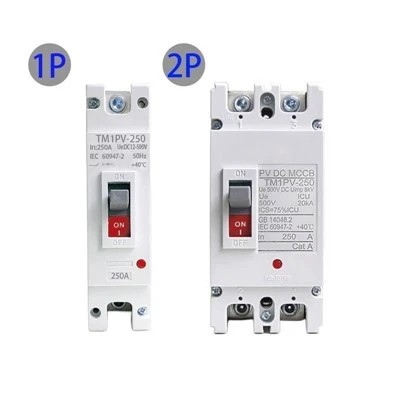
A lot of people new to electrical components mix MCCBs up with their smaller cousins, Miniature Circuit Breakers (MCBs), or even fuses. Fuses are single-use devices — they melt when overloaded, and you have to replace them entirely to restore power — while MCBs use a simpler tripping mechanism tailored for residential circuits with lower amperage (usually up to 125A). MCCBs, by contrast, are built for higher amperage loads (typically 100A to 2500A) common in commercial, industrial, and large residential setups, and their tripping mechanism has to handle two distinct danger scenarios: long-term, mild overloading (the kind that slowly heats wires over hours or days) and short, intense circuit faults (like a wire frayed against metal, which can generate heat hot enough to melt copper in milliseconds). That dual function is what makes MCCBs so versatile, and their tripping mechanism is the heart of that functionality.
Let’s break that mechanism down step by step, starting with how it detects each danger type. First, the long overload protection, what most electrical engineers call the “thermal trip” stage. Inside every MCCB, a bimetallic strip is mounted between the main power inlet and the contact assembly. This strip is made of two different metals bonded together — like steel and brass — each with a different rate of thermal expansion. When current flows through the circuit, it also flows through this bimetallic strip. If the current is higher than the rated amperage of the breaker (say, a 200A MCCB carrying 250A for two hours), the extra current generates extra heat. The two metals expand at different rates, causing the strip to bend. It’s a slow, gradual bend — designed that way to avoid tripping for temporary overloads, like a shop starting a 10hp compressor that draws extra current for 10 seconds before stabilizing. Once the strip bends far enough, it trips a small latch that releases the main contact assembly, cutting power to the circuit before the wires get hot enough to ignite insulation.
The other half of the tripping system is the “magnetic trip” stage, built for short-circuit faults. These are the emergencies: a dead short can spike current to 10, 20, even 50 times the breaker’s rated amperage in a fraction of a second, too fast for the slow thermal bimetallic strip to react. For this, every MCCB has a solenoid (a coil of wire wrapped around an iron core) mounted next to the main power conductor. During normal current flow, the magnetic field created by the solenoid is weak, and it doesn’t interfere with the breaker’s operation. When a short circuit hits, the sudden surge of current makes the magnetic field strength spike dramatically. The core of the solenoid is pulled violently toward the coil, and this movement directly triggers the same latch that the thermal stage uses, cutting power in as little as 0.02 seconds — fast enough to stop a fault before it damages equipment or starts a fire.
What makes the MCCB’s tripping mechanism truly clever, though, is that it’s adjustable. Unlike standard MCBs, which have fixed trip settings, most commercial and industrial MCCBs let you dial in both the thermal trip (to match the specific wire gauge of your circuit — a rule of thumb is that a breaker should be 125% of the continuous load, so a 100A continuous load uses a 125A thermal setting) and the magnetic trip threshold (usually 2x to 10x the breaker’s rated amperage, based on the equipment connected to the circuit). For example, a factory using a motor that draws a high startup current might set the magnetic trip to 7x, so it doesn’t trip every time the motor starts, but still trips instantly if a short occurs. This adjustability is why MCCBs are preferred over simpler overcurrent protection for non-residential projects where load variability is high.
Of course, a tripping mechanism isn’t much good if it fails when you need it most. That’s why MCCBs go through rigorous testing at our facility — and at third-party labs like UL or IEC — to make sure their tripping is consistent, no matter the environment. Extreme temperatures can throw off bimetallic strip performance, so we test breakers in walk-in chambers from -40°F to 158°F to confirm they trip at the correct amperage. We also simulate thousands of operations (tripping and resetting) to ensure the latch and solenoid don’t wear out prematurely, because a broken latch in a breaker installed in a server room is a disaster waiting to happen.
I’ve seen firsthand what happens when a tripping mechanism is flawed. A few years back, we got a call from a small food processing plant that had an MCCB trip repeatedly during production, causing thousands of dollars in lost product, and another plant that had a breaker fail to trip during a short circuit, leading to a small fire that damaged part of their packaging line. In the first case, the plant had bought an unbranded breaker that used a cheap bimetallic strip that bent too easily; we swapped it with our standard MCCBs with precision-calibrated thermal strips, and the trips stopped. In the second case, the breaker’s solenoid was undersized for the amperage rating, so it didn’t generate enough magnetic force to trip during a surge. That’s the kind of risk that comes with cutting corners on the tripping mechanism, and it’s why we don’t sell anything less than units built to meet strict safety standards.
Another common question we get is: why resetting a tripped MCCB doesn’t damage it (most of the time). When the breaker trips, the main contacts separate, and the bimetallic strip cools and bends back to its original shape. The solenoid’s core also resets once the current is gone. Resetting just requires flipping the breaker’s external lever to the “off” position and back to “on” — but we always advise clients to find the cause of the trip before resetting, because a breaker that trips repeatedly could be a sign of a persistent overload, a frayed wire, or faulty equipment, not a faulty tripping mechanism. Our product labels include a quick troubleshooting guide, and our support team is on call 24/7 to help customers walk through that process, because we want our MCCBs to work when they’re needed, not just on paper.
For anyone selecting MCCBs for a project, the tripping mechanism isn’t a detail to overlook. It’s the difference between a system that alerts you to a minor overload before it becomes a major problem, and one that protects your most valuable equipment and personnel during a crisis. The thermal and magnetic stages work in tandem, calibrated to be fast enough for faults but slow enough to handle normal startup currents, and adjustable to fit the unique needs of every circuit. As a supplier, our focus isn’t just on selling breakers — it’s on building tripping mechanisms that are reliable, consistent, and proven to perform in the real world, not just in a lab.
Copper Aluminum Cable Lug If you’re working on a project and need MCCBs with precise, tested tripping mechanisms, or you have questions about setting trip thresholds for your specific load, our team of electrical specialists is ready to help. We can walk you through the differences between thermal-magnetic tripping, electronic tripping (available for higher-amperage industrial applications), and which configuration is right for your needs. Reach out to our sales team to learn more, get a customized quote, or discuss how our MCCBs can keep your electrical systems safe and compliant with local safety codes.
References
- El-Hawary, M. E. (2019). Electrical Power Systems Design and Analysis. Wiley-IEEE Press.
- International Electrotechnical Commission. (2020). IEC 60947-2: Low-voltage switchgear and controlgear — Part 2: Circuit breakers.
- Underwriters Laboratories Inc. (2021). UL 489: Molded-Case Circuit Breakers, Meter-Main Circuit Breakers, and Circuit Breakers for Use in Branch Circuits.
- Kreindler, P. (2017). Power Distribution Engineering: Fundamentals and Applications. CRC Press.
- National Electrical Manufacturers Association. (2018). MCCB Application Guide for Commercial and Industrial Facilities.
Wenzhou Lanen Electrical Co., Ltd.
Wenzhou Lanen Electrical Co., Ltd. is one of the most professional molded case circuit breakers manufacturers and suppliers in China, also supports customized service with low price. Please feel free to buy CE approved molded case circuit breakers made in China here from our factory. Contact us for more discount information.
Address: Zhiguang Liushi Town Yueqing City Wenzhou City Zhejiang Province
E-mail: lanen@luyele.cn
WebSite: https://www.lanenelectrical.com/
