If you’ve ever stood in a sterile lab watching a life-saving diagnostic machine run, or held a portable ventilator that’s keeping someone stable during a critical moment, you haven’t just interacted with wires or valves. You’ve interacted with the unsung heroes of medical device design: pneumatic fittings. As a pneumatic fittings supplier, I’ve spent 12 years navigating the gap between “standard industrial fittings” that work for a factory’s assembly line and the parts that work in a hospital, operating room, or sterile processing department. The difference isn’t just a matter of material or size—it’s a web of non-negotiable requirements that are tested not just for durability, but for human safety. Let’s break down what makes medical-grade pneumatic fittings special, because if we get this wrong, the consequences aren’t just a leaky hose. Pneumatic Fitting
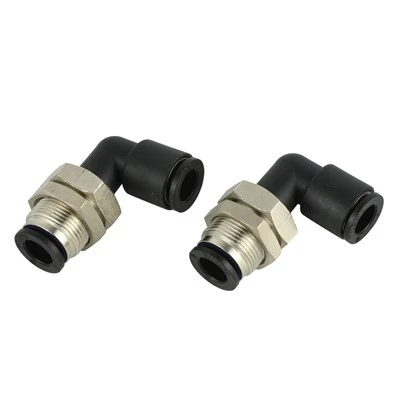
First, and most fundamental, is biocompatibility. This isn’t the “it doesn’t rust” label you might see on a fitting for a paint sprayer. Medical pneumatic fittings are part of systems that touch, or are very close to, biological tissue, bodily fluids, or even the internal pathways of a patient’s body. Let’s be clear: if a fitting sheds particles, leaches chemicals, or reacts with blood, saliva, or any other biological material, it can cause inflammation, infection, or even toxicity. That’s why the materials we use have to meet strict regulatory standards—like ISO 10993, the global gold standard for biocompatibility, and USP Class VI, the U.S. Pharmacopeia’s rigorous test for materials that come into contact with body fluids. I’ve seen dozens of suppliers cut corners here, using generic nylon or brass fittings that pass industrial tests but fail to meet biocompatibility screening. For example, a brass fitting with an uncoated surface might leach trace amounts of copper, which can be toxic to cells in a catheter-based pneumatic system. Instead, we use high-grade 316L stainless steel—low-carbon, so it doesn’t corrode easily—and medical-grade PEEK (polyether ether ketone), a high-performance polymer that’s inherently biocompatible, lightweight, and resistant to chemicals. Even the elastomeric seals in our fittings, made from EPDM or silicone, are formulated to meet ISO 10993 Part 10, which tests for skin irritation and sensitization. This isn’t a box we tick; it’s the first line of defense for patients.
Next is sterility compatibility, and this is where most industrial fittings fall flat. Medical devices that use pneumatic systems—like surgical power tools, anesthesia machines, or patient monitoring pumps—are either single-use, or designed to be resterilized between patients. That means every component, including the pneumatic fittings, has to withstand repeated exposure to sterilization methods without degrading, shedding, or changing its performance. There are three main sterilization methods used in healthcare: autoclaving (steam under pressure), ethylene oxide (EtO) gas, and gamma irradiation. Let’s talk about autoclaving first—most reusable surgical tools go through this, with temperatures reaching up to 134°C (273°F) and high levels of moisture. Industrial rubber seals will often swell or crack after a few autoclave cycles, because the materials aren’t formulated to handle that level of heat and moisture. Our fittings, by contrast, are tested to survive up to 1000 autoclave cycles at 134°C, with no change in leak rate or material integrity. For devices that can’t handle high heat, like portable ventilators that have plastic components, EtO sterilization is common. EtO is a gas that penetrates packaging to kill microbes, but it can leave residual chemicals that are toxic. We use materials that don’t absorb EtO, so there’s no residual leaching, and our fittings are tested to maintain their seal after 24 hours of EtO exposure. Gamma irradiation is another method, used for single-use devices like disposable respiratory filters. Our PEEK fittings are tested to withstand up to 50 kGy of gamma radiation, without becoming brittle or losing their ability to create a tight, consistent seal. I once worked with a startup that launched a portable nebulizer with generic fittings, and after 50 autoclave cycles, the seals started leaking—they had to replace every fitting in their entire production run, costing them $200k in recalls and lost trust. That’s why sterility compatibility isn’t an afterthought; it’s baked into the material selection and testing process from day one.
Then there’s leak integrity and precision, which is non-negotiable for medical systems. A pneumatic system in a medical device works by controlling very small volumes of air at very specific pressures. For example, a ventilator needs to deliver a precise volume of air (like 500 milliliters per breath) at a precise pressure (10 cm H2O) to a patient’s lungs. If there’s a leak in a fitting, that volume or pressure is thrown off—leading to inadequate oxygen delivery, which can be life-threatening for a patient with respiratory failure. Industrial fittings often have tolerances measured in thousandths of an inch, but medical fittings have tolerances measured in ten-thousandths of an inch. That means the way the fitting mates with a hose or a component has to be perfectly consistent, every single time, across thousands of units. We test every fitting for leak rate using helium mass spectrometry, the most sensitive leak detection method available. A leak rate for a medical pneumatic fitting is required to be less than 1 x 10^-8 std cc/sec of helium—That’s equivalent to a leak so small it would take over 10 years for a single bubble of air to escape. Industrial fittings, by contrast, often have leak rates up to 1 x 10^-5 std cc/sec, which is 1000 times higher, a gap that’s catastrophic in a medical setting. I also see a lot of confusion between fittings for low-pressure and high-pressure systems. A surgical power tool, for example, operates at pressures up to 1000 psi, so fittings have to be designed to handle that pressure without bursting or decoupling. A common mistake is using a compression fitting designed for 150 psi industrial air lines in a surgical tool—when that fitting fails, it can blow off at 1000 psi, posing a risk to both the patient and the surgeon. We engineer our fittings with unique gripping mechanisms: for compression fittings, we use dual ferrules that bite into the hose evenly, creating a consistent seal, and for push-to-connect fittings, we use stainless steel gripping claws that don’t slip even when the system is vibrated repeatedly (like a surgical tool being used during a procedure).
Regulatory compliance is another layer that makes medical pneumatic fittings unique, and it’s not just about meeting standards—it’s about proving that you meet them. Industrial suppliers might self-certify their parts, but medical device manufacturers have to have traceable, auditable documentation for every component that goes into their device, because the FDA, CE, and other global regulators audit every step of the supply chain. That means every batch of fittings has to have a lot number, material test reports (MTRs) that prove the material is the correct grade, and biocompatibility test data that’s specific to that part. We work with manufacturers to create a “design history file” (DHF) for every component, which includes testing reports for biocompatibility, sterility compatibility, leak rate, and pressure rating. For example, when a customer is designing a new infusion pump, they’ll need to submit our MTRs to the FDA as part of their 510(k) submission. If a supplier can’t provide that documentation, the manufacturer can’t use their parts—simple as that. We also have to comply with quality management systems like ISO 13485, which is specifically for medical device manufacturing, not ISO 9001 for general industry. ISO 13485 requires that every process in our factory is documented, every employee is trained on medical quality standards, and every non-conforming part is tracked and corrected. I’ve had customers turn down other suppliers because those suppliers couldn’t show them a copy of their ISO 13485 certificate, or couldn’t provide a traceability system that let the customer track a single fitting back to the exact batch of raw material it was made from. That level of traceability is unheard of in industrial supply chains, where you might get a box of fittings with no way to know when or where they were made.
Durability and reliability, too, are calibrated for medical use, not just industrial use. Medical devices are often used in high-stress environments: emergency rooms where staff are rushing, operating rooms where devices are used for hours at a time, and clinics where portable devices are transported daily. A fitting that works perfectly in a clean factory might fail if it’s dropped, pulled roughly, or exposed to cleaning chemicals over time. For example, a hospital might clean a device with a harsh disinfectant like quaternary ammonium compounds, or even bleach, and if a fitting’s material isn’t resistant to those chemicals, it can crack or become brittle. Our fittings are tested for chemical resistance to common hospital disinfectants, and they survive exposure to 70% isopropyl alcohol, 10% bleach solutions, and other disinfectants without degrading. We also test for mechanical durability: push-to-connect fittings are tested to be connected and disconnected over 1000 times without losing their sealing ability, and compression fittings are tested to withstand repeated vibration and pressure cycling without slipping or leaking. I remember a customer making portable oxygen concentrators—they were using standard push-to-connect fittings that would come loose when the device was transported in an ambulance over rough roads. We redesigned their fittings with a locking tab that prevents accidental disconnection, and after testing, we confirmed the fitting stayed secure even with 10G of vibration (the level of vibration in an ambulance). That small change didn’t just improve reliability—it made their device safer for patients who needed oxygen while traveling.
Another often-overlooked requirement is cleanliness, from manufacturing to packaging. Industrial fittings are often made in facilities that aren’t controlled for particles or contaminants, because they’re going into systems that don’t need to be sterile. Medical fittings, by contrast, have to be manufactured in a cleanroom environment, because even a single tiny particle of metal or plastic shed during manufacturing can get into a patient’s bloodstream or respiratory system. Our fittings are made in a Class 10,000 cleanroom (meaning no more than 10,000 particles larger than 0.5 microns per cubic foot of air), and during packaging, we use static-free, sterile bags that are sealed to prevent contamination. We don’t package fittings with cardboard or paper, because those can shed fibers that get trapped in the fitting’s seal. I’ve seen a patient safety alert issued by the FDA because a medical device had a contamination issue traced back to fittings that were packaged in non-static-free bags. That’s why we take packaging as seriously as the part itself: every fitting is individually bagged, labeled with a lot number, and only opened when the manufacturer is ready to use it, to keep it clean until it’s assembled.
Now, you might be wondering why this matters for someone who’s not a medical device engineer. The reality is that every part of a medical device contributes to patient safety. A pneumatic fitting that’s designed for industrial use, not medical use, might work for a few months, but when it fails during a critical procedure, it’s not just a financial loss—it’s a risk to a patient’s life. As a pneumatic fittings supplier, I don’t just sell parts; I provide a component that’s part of a system that saves lives. That’s why we don’t cut corners on material testing, regulatory documentation, or quality control.

If you’re a medical device designer, engineer, or procurement manager, and you’re looking for pneumatic fittings that meet all these requirements—biocompatibility, sterility compatibility, precise leak integrity, regulatory compliance, durability, and cleanliness—let’s connect. We work with startups and large medical device companies alike, and we provide custom and standard fittings tailored to your specific application, whether it’s a ventilator, surgical tool, infusion pump, or patient monitor.
POM G Thread Connector References:
ISO 10993-1:2018, Biological evaluation of medical devices — Part 1: Evaluation and testing within a risk management process
ISO 13485:2016, Medical devices — Quality management systems — Requirements for regulatory purposes
United States Pharmacopeia (USP) Class VI, Plastic Materials
FDA Guidance for Industry: Medical Device Traceability Requirements
ASTM F1160-19, Standard Specification for Pneumatic Fluid Power Systems and Components for Medical Applications
Yuyao Eshiong Pipe Fittings Technologies Co., Ltd.
Yuyao Eshiong Pipe Fittings Technologies Co., Ltd. is one of the most professional pneumatic fitting manufacturers and suppliers in China. With abundant experience, we warmly welcome you to wholesale bulk customized pneumatic fitting at competitive price from our factory. If you have any enquiry about free sample, please feel free to email us.
Address: No.263,North Yangshan Village, Lishan, Ditang Subdistrict, Yuyao ,Ningbo ,Zhejiang
E-mail: sales@trosung.com
WebSite: https://www.eshiongcn.com/
