Hey there, it’s Jake from your go-to industrial centrifugal fan supplier—let’s cut the small talk and get straight to the question that’s been popping up in our DMs, service calls, and even the random warehouse stop-by: Can an industrial centrifugal fan be used in a negative-pressure ventilation system? Industrial Centrifugal Fan
First off, if you’re here scrolling because you’re deep in a project—whether that’s a pharmaceutical cleanroom, a COVID-era hospital wing, a dusty agricultural grain bin, or a manufacturing floor where fumes can turn a regular workday into a headache—you’re not wrong to wonder this. I’ve lost count of how many times a client has called panicking because their axial fan quit holding the negative pressure they need, or they thought they had to spring for a specialty, super-pricy “negative-pressure-only” fan. Spoiler: Most of the time, a good industrial centrifugal fan works just fine. But let’s break this down like we’re troubleshooting a unit on a loading dock, no fancy jargon allowed.
First, what is negative-pressure ventilation, anyway?
Let’s keep this simple. Negative pressure is when you’re pulling more air out of a space than you’re pushing into it. Think of it like a vacuum for a specific zone—if you’ve ever opened a bathroom door and felt the air suck toward the bathroom, that’s negative pressure. For industrial settings, that’s non-negotiable in places you don’t want contaminants escaping: a lab handling pathogens, a spray paint booth where overspray could drift to other workstations, a meat processing facility where bacteria need to stay confined, or even a commercial attic where mold spores won’t spread into living spaces.
The key here isn’t just “pulling air”—it’s controlling that pull. You need consistent, reliable airflow that’s steady enough to keep pressure delta (the difference between inside your zone and outside) where it needs to be, no hiccups. That’s where fans come in, and centrifugal ones are way better for this than axial (the big, flat, propeller-looking ones you see in box fans or warehouse ceiling fans).
Why centrifugal fans are built for this (no, they’re not just for blowing stuff away)
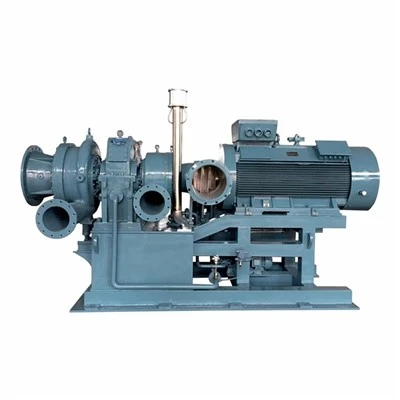
Let’s talk centrifugal fan 101, real quick. Unlike axial fans that push air straight along the shaft, centrifugal fans have those curved blades inside a snail-shaped housing (that’s called a volute, if you want to drop that at a trade show to sound like you know your stuff). They pull air into the center of the fan, spin it around with the blades, and shoot it out at a 90-degree angle, directed by that volute.
That design is a game-changer for negative pressure because of two big reasons: static pressure and airflow control. Axial fans move volume—like, tons of air per minute—but they’re terrible at overcoming resistance. If your ductwork is long, has lots of turns, or has filters you’re pulling air through? Axial fans will lose their oomph fast, and your negative pressure drops. Centrifugal fans, though, are built for static pressure—that’s the pressure needed to push or pull air through a resistance, like duct filters or long runs of pipe. That’s exactly what you need to maintain a consistent vacuum effect on your zone.
Let’s use a recent client example: A mid-sized pharmaceutical company that was running tests on a batch of drug ingredients in a small, confined room. They were using an axial fan, and no matter how they cranked it, the pressure delta was only hitting -0.02 inches of water column (inches WG)—the minimum they needed was -0.05 inches WG. When they switched to a medium-pressure centrifugal fan we stock here, within an hour they hit -0.06 inches WG, steady as a rock, even when they added a HEPA filter to the exhaust line (which was adding more resistance). That’s exactly the kind of consistency you need for negative pressure—no fluctuations when a worker opens a door, no drops when the filter gets a little dusty.
Wait, but hold on—does all centrifugal fan work? No, that’s the catch. Not every centrifugal fan is cut out for negative pressure, and if you grab the wrong one, you’ll end up with the same problem as that pharma client first. Let’s talk about which centrifugal fan types are (and aren’t) good for this.
The centrifugal fan types that actually work for negative pressure
There are three main centrifugal fan categories, and two are solid for negative-pressure systems—one you should avoid. Let’s break ’em down:
- Backward-inclined (BI) blade centrifugal fans: These are the gold standard for negative pressure. Their blades curve backward (away from the direction the fan spins), which makes them super efficient at moving air against resistance. They don’t overheat easily, they have a flat power curve (so their power use stays consistent even if resistance changes), and they’re perfect for applications that need steady static pressure—like cleanrooms, hospital isolation rooms, or fume hoods. I recommend these 9 times out of 10 for negative-pressure setups.
- Airfoil blade centrifugal fans: These are a subtype of backward-inclined, with curved blades shaped like airplane wings. They’re even more efficient than standard backward-inclined, great for high-airflow negative-pressure systems where energy costs matter (like large industrial warehouses or agricultural grain storage facilities where you need to suck out dust and mold spores). The only downside? They can be pricier upfront, but they save you cash on electricity long-term—worth it if you’re running the fan 24/7.
- Forward-curved (FC) blade centrifugal fans: Skip these for negative pressure. Their blades curve forward, and they’re designed for low-resistance, high-airflow jobs like moving air through a small duct with no filters. They’re cheap, but their power curve is steep—if you add even a little resistance (like a filter), their airflow drops hard, and they’ll use way more power than they need to. Save these for your breakroom HVAC, not your negative-pressure zone.
Another thing to consider: Fan size. You don’t want a fan that’s too small (can’t hit your required pressure) or too big (wastes energy, can cause damaging pressure spikes). That’s why we always ask clients for two numbers: their required airflow (CFM—cubic feet per minute) and their required static pressure (inches WG). We size ’em right on the spot, no guesswork.
Common myths I hear all the time (let’s debunk ’em)
Now that we’ve covered the basics, let’s get to the stuff that makes clients second-guess themselves. I hear these three myths every week:
Myth 1: “Negative-pressure systems need specialty fans, not regular centrifugal ones.” No, that’s just a marketing trick. If a sales rep tries to charge you double for a “negative-pressure-specific” fan, run—you can get the same performance from a properly sized industrial centrifugal fan. We sell our centrifugal fans to hospitals, labs, and food processing plants every day, and none of them are labeled “negative-pressure fans.” They just work because they’re sized right.
Myth 2: “Centrifugal fans are too loud for quiet negative-pressure zones.” Modern centrifugal fans? Way quieter than they used to be. We install sound dampers, and backward-inclined blades are quieter than forward-curved ones, anyway. The pharma client I mentioned earlier? They had no noise complaints from workers in adjacent offices—because we matched the fan to their duct size and added a simple silencer.
Myth 3: “Axial fans work just as well if I crank them all the way.” I saw a factory do this last month—they had a spray booth with an axial fan, and they cranked it to max speed, but the fumes still leaked into the main floor. Why? Because axial fans lose static pressure fast. Cranking it just makes it louder and uses more power, but it doesn’t solve the resistance problem. Centrifugal fans hold steady even at lower speeds, so you get consistent pressure without wasting energy.
Installation and maintenance quick hits (don’t skip this part)
Even a great centrifugal fan will fail at negative pressure if installed wrong. Let’s keep this simple:
- Duct sizing matters: If your duct is too small, you’ll add unnecessary resistance, and your fan won’t hit its pressure target. We always calculate the right duct size for the fan we sell—no clients have to guess.
- Filters need to be sized for the fan: HEPA or MERV filters add resistance as they get dirty. If your fan can only handle 1 inches WG of static pressure, don’t slap a filter that adds 2 inches WG—you’ll lose pressure. We make sure the fan’s static pressure rating matches your filter’s resistance.
- Regular check-ins: Every few months, check that the fan’s belt (if it’s a belt-driven model) isn’t slipping, that the blades are clean (dust buildup on blades reduces performance by 10-20% fast), and that the pressure delta is holding steady. Most clients set a quick monthly check, and that’s enough to keep things running smooth.
When would you need a different fan?
Okay, I’m not here to say centrifugal fans solve everything. There’s one case where you might need something else: If you need extremely high negative pressure (like -1 inch WG or more) for a super confined, high-hazard space. But even then, a high-static centrifugal fan will almost always work—we’ve done projects for nuclear facilities and biotech labs where that’s exactly what we used. The only time I’d recommend a different fan is if you’re dealing with corrosive or explosive materials, and even then, we have centrifugal fans lined with corrosion-resistant materials or spark-proof blades for that.
Final thought for anyone on the fence
At the end of the day, the answer to “Can an industrial centrifugal fan be used in a negative-pressure ventilation system?” is a resounding yes—as long as you pick the right type, size it correctly, and install it right. I’ve seen too many clients waste money on overpriced specialty fans when a good centrifugal one does the job better, cheaper, and is easier to maintain.

If you’re working on a project right now and aren’t sure what fan you need, don’t overcomplicate it. Shoot us a message, tell me what your CFM, static pressure requirement, and application are, and we’ll hook you up with the right centrifugal fan. No hard sell, no hidden fees—just the right equipment to keep your space safe, compliant, and working like it should. Stop guessing and start getting the consistent negative pressure you need.
High-pressure Pump References:
- ASHRAE Handbook—HVAC Applications, Chapter 24: Hospital Facilities Ventilation.
- Industrial Ventilation: A Manual of Recommended Practice for Design, 29th Edition, American Conference of Governmental Industrial Hygienists (ACGIH).
- Centrifugal Fan Fundamentals for Industrial Ventilation, Air Movement and Control Association (AMCA) International.
- Pharmaceutical Cleanroom Design and Ventilation Standards, International Society for Pharmaceutical Engineering (ISPE).
- Grain Storage Ventilation Guidelines, National Grain and Feed Association (NGFA).
Xiaofeng Machinery Technology Co., Ltd.
As one of the most professional industrial centrifugal fan manufacturers and suppliers in China, we also support custom service. Please feel free to wholesale advanced industrial centrifugal fan made in China here from our factory. Quality products and reasonable price are available.
Address: No.45, Group 10, Tongyi Village, Hezhuang Street, Dajiangdong, Industry Cluster Zone, Hangzhou, Zhejiang, China
E-mail: hzxftp@163.com
WebSite: https://www.hzxfmt.com/
