What is the lifespan of a liquid cooling manifold?
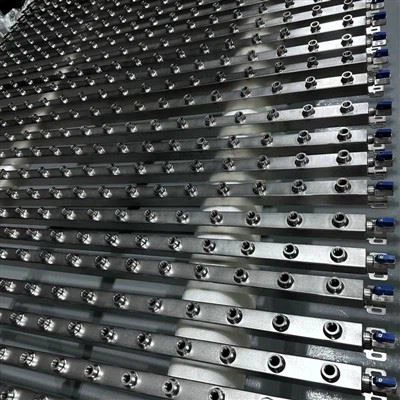
As a supplier of liquid cooling manifolds, I often encounter inquiries from customers about the lifespan of these crucial components. Understanding the factors that influence the lifespan of a liquid cooling manifold is essential for both manufacturers and end – users. In this blog, I will delve into the various aspects that determine how long a liquid cooling manifold can last. Liquid Cooling Manifold
1. Material Quality
The choice of materials in manufacturing a liquid cooling manifold plays a fundamental role in its lifespan. High – quality materials are more resistant to corrosion, wear, and chemical reactions. For instance, stainless steel is a popular choice for liquid cooling manifolds due to its excellent corrosion resistance. It can withstand a wide range of temperatures and chemical environments without significant degradation.
Aluminum is another commonly used material. It is lightweight and has good thermal conductivity. However, aluminum can be more susceptible to corrosion in certain aggressive chemical environments. If the coolant used in the system contains chemicals that react with aluminum, it can lead to pitting and erosion, reducing the manifold’s lifespan.
Copper is also a great option because of its high thermal conductivity. But copper can oxidize over time, especially when exposed to oxygen and moisture in the coolant. This oxidation can form a layer of copper oxide on the surface, which may flake off and potentially clog the cooling system, affecting the performance and lifespan of the manifold.
2. Operating Conditions
The environment in which the liquid cooling manifold operates has a major impact on its lifespan. Temperature is a critical factor. Extreme temperatures, either too high or too low, can cause thermal stress on the manifold. High temperatures can accelerate chemical reactions, such as corrosion, and can also cause the material to expand and contract, leading to mechanical fatigue over time.
On the other hand, low temperatures can make some materials more brittle. For example, plastics used in some parts of the manifold may become less flexible in cold conditions, increasing the risk of cracking.
The coolant used in the system is also an important consideration. The chemical composition of the coolant can either protect or damage the manifold. A coolant with the right additives can prevent corrosion and scale formation. However, if the coolant is not properly maintained or if it contains contaminants, it can cause significant damage to the manifold. For example, hard water with a high mineral content can leave scale deposits inside the manifold, reducing its flow capacity and heat transfer efficiency.
3. Design and Manufacturing Quality
A well – designed liquid cooling manifold can have a longer lifespan. The design should ensure even distribution of the coolant throughout the system. Uneven flow can lead to hot spots, which can cause local overheating and accelerate material degradation.
Manufacturing quality is also crucial. Precise machining and assembly are necessary to ensure that there are no leaks or weak points in the manifold. Any defects in the manufacturing process, such as rough edges or improper sealing, can lead to coolant leakage, corrosion, and ultimately, a shorter lifespan.
4. Maintenance and Usage Patterns
Regular maintenance is vital for extending the lifespan of a liquid cooling manifold. This includes flushing the system periodically to remove any dirt, debris, or scale deposits. Inspecting the manifold for signs of wear, corrosion, or leaks is also an important part of maintenance.
The usage pattern of the system can also affect the manifold’s lifespan. If the system is run continuously at high loads, the manifold will experience more stress compared to a system that is used intermittently. For example, in a data center where servers are running 24/7, the liquid cooling manifold will be under constant stress, which may reduce its lifespan.
5. Expected Lifespan Estimates
In general, a high – quality liquid cooling manifold made from stainless steel and operating under normal conditions can last up to 10 – 15 years. Aluminum manifolds may have a lifespan of 7 – 10 years, depending on the chemical environment of the coolant.
However, these are just rough estimates. If the operating conditions are harsh, such as in a chemical processing plant where the coolant contains corrosive chemicals, the lifespan can be significantly shorter, perhaps only 2 – 5 years. On the other hand, if the system is well – maintained and operates under ideal conditions, the manifold may last even longer than the expected estimates.
Conclusion
The lifespan of a liquid cooling manifold is determined by a combination of factors, including material quality, operating conditions, design and manufacturing quality, and maintenance. As a supplier, we strive to provide the highest – quality liquid cooling manifolds that can withstand a wide range of conditions.

If you are in the market for a reliable liquid cooling manifold, we are here to help. Our team of experts can assist you in choosing the right manifold for your specific application, taking into account all the factors that affect its lifespan. We can also provide guidance on maintenance to ensure that your manifold lasts as long as possible.
Spirally Wound Stainless Steel Tube Contact us today to start a discussion about your liquid cooling manifold needs. We look forward to working with you to find the best solution for your cooling requirements.
References
- ASM Handbook Volume 13A: Corrosion: Fundamentals, Testing, and Protection
- Perry’s Chemical Engineers’ Handbook
- Thermal Management of Electronic Systems: Design and Optimization
China Super Tech Co., Ltd.
As one of the most professional liquid cooling manifold manufacturers and suppliers in China, we’re featured by quality products and good service. Please rest assured to wholesale OEM liquid cooling manifold from our factory. Also, custom service is available.
Address: Wangjing Science and Technology Park, Guangshun North Street, Chaoyang District, Beijing
E-mail: sales@316liquidcooling.com
WebSite: https://www.316liquidcooling.com/
