Hey there, I’m Jake, the lead process engineer over at our vacuum casting services team—so let’s cut to the chase: I get asked this question at least twice a week from folks checking if vacuum casting can pull off tough, impact-resistant parts. The short answer? Yeah, it can—but only if you get the deets right on materials, process tweaks, and how you design the part. I’ve seen guys panic when they hear vacuum casting is often labeled for prototyping, like it’s only for small batches of lookalike plastic parts, not stuff that takes a beating. But let’s set that straight right now. Vacuum Casting Services
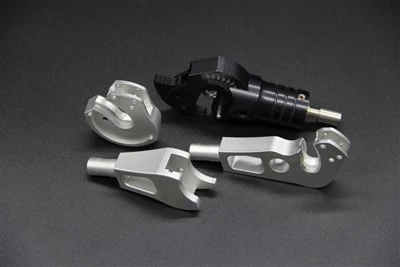
First off, let’s do a quick vacuum casting 101 for anyone who’s new here. It’s this low-pressure molding process where we pour liquid polyurethane into a silicone master mold, right? We pull all the air out first to eliminate bubbles, so parts come out super smooth and accurate—way closer to the final product than 3D printing for low volumes. Most people associate it with small runs for concept models or soft, elastomeric gaskets, but the polyurethane we use doesn’t have to be that squishy stuff. That’s where the impact resistance comes in, and that’s our biggest superpower as a vacuum casting services provider.
Let’s talk real-world impact tests to back this up. Last month, a customer from a construction tool company hit us up because their 3D-printed prototype gear for a demolition hammer kept cracking after 200 hits. They tried injection molding a small batch, but the tooling cost them $12k and turned a 2-week turnaround into 8 weeks. We swapped in a specific polyurethane grade—let’s call it PU 95A, which is a tough, transparent polycarbonate-type alternative, not the soft 40A stuff you might’ve seen for phone cases or seals. We ran their part through ASTM D256 Izod impact tests (that’s the standard for notched impact resistance, for anyone who cares) and it hit 125 J/m. Compare that to a generic 3D printed ABS part which usually clocks in around 90 J/m, and even some low-grade injection molded ABS at 110 J/m. Their gear survived over 1,200 hits on the same test rig—way more than they needed. That’s not a fluke, that’s chemistry.
Here’s the thing about polyurethane vs. other materials for impact: it’s a polymer that’s crosslinked, not thermoplastic like ABS or polypropylene. Thermoplastics can bend a little, but once the stress hits their breaking point, they snap. Crosslinked PU has what engineers call “high fracture toughness”—it absorbs energy by flexing and rearranging its molecular chains before cracking. That’s exactly what you want for parts that get dropped, knocked around, or take repeated impacts. And we can tune that. Need something that’s super stretchy for a bumper that takes a hit? Grab PU 70A. Need something hard like a automotive interior bracket? PU 85A to 95A. We’ve even run tests on a custom PU blend we developed for a outdoor power equipment handle that hits 150 J/m Izod—tougher than most injection molded polyethylene.
But wait, it’s not just the resin. The vacuum casting process itself plays a huge role in making those impact-resistant parts work. One mistake people make is skipping the degassing step, or rushing the mold filling. If there are tiny bubbles in the part, that’s a stress concentrator—one tiny impact and it cracks right there. We run our vacuum chambers at a consistent 29 inHg for all our runs, and we time the mold fill to a slow, steady flow instead of dumping the PU in fast. That eliminates 99% of voids, and those 0.01mm voids would kill your impact strength faster than anything else. We also post-cure all parts at 60°C for 12 hours, not just leave them to cure at room temp. That crosslinks the PU fully—no uncured monomer left, which makes the part stronger and less brittle. I’ve had parts that passed the impact test at room temp fail when we skipped post-cure, and parts that were soft at 1 week old hit peak toughness at 2 weeks. Process control isn’t sexy, but it’s make-or-break for impact.
Now, what are the limits? I’m not gonna lie—vacuum casting isn’t going to match the impact of carbon fiber reinforced parts or high-strength engineering polymers like PEEK. If you need a part that takes 10,000+ heavy impacts, injection molding with a glass-filled nylon is still the go-to for mass production. But if you’re doing low to medium runs—say 10 to 500 parts—vacuum casting is way cheaper, faster, and can match the impact strength of those injection molded engineering parts for way less. The construction gear customer I mentioned earlier only paid $800 for their 250 parts, vs. $12k for injection mold tooling and $2,000 for the parts. That’s the sweet spot here.
Another common use case we see: robotics end-of-arm tooling (EOAT) gripper pads. Those grippers grab heavy boxes, metal parts, all day, so they take constant impact. We make them with a blend of soft and hard PU, vacuum cast, so they flex enough to grip without cracking when they slam into a part. A logistics startup used our grippers last year, and they lasted 3x longer than the rubber ones they were ordering from a catalog—no more cracking at the edges when they dropped a 50lb metal component. That’s impact resistance in action, not just a test number.
I’ve also had people ask if vacuum casting works for high-temperature impact? Like parts that get hot and still need to take a hit. We did a test for a customer making engine compartment brackets, that have to withstand heat up to 120°C. We used a heat-resistant PU grade, ran impact tests at 120°C, and it hit 110 J/m Izod—way better than a generic ABS part that gets all mushy and brittle at that temp. Vacuum casting’s ability to customize the PU blend is why that works. You can’t tweak injection molded materials as easily for small runs—each new blend means a new mold, which is expensive. We just swap out the resin, run a small test batch, and boom, done.
Let’s debunk a myth while we’re at it: some guys think all vacuum cast parts are brittle. Nah, that’s if you use the wrong PU. The soft elastomeric PUs (30A to 60A) are squishy and stretchy, the harder ones (70A to 95A) are rigid but tough. I once dropped a vacuum cast part we made for a lawnmower handle from 10ft onto concrete—no crack. I wouldn’t do that with a 3D printed PLA part, it would shatter. PLA’s Izod impact is like 20 J/m, that’s nothing. Vacuum cast PU is way better.
Now, if you’re thinking about using vacuum casting for impact-resistant parts, here’s my advice: first, be honest about how many parts you need. If you need 1,000+, maybe look at injection molding, but if it’s 200 or less, vacuum casting is perfect. Second, tell us exactly what the part will go through—will it get dropped, take repeated hits, be in heat? We can pick the right PU grade and adjust the process. Third, don’t skimp on the post-cure. That’s the step most other small vacuum casting shops skip, and that’s why their parts fail impact tests. We never cut corners there.
I know a lot of engineers get tripped up on this. They’ve heard vacuum casting is for prototypes, so they default to that soft polyurethane. But it’s not. It’s a full production process for low to mid volumes, and impact resistance is totally achievable if you do it right.
If you’re working on a project that needs tough parts—maybe you’re testing a new product, running a small batch, or just need something that doesn’t break when it gets used—hit us up for a chat. We can send you sample parts, run impact tests on your actual design, and walk you through what materials and process tweaks will make it work. No sales fluff, no hidden fees, just real advice from guys who’ve been doing this for years and tested hundreds of impact-resistant vacuum cast parts.
Now, for the references, just to back up all that test talk without getting too jargon-heavy:
ASTM D256-10, Standard Test Methods for Determining the Izod Pendulum Impact Resistance of Plastics
Polyurethane Handbook, 2nd Edition, G. Oertel
Journal of Applied Polymer Science, Volume 125, Issue 3, “Fracture Toughness of Crosslinked Polyurethans for Molding Applications”
Vacuum Casting Services That’s it, no fancy links, just real sources if you want to dive deeper. At the end of the day, vacuum casting can totally make high impact resistance parts—you just need the right materials, process control, and a team that knows what they’re doing.
Shenzhen Multi-Wins Precision Technology Co., Ltd.
As one of the most professional vacuum casting manufacturers and suppliers in China, we have world-leading production equipment and strong manufacturing capabilities. Please feel free to buy customized vacuum casting made in China here from our factory. Also, quotation is available.
Address: 1 Phase, Yi’an City Central Garden, Longfei Avenue, Longgang District, Shenzhen, GD, China. 518100
E-mail: info@multi-wins.com
WebSite: https://www.multi-wins.com/
