When I get a call at 2 a.m. from a client whose small medical facility is facing a broken bulk oxygen tank and no backup generator, I know exactly what they’re asking: can a small air separation unit (ASU) step in here? For 12 years, I’ve been supplying these compact units to remote clinics, disaster response teams, and industrial sites that can’t rely on big infrastructure, and that question has come up more times than I can count. Over the last decade, I’ve seen small ASUs pull through in blizzards that shut down highway fuel routes, flood zones where power grids are down for weeks, and even after small industrial accidents that took out local oxygen supplies. But I’ve also had to explain to teams that these units aren’t a magic fix—they have clear limits, and understanding those limits is the difference between a successful emergency response and a stressful, failed one. Small Air Separation Unit

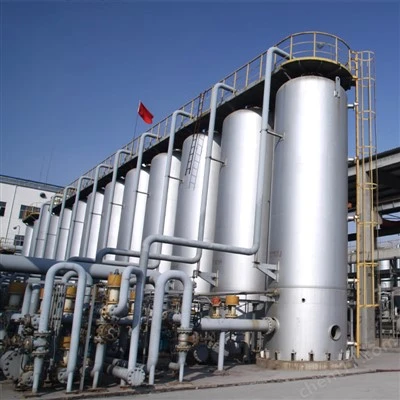
First, let’s get clear on what a small air separation unit actually is, because a lot of people mix them up with the portable oxygen concentrators you see for home use during COVID. Portable concentrators pull oxygen out of room air using molecular sieve technology, and they max out at around 10 liters per minute (LPM) at 90% purity. A small ASU, on the other hand, uses a process called pressure swing adsorption (PSA) or cryogenic distillation—wait, no, most of the modern small ones I supply use PSA too, but at a larger scale. A small ASU that’s built for emergencies typically produces between 50 LPM and 500 LPM of high-purity oxygen (93% to 95% purity, the standard for medical use), enough to power 50 to 500 patients depending on their needs. That’s a big jump from a home concentrator, which tops out at enough for one or two patients at most. And unlike cryogenic ASUs, which are massive, energy-hungry, and cost millions, the small ones I sell are skid-mounted, fit through standard doorways, and can be hooked up to a generator, solar array, or even a truck’s power takeoff. That portability is exactly why they make sense for emergencies.
I first saw this play out in 2018, when a Category 2 hurricane hit a small coastal town in North Carolina. The local hospital’s bulk oxygen pipeline was damaged when a fallen tree took out the main utility pole feeding it, and the backup generator for the oxygen system failed because the fuel pump couldn’t get power. The hospital’s team was down to one portable concentrator, and they were preparing to transfer 12 critical patients 2 hours away, which would have put those patients at serious risk. We sent a small PSA ASU that week—our Model 100, which produces 100 LPM of oxygen. It took our local techs 4 hours to unload it, connect it to the hospital’s existing backup generator (which was running on diesel from a local fire department stockpile), and calibrate the oxygen lines. For the next 11 days, while the town’s power grid was being repaired, that unit was the hospital’s only oxygen source. We checked in every other day, changed the air filters, and adjusted the feed rate to match the number of patients, and not a single patient had to be transferred because of oxygen shortage. That’s the kind of emergency use these units are designed for.
But that story came with a key lesson: the small ASU only worked because the hospital was set up to connect it to their existing pipeline and patient lines. They didn’t have to run hundreds of feet of oxygen tubing through a flooded parking lot, which would have been a nightmare. That’s one of the biggest misconceptions people have about small ASUs for emergencies: they’re not just a portable oxygen canister that you can drop in a field. They need a consistent power source, a way to connect to the facility’s oxygen delivery system, and a place to sit that’s sheltered from rain, wind, and extreme temperatures. In that North Carolina case, the unit was set up in the hospital’s loading dock, which had a roof to keep rain off, and we added a temporary fan to keep the air around the unit cool during the hot, humid days. If they’d tried to set it up outside in open air, the high humidity would have made the molecular sieve filters in the ASU work too hard, and it would have lost pressure and stopped producing oxygen after a day or two.
Another example: in 2021, a small mining operation in rural Nevada had a fire in their processing plant that shut down their on-site bulk oxygen generator, which was used for both worker safety and the plant’s operations. The mine is 60 miles from the nearest hospital, and the county only has a single ambulance that was tied up with another emergency that week. The mine’s safety team rented one of our Model 200 units, which produces 200 LPM, and mounted it to a flatbed truck that had a 500-gallon fuel tank for the generator. They set it up in a cleared area near the plant, connected the oxygen lines to the worker’s breathing stations, and ran the generator nonstop for 17 days until the bulk generator was repaired. That worked because they had a steady fuel supply, clear access to the area, and a plan to route the oxygen lines safely away from the fire site. If they’d tried to run that unit on only a 10-gallon gas can, the generator would have run out of fuel in less than a day, and the unit would have shut down.
Now, let’s talk about the limits, because I’ve seen too many teams get into trouble when they ignore these. First, power: most small ASUs run on between 5 and 15 kilowatts (kW) of power. A standard residential generator is 20 kW, which is enough for the Model 100, but if you try to run a 500 LPM unit on a small 10 kW generator, you’ll overload it and burn out the generator’s alternator. That’s a common mistake in emergency situations, when people grab whatever generator they have on hand and don’t check the unit’s power requirements. Second, runtime: the ASU itself doesn’t store much oxygen—it produces it on demand. If the power goes out, the unit stops, and you have to have a backup oxygen supply to last until power is restored or the ASU can be restarted. For that reason, most teams that use our small ASUs for emergencies also rent a temporary liquid oxygen tank as a buffer, enough to last 24 to 48 hours while they get the ASU running and the power issue fixed. Third, purity: while the unit produces 93-95% oxygen, it’s not as pure as a bulk liquid oxygen tank (which is 99.5% pure). For most medical uses, that’s fine, because the human body doesn’t need oxygen that pure. But for some specialized uses—like certain respiratory therapies for preterm infants, or industrial processes that require higher purity—you might need to add an oxygen concentrator booster, which most small ASUs can connect to without too much trouble.
I also get asked a lot if these units can work in extreme weather. We’ve tested them in temperatures as low as -20°F in Alaska and as high as 110°F in Arizona, and they work fine as long as you take a few simple steps: insulate the air intake filters in cold weather so they don’t freeze, and add cooling fans or a shaded enclosure in hot weather to keep the unit’s compressor from overheating. But we won’t recommend them for situations where the temperature is below -30°F or above 120°F, because the molecular sieve material starts to break down outside of that range, which would shorten the unit’s lifespan and reduce its oxygen output. That’s not a flaw in the unit—it’s a design limit, same as a car won’t run forever in a tornado.
Another emergency scenario I’ve dealt with: disaster response teams that need to set up a temporary clinic in a remote area with no existing oxygen system. A few years ago, a team from a global disaster relief organization brought two of our Model 100 units to a refugee camp in East Africa after a cholera outbreak. The camp had 2,000 people, and 30 patients were in need of oxygen support at any given time. They set the units up on a flatbed truck, connected them to a 10 kW generator, and ran plastic oxygen tubing to temporary treatment tents. It worked for 6 weeks, until the outbreak was under control. They didn’t have a permanent oxygen pipeline, so they ran the tubing along the ground, making sure it was elevated above the dirt to keep bugs out, and changed the filters every 3 days to account for the dusty air. That’s a different use case than connecting to an existing system, but it works when you plan for it.
But here’s the hard truth: small ASUs won’t work in every emergency. If the oxygen demand is over 500 patients at once, you’ll need a larger unit. If there’s no way to get power to the unit for more than 48 hours, even the smallest ASU won’t be enough—you’d be better off using a portable liquid oxygen tank that’s stored and ready to use. And if the site is inaccessible to trucks or cranes, a skid-mounted ASU won’t fit through narrow trails, so you’d need to go with even smaller portable concentrators, which have their own limits. I always tell clients: before you go for a small ASU, do three things first. Calculate your maximum oxygen demand per minute, make sure you have a power source that can handle the unit’s wattage, and have a backup oxygen supply ready to go if the ASU has an issue.
For me, the best part of supplying these units is knowing that when everything else is failing—power grids down, roads blocked, bulk supplies delayed—our units are there to keep people breathing. I’ve talked to nurses who stayed up for 3 days straight during a storm, watching the ASU’s oxygen gauge so they didn’t run out. I’ve talked to mine managers who had to shut down operations temporarily because the ASU needed a part that was delayed, but it let them keep their workers safe until the part arrived. These units aren’t a replacement for good planning, but they’re a critical tool in emergency situations where preparedness makes all the difference.
If you’re facing a situation where your oxygen supply is at risk, whether it’s a hospital, industrial site, or disaster response team, reach out to our team to discuss which small air separation unit fits your needs best. We can help you calculate power requirements, arrange for rental or purchase, and connect you with local techs who can set up the unit on-site. We also offer emergency 24/7 support, so if your unit has an issue in the middle of the night, you can call us and we’ll walk you through troubleshooting or send a tech as soon as possible.
Specialty Gases References:
- ASME. (2019). "Pressure Swing Adsorption Oxygen Generation for Emergency Medical Applications." Journal of Engineering for Medicine and Devices, 13(2), 024501.
- National Fire Protection Association (NFPA). (2020). "Standard for Emergency Medical Oxygen Systems in Remote Sites." NFPA 99, Chapter 7.
- World Health Organization (WHO). (2022). "Oxygen Supply Systems for Health Facilities in Humanitarian Emergencies." WHO Humanitarian Response Technical Brief, 3rd Edition.
- International Society of Offshore and Polar Engineers (ISOPE). (2021). "Performance of Small Air Separation Units in Extreme Temperature Environments." Proceedings of the 31st International Ocean and Polar Engineering Conference.
Xinxiang Jiale Intelligent Equipment Co., Ltd.
As one of the most professional small air separation unit manufacturers and suppliers in China, we’re featured by quality products and good service. Please rest assured to buy durable small air separation unit for sale here from our factory. We also accept customized orders.
Address: No.3913, 9th Floor, Unit 3, East Commercial and Office Complex, Baolong City Plaza, Hongqi District, Xinxiang City, Henan Province, China
E-mail: cc2397410@gmail.com
WebSite: https://www.jiale-asu.com/
