If you’re running a farm, a construction site, or even a landscaping business, you know how important it is for your fence trailer to pull like a dream. Nothing kills a workday faster than a trailer that bounces so bad it sends your post drivers or supplies sliding around, or sways so much you’re white-knuckling the steering wheel on back roads. I’ve been supplying fence trailers for over a decade, and I swear by this: 90% of the time, a finicky ride isn’t the trailer itself—it’s the suspension. Most new owners skip the small adjustments that make a huge difference, and by the time they’re complaining to me that their trailer feels like a bucking bronco, I know exactly where to start. Let’s break this down like I’d explain it to a buddy who just bought his first 16-foot fence trailer—no jargon, no overcomplicating things, just the stuff that actually works. First, let’s get one thing straight: your trailer’s suspension isn’t a set-it-and-forget-it system. I see this all the time—owners unhitch their new trailer from the dealer, take it straight to a job, and never touch the suspension again. But your trailer carries different weights, hits different roads, and ages a little every month, so those leaf springs, shackles, and the hitch itself need tiny tweaks every few months to stay perfect. Let’s start with the basics you can do in your backyard with tools you probably already have, no fancy mechanic stuff required. First, before you even touch anything, you need to know what kind of suspension your fence trailer has. 9 times out of 10, it’s a leaf spring suspension—simple, reliable, and the most common on utility trailers for fencing work. There are also torsion axles, which are a bit smoother but trickier to adjust, but I’m gonna stick to the leaf spring stuff here because that’s what 90% of my customers use. First step: prep your trailer safely. This is non-negotiable, guys. You can’t crawl under a trailer that’s just sitting on the ground— it’s way too easy to slip and get crushed. Grab a good set of jack stands (not just the flimsy scissor jack that came with your car) and a jack that can handle the trailer’s weight. Block the wheels that are on the ground, too—put a brick or a heavy wood block behind them, just to be extra safe. Once it’s jacked up high enough that you can slide under, make sure it’s steady; give the trailer a little shake to test. If it moves, lower it a hair and adjust the jack stands. Got that? Good. Now let’s start with the first adjustment: the shackles and spring hangers. These are the parts that let your leaf springs move up and down as you go over bumps. Over time, the shackles can get loose, or the bolts holding them in place can stretch a little. If your trailer sways side to side when you hit a bump, this is almost always the culprit. Here’s how to check: grab each leaf spring and wiggle it back and forth. If there’s more than a tiny bit of play (like, more than a quarter-inch), that’s the problem. You’ll need a socket wrench and a breaker bar to loosen the bolts on the shackles and hangers. Don’t tighten them all the way yet—just loosen them enough that you can adjust the angle of the shackles. The shackles should be at a 90-degree angle to the axles when the trailer is unloaded. If they’re tilted forward or backward, that throws the whole suspension off. I see owners make this mistake all the time: they tighten the bolts all the way without checking the angle, and then wonder why their trailer rides rough. Once you get the shackles straight, tighten the bolts to the manufacturer’s spec—usually around 50 to 70 ft-lbs, but double-check your trailer’s manual, because different brands are different. Pro tip: if your shackles are worn out (like, the holes are oval-shaped from years of use), don’t just tighten them—replace them. A $20 shackle set is way cheaper than fixing a bent axle later. Next up: adjusting the ride height. This is the big one for fence trailers, because your weight changes all the time. If you’re hauling 50 10-foot steel posts, your trailer should sit a little lower than when it’s empty. If it’s way too low, it’ll drag on the ground when you go over a speed bump or a dirt mound, and if it’s way too high, it’ll bounce like crazy and be unstable. How do you adjust ride height on a leaf spring trailer? It’s all about the spring perches and the axle’s position. Most standard leaf spring trailers have adjustable U-bolts that hold the axle to the leaf springs. Wait, U-bolts—don’t mess with those unless you’re comfortable, but here’s the thing: ride height is usually off because the U-bolts are loose, or the leaf springs have settled over time. Let’s do a quick check for ride height: measure from the ground to the bottom of the trailer’s frame (not the top) on each side. If there’s more than a 1-inch difference between the left and right, that’s a problem—your suspension is unbalanced. If the whole trailer is sitting lower than it was when you bought it, that means the leaf springs have compressed. Some people will add a lift kit to fix this, but for most fence trailer owners, a better trick is to replace the leaf springs every 5 to 7 years, depending on how hard you use them. I’ve had customers run their trailer for 10 years without replacing springs, but by year 7, the ride is so rough they can’t haul delicate fencing material anymore. If the trailer is sitting too high, that’s usually from the axle being too far under the springs. You can adjust the U-bolts to move the axle up a little, but only do this in small increments—like a quarter-inch at a time. If you move it too much, you’ll throw off the trailer’s center of gravity, which is a huge safety risk. Fencing stuff is heavy, and a high center of gravity means you’re way more likely to tip if you take a turn too fast. Don’t cut corners here. Now, what about sway control? Sway is the enemy of every fence trailer owner. I’ve had customers call me panicking because their trailer started swerving all over the road when they hit 50 mph, and 9 times out of 10, it’s a combination of loose shackles and a misadjusted hitch, but sometimes the suspension is part of it. Wait, sway control isn’t just a hitch thing—your suspension plays a big role in keeping the trailer stable. Torsion axle trailers are a bit better for sway, but again, most of my customers have leaf springs. If you have leaf springs, make sure the spring plates (the flat parts the U-bolts clamp to) are not worn or bent. A bent spring plate will make the axle sit crooked, which causes sway and uneven tire wear. If you check and the plate is bent, you can bend it back with a trailer jack or replace it—again, replacement is usually better for long-term use. Another thing I see: owners overload their trailers. I don’t care what the dealer says the “max load” is—if you’re hauling 2 tons of posts and fencing, that’s way more than the trailer was designed for, and it will destroy the suspension over time. Adjusting the suspension can only do so much if you’re overloading it. Stick to the weight limit, and if you regularly haul super heavy loads, consider upgrading to a heavier-duty suspension when you replace your leaf springs. Now, what if you have a torsion axle trailer? A lot of newer fence trailers use these because they’re smoother, no leaf springs to grease or replace. Adjusting a torsion axle’s suspension is a little different, though. Most torsion axles have adjustment bolts at the center of the axle, where it connects to the frame. To adjust the ride height, you loosen those bolts, jack the trailer up, and move the axle up or down to get the right height, then tighten the bolts. But here’s the catch: torsion axles are not meant to be adjusted as often as leaf springs, and if you move them too much, you can damage the internal torsion bars. I usually tell customers with torsion axles to only adjust ride height if they notice a consistent issue, and to check with the manufacturer if they’re unsure. Also, torsion axles need regular checks for wear—look for cracks in the axle housing, or grease leaking from the seals. If you see either of those, replace the axle before it fails on the road. Let’s talk about common mistakes I see owners make all the time, because these are the things that turn a simple adjustment into a big headache. First: not greasing the suspension parts. Shackle bolts, spring hangers, and U-bolts need to be greased every 6 months, or before a big job season. Dry, rusted bolts will seize up, making adjustments impossible, and leading to worn suspension parts. I carry a can of heavy-duty trailer grease in my truck, and I grease all the suspension parts once a month when I’m checking my own trailer. Second: not checking tire pressure. Wait, is tire pressure part of suspension? Kinda! Underinflated tires make the trailer ride rough and cause sway, just like a bad suspension. Check your tire pressure before every trip, and make sure both tires have the same pressure. If one tire is 5 psi lower than the other, that will make the trailer pull to one side and throw off the suspension balance. Third: ignoring small issues. If your trailer starts bouncing a little more than usual, don’t wait until it’s bouncing so bad you can barely drive. Tighten the shackles, check the U-bolts, and adjust the ride height a little. A 10-minute check every month saves you hundreds in repair bills later. I had a customer last year who waited until his leaf springs broke entirely, and that cost him $800 in repairs, plus he missed a job because his trailer was out of commission. That’s way worse than spending 10 minutes a month checking things. Now, let’s put this all together in a simple step-by-step that you can follow right now, if your trailer feels off. Step 1: Prep your workspace safely. Jack up your trailer, use jack stands, block the wheels, no exceptions. Step 2: Check the shackle play. Wiggle each leaf spring, if there’s more than a quarter-inch of play, loosen the bolts, align the shackles to 90 degrees to the axle, tighten to spec, grease the bolts. Step 3: Check ride height. Measure from ground to frame on both sides, if there’s more than 1 inch difference, adjust the U-bolts (leaf spring) or axle bolts (torsion, small adjustments only) to balance it. Step 4: Check tire pressure and wear. Make sure both tires are at the same pressure, no bulges or cracks in the tread. Step 5: Test drive. Take the trailer around your block or an empty parking lot, see if it rides smoother, no sway, no bouncing. If it still feels off, double-check everything—you probably missed a loose bolt or a bent part. At the end of the day, adjusting your fence trailer’s suspension is all about common sense. It’s not rocket science, and you don’t need a shop full of tools. Most issues are loose bolts, worn shackles, or an unbalanced ride height, and fixing those will make your trailer pull better, last longer, and keep you safe on the road. If you’re not comfortable doing this yourself, that’s fine—most trailer shops can do this for you in 30 minutes, and it’s way cheaper than buying a new trailer or paying for major repairs later. But if you’re a hands-on person like most fence trailer owners, this is the kind of maintenance you can knock out on a Saturday morning, no appointment needed. Now, if you’re in the market for a new fence trailer, or you’ve had issues with your current one that suspension adjustments can’t fix, feel free to reach out to discuss your specific needs. Whether you haul small fence posts or heavy construction materials, we can help you find the right setup or tweak your existing trailer to work for you. Don’t let a finicky trailer ruin your workday—take 10 minutes to check your suspension, and you’ll be glad you did. Fence Trailer

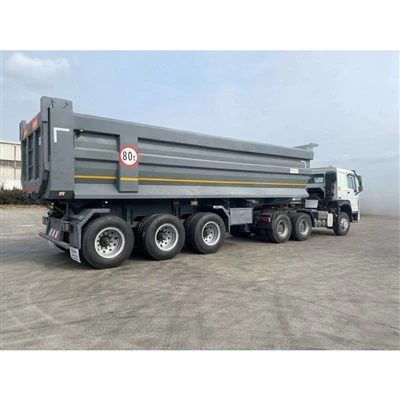
Mexican Double Flatbed Trailer References
- Trailer Suspension Systems: A Guide for Utility Trailer Owners, Trailer Life Publications, 2021
- ASABE Standard S278.1: Agricultural Trailer Suspension Components, American Society of Agricultural and Biological Engineers, 2022
- Practical Maintenance for Fence Trailers, National Farm Machinery Association, 2020
Qingdao Leonmec Mechanical Co., Ltd.
As one of the most professional fence trailer manufacturers and suppliers in China, we have world-leading production equipment and strong manufacturing capabilities. Please feel free to buy durable fence trailer made in China here from our factory. For price consultation, contact us.
Address: ROOM 903, BUILDING 3 NO.480 JIANGSHAN SOUTH ROAD HUANGDAO DISTRICT (FORMER ECONOMIC & TECHNOLOGICAL DEVELOPMENT ZONE) QINGDAO CITY, SHANDONG PROVINCE P.R.CHINA
E-mail: info@leonmec.com
WebSite: https://www.leonmec.com/
