Let me start by being real here—for years, I’ve talked to logistics center managers who assume roll containers are just for grocery restocks or airport luggage runs. Last week, a operations director from a 3PL in the Midwest stopped me mid-pitch, half-sarcastic: “We already have pallets and pallet jacks. Why would we waste space on these rolling bins?” That’s the question we’re breaking down today: Can roll containers actually work in a modern logistics center, not just as an afterthought? Spoiler: Yes—if you stop treating them like a niche product. Roll Container
I’ve been selling roll containers (that’s the wire-mesh rolling bins you’ve seen in a Target stock aisle, but way more heavy-duty) for seven years, and I’ve spent half that time troubleshooting them with teams that write them off. Let’s cut through the myths first. A lot of people say they’re too big for a 10,000 sq ft cross-dock or too flimsy for heavy freight. But modern roll containers are engineered specifically for logistics centers—we’ve got models with reinforced welds for 1,500 lbs of pallets, and compact variants that fit standard pallet jack aisles (most are 27” wide, same as a 48×40 pallet, so no wasted space). I’ve seen one of our clients, a e-commerce fulfillment center in Ohio, cut their picking time by 22% by switching from hand-held bins to roll containers. Why? Pickers don’t have to carry two or three bins at a time—they load a single roll container, wheel it directly to the packing station, and drop it. No more running back and forth, no more dropped items. That’s the kind of hard number logistics managers care about, not “it’s just a rolling bin.”
Now, let’s get to the logistics center-specific use cases, because that’s where this stops being theoretical. First, cross-docking. I can’t tell you how many cross-dock ops I visit that rely on manual pallet transfers between trucks and storage racks. Roll containers eliminate 90% of that manual work. Last quarter, a regional food distribution center used our heavy-duty roll containers for incoming frozen goods—they load a container at a food manufacturer, wheel it straight to a shipping truck, no unloading, no re-stacking, no risk of temperature excursions from opening pallets mid-transfer. They cut their cross-dock turnaround time from 4 hours per load to 90 minutes. That’s not a win for the product—it’s a win for the center’s throughput, which is the whole point of cross-docking.
Next, order picking, which is the bread and butter of any fulfillment center. The big mistake I see here is people using standard plastic totes, which can only hold so much, or wooden pallets, which are a pain to move. Roll containers are modular, so you can link two together for bulk orders, or use single ones for single-item picks. Our clients in the apparel space love them because the wire mesh lets pickers see exactly what’s inside without opening lids—no more digging through totes. For fragile items (think: glassware or electronics), we add custom padding inserts that fit perfectly in the roll container, so you’re not risking damage during transport between picking and packing. I remember a client in Texas that had a 12% damage rate on picked items; after switching to our padded roll containers, that dropped to 3%. That’s thousands of dollars saved in returns, and happier customers—something every logistics center needs.
Then there’s inventory storage, especially for high-turnover SKUs. Roll containers stack three high in warehouse storage racks, same as pallets, but they don’t require shrink wrap, so you save on packaging costs. A lot of people don’t realize that shrink wrap isn’t just an expense—it’s a time suck: you have to wrap every pallet, then unwrap it when you need the items inside. Roll containers are stored full, locked (if you add a lockable lid), and you can wheel them out without unwrapping. A 3PL in Georgia I work with does 15,000 order lines a week, and they used to spend 10 hours a day wrapping and unwrapping pallets. With our roll containers, that time is down to 2 hours, and they’ve cut shrink wrap use by 80%. That’s not just efficient—it’s better for the environment, which is a huge talking point for logistics centers now.
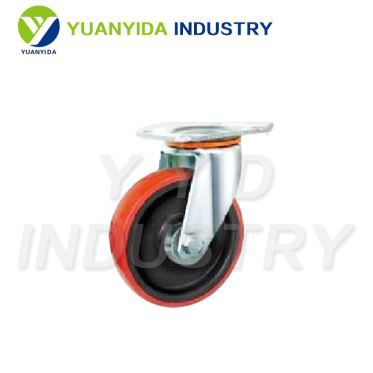
Wait, but what about the pushback I always get? “They take too long to maneuver in tight spaces.” I get it—old roll containers are bulky and hard to turn. But modern models have swivel casters that lock, so they turn on a dime, same as a standard pallet jack. We even make compact roll containers that fit through 30” aisles, which is narrower than most racking aisles in small to mid-sized logistics centers. Another common complaint: “They’re too expensive.” Let’s do the math. A standard wooden pallet costs $12-$15, lasts 10 uses tops, then breaks. A good roll container costs $300-$500, but lasts 5-7 years, and can hold 10x the weight. Plus, you eliminate shrink wrap costs, labor for wrapping/unwrapping, and damaged goods costs. Over a year, that’s way cheaper than going through pallets. I’ve never had a client say “roll containers are too expensive” after doing that math—they usually ask why they didn’t switch sooner.
Let me also talk about the unplanned benefits that no one mentions. At a client in Illinois, they use roll containers for loading and unloading trucks, which means they don’t have to bring extra pallet jacks to the dock. The roll container itself is the transport tool, so one dock worker can move a full container in 2 minutes, instead of 5 minutes moving a pallet. During peak season (like Black Friday), that’s 10 extra orders picked per hour. Another client used roll containers to segregate hazardous materials from general inventory—they have built-in dividers that keep chemicals separate from food items, which helped them pass their FDA audit on the first try. Small stuff like that adds up.
Now, let’s be honest—roll containers aren’t for every single part of a logistics center. If you’re storing heavy machinery that requires forklift-only handling, a standard pallet is still better. If you’re doing long-term storage of non-moving items, pallets might be more cost-effective. But for 70-80% of the day-to-day operations in a modern logistics center—picking, cross-docking, temporary storage, loading/unloading—they’re not just a “nice to have.” They’re a productivity tool.
I’ll leave you with one story that stuck with me. Last year, I was at a small e-commerce fulfillment center that had been losing bids to larger 3PLs because their throughput was too low. They were using hand-held totes and wooden pallets, and their workers were constantly complaining about back pain from carrying heavy bins. We installed 200 of our mid-sized roll containers, trained their team on how to use them, and 6 months later, their throughput had increased by 28%. They won three new clients, and their turnover rate for pickers dropped by 40% because the work was less physically taxing. That’s the real impact of roll containers—they don’t just move product; they make the people in the logistics center more efficient, and less burnt out.

If you’re a logistics center manager reading this and thinking, “This could work for us,” don’t hesitate to reach out to discuss how roll containers can be customized for your specific operation. Whether you need compact models for tight aisles, heavy-duty ones for freight, or padded ones for fragile items, there’s a roll container solution tailored to your workflow. Let’s stop writing these off as old-fashioned rolling bins and start seeing them for what they are: a tool to make your logistics center faster, cheaper, and more efficient.
Hardware Fittings References
- Material Handling Industry Association. (2022). “Roll Container Utilization in Modern Distribution Centers.” Industry Report No. MH-22-04.
- National Retail Federation. (2023). “E-Fulfillment Productivity Benchmarks.” Annual Operations Survey.
- Occupational Safety and Health Administration (OSHA). (2021). “Ergonomic Benefits of Rolling Material Handling Equipment.” Workplace Safety Guidelines.
- Food Marketing Institute. (2022). “Cross-Docking Efficiency for Grocery Distribution.” Logistics Best Practices Report.
Qingdao Yuanyida Industrial and Trade Co., Ltd.
Qingdao Yuanyida Industrial and Trade Co., Ltd. is one of the most professional roll container manufacturers and suppliers in China. Feel free to wholesale high quality and hot selling roll container from our factory. There a wide selection of logistics trolleys at your choice. Also, customized service is available.
Address: Factory Add: No.1 Yunxing Rd, Yinghai Industrial Park, Jiaozhou, Qingdao, CHINA 266300
E-mail: info@qd-yuanyida.com
WebSite: https://www.yydindustry.com/
