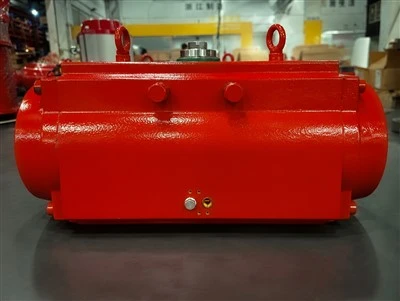
When it comes to the world of pneumatic actuators, selecting the right solenoid valve is a crucial decision that can significantly impact the performance, efficiency, and reliability of your system. As a seasoned supplier of pneumatic actuators, I’ve witnessed firsthand the profound effects that a well-chosen solenoid valve can have on a client’s operations. In this blog post, I’ll share my insights and expertise on how to choose a suitable solenoid valve for a pneumatic actuator. Pneumatic Actuator

Understanding the Basics: What is a Solenoid Valve and How Does it Work with a Pneumatic Actuator?
Before delving into the selection process, it’s essential to understand what a solenoid valve is and how it interacts with a pneumatic actuator. A solenoid valve is an electromechanical device that controls the flow of fluids (liquids or gases) in a system. In the context of pneumatic actuators, solenoid valves are used to control the flow of compressed air, which in turn drives the movement of the actuator.
The basic principle behind a solenoid valve is simple. It consists of a coil, a plunger, and a valve body. When an electrical current is applied to the coil, it creates a magnetic field that moves the plunger, either opening or closing the valve. This action allows or blocks the flow of compressed air to the pneumatic actuator, enabling precise control over its movement.
Key Factors to Consider When Choosing a Solenoid Valve for a Pneumatic Actuator
1. Valve Type
There are several types of solenoid valves available, each with its own unique characteristics and applications. The most common types used with pneumatic actuators are:
- 2-Way Valves: These valves have two ports (inlet and outlet) and are used to either allow or block the flow of compressed air. They are typically used in simple on/off applications.
- 3-Way Valves: These valves have three ports and can be used to control the flow of compressed air in two directions. They are commonly used in applications where the actuator needs to be moved in both directions.
- 4-Way Valves: These valves have four ports and are used to control the flow of compressed air to a double-acting pneumatic actuator. They allow for precise control over the movement of the actuator in both directions.
When choosing a valve type, consider the specific requirements of your pneumatic actuator system. If you need simple on/off control, a 2-way valve may be sufficient. However, if you require more complex control, such as bidirectional movement, a 3-way or 4-way valve may be necessary.
2. Flow Rate
The flow rate of a solenoid valve refers to the volume of compressed air that can pass through the valve per unit of time. It is an important factor to consider because it determines the speed at which the pneumatic actuator can move. If the flow rate of the valve is too low, the actuator may move slowly or not at all. On the other hand, if the flow rate is too high, it can cause excessive wear and tear on the actuator and other components in the system.
To determine the appropriate flow rate for your solenoid valve, you need to know the air consumption rate of your pneumatic actuator. This information can usually be found in the actuator’s technical specifications. Once you have the air consumption rate, you can select a solenoid valve with a flow rate that is slightly higher than the actuator’s requirements to ensure smooth and efficient operation.
3. Pressure Rating
The pressure rating of a solenoid valve refers to the maximum pressure that the valve can withstand without leaking or failing. It is important to choose a solenoid valve with a pressure rating that is compatible with the operating pressure of your pneumatic actuator system. If the pressure rating of the valve is too low, it can lead to leaks, reduced performance, and even valve failure. On the other hand, if the pressure rating is too high, it can result in unnecessary cost and complexity.
To determine the appropriate pressure rating for your solenoid valve, you need to know the maximum operating pressure of your pneumatic actuator system. This information can usually be found in the system’s technical specifications. Once you have the maximum operating pressure, you can select a solenoid valve with a pressure rating that is at least equal to or slightly higher than the system’s requirements.
4. Electrical Specification
The electrical specification of a solenoid valve refers to the voltage, current, and power requirements of the valve’s coil. It is important to choose a solenoid valve with an electrical specification that is compatible with the power supply available in your pneumatic actuator system. If the voltage or current requirements of the valve are not compatible with the power supply, the valve may not operate properly or may even be damaged.
To determine the appropriate electrical specification for your solenoid valve, you need to know the voltage and current rating of the power supply available in your system. This information can usually be found on the power supply label or in the system’s technical specifications. Once you have the power supply information, you can select a solenoid valve with an electrical specification that is compatible with the power supply.
5. Material and Construction
The material and construction of a solenoid valve can have a significant impact on its performance, durability, and reliability. When choosing a solenoid valve, consider the following factors:
- Valve Body Material: The valve body material should be compatible with the type of fluid (compressed air) and the operating environment of the system. Common valve body materials include brass, stainless steel, and plastic.
- Seal Material: The seal material should be compatible with the type of fluid and the operating temperature of the system. Common seal materials include rubber, silicone, and PTFE.
- Coil Enclosure: The coil enclosure should provide adequate protection against dust, moisture, and other environmental factors. Common coil enclosure materials include plastic, metal, and epoxy.
6. Response Time
The response time of a solenoid valve refers to the time it takes for the valve to open or close after an electrical signal is applied. It is an important factor to consider in applications where fast and precise control of the pneumatic actuator is required. A solenoid valve with a short response time can provide faster and more accurate control over the movement of the actuator, resulting in improved system performance and efficiency.
When choosing a solenoid valve, look for a valve with a short response time. The response time is typically specified in milliseconds (ms) and can vary depending on the valve type, size, and operating conditions.
7. Maintenance and Serviceability
Like any other component in a pneumatic actuator system, solenoid valves require regular maintenance and servicing to ensure optimal performance and reliability. When choosing a solenoid valve, consider the ease of maintenance and serviceability. Look for a valve that is easy to disassemble, clean, and replace worn or damaged parts. Additionally, consider the availability of replacement parts and technical support from the valve manufacturer.
Additional Considerations
1. Application-Specific Requirements
In addition to the factors mentioned above, you may need to consider application-specific requirements when choosing a solenoid valve for a pneumatic actuator. For example, if your application requires a high degree of precision and accuracy, you may need to choose a solenoid valve with a high flow rate and a short response time. If your application operates in a harsh environment, you may need to choose a solenoid valve with a robust construction and a high degree of protection against dust, moisture, and other environmental factors.
2. Cost
Cost is always an important consideration when choosing any component for a pneumatic actuator system. While it’s important to choose a solenoid valve that meets your performance requirements, it’s also important to consider the cost of the valve and its impact on the overall cost of the system. When comparing different solenoid valves, look for a valve that offers the best combination of performance, reliability, and cost.
Conclusion
Choosing a suitable solenoid valve for a pneumatic actuator is a critical decision that can have a significant impact on the performance, efficiency, and reliability of your system. By considering the factors mentioned in this blog post, you can make an informed decision and select a solenoid valve that meets the specific requirements of your pneumatic actuator system.
Hydraulic Actuator As a supplier of pneumatic actuators, I’m committed to providing my customers with high-quality products and expert advice. If you have any questions or need further assistance in choosing a solenoid valve for your pneumatic actuator system, please don’t hesitate to contact me. I’m here to help you find the perfect solution for your needs.
References
- Festo Corporation. (2023). Pneumatic Solenoid Valves Selection Guide.
- Parker Hannifin Corporation. (2023). Pneumatic Valve Technology Handbook.
- SMC Corporation. (2023). Solenoid Valve Catalog.
Zhejiang Bigtork Valve Automation Co., Ltd.
Zhejiang Bigtork Valve Automation Co., Ltd. is one of the leading pneumatic actuator manufacturers and suppliers in China. We warmly welcome you to buy customized pneumatic actuator at competitive price from our factory. Contact us for more details.
Address: 98 Yuanqu Avenue,Anfeng Industrial Zone,Oubei,Yongjia,Zhejiang,China.
E-mail: sales@bigtork.com
WebSite: https://www.bigtork.com/
